
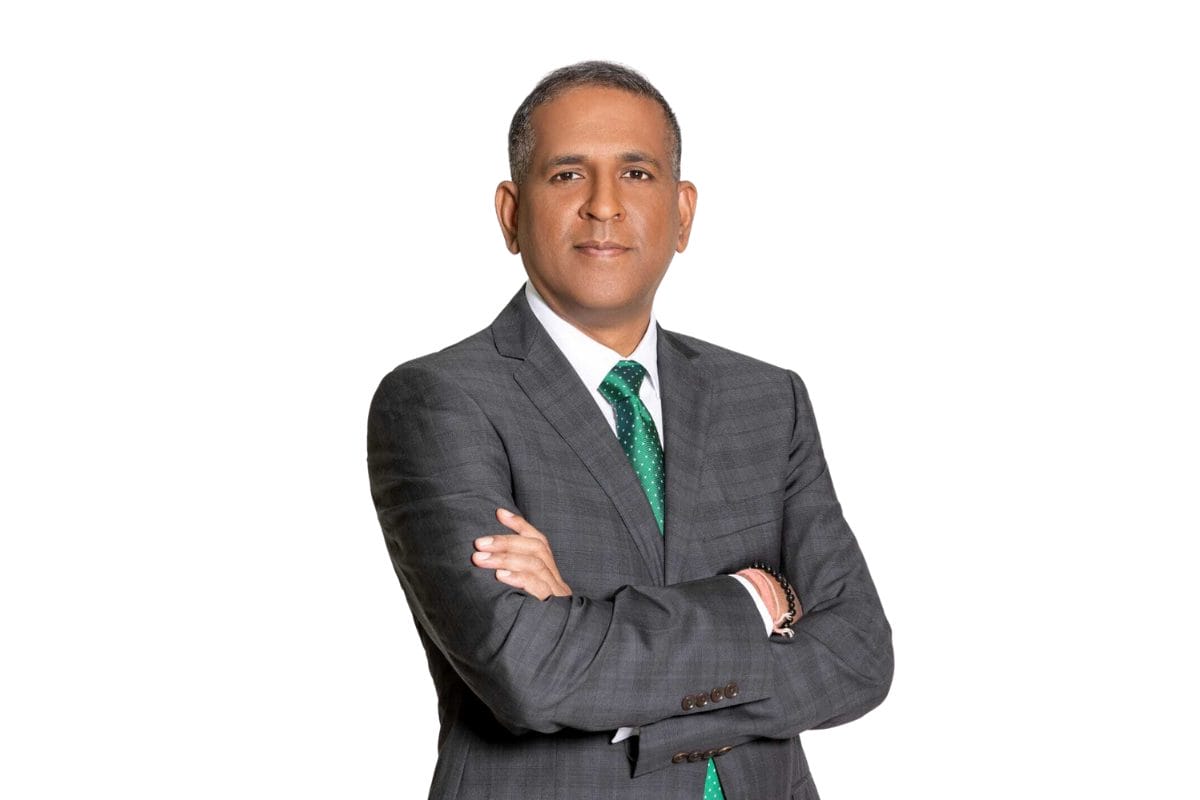
Shiva Ramnarine is a finance executive, corporate strategist, and governance expert with over 30 years of experience in financial transformation, business restructuring, and risk management. As the Founder of Mobius Solutions, he specializes in corporate restructuring, financial strategy, and digital transformation, helping businesses eliminate inefficiencies, optimize profitability, and strengthen governance frameworks.
With a background in financial planning & analysis (FP&A), mergers & acquisitions (M&A), and regulatory compliance, Shiva has held key leadership roles across multiple industries, including telecommunications, aviation, retail, and financial services. His expertise in cost optimization, treasury management, and process automation has helped companies streamline operations and achieve sustainable growth.
Beyond the corporate world, Shiva is deeply committed to ethical leadership and social impact. He founded the FIFO Foundation, a nonprofit organization dedicated to providing monthly food hampers to families in need, ensuring food security and supporting educational development for underprivileged communities.
As a recognized thought leader, Shiva frequently shares insights on corporate governance, financial strategy, and economic trends through public speaking, consulting, and published articles. His ability to simplify complex financial concepts and apply data-driven decision-making has made him a trusted advisor in the business world.
With a passion for financial transparency, corporate ethics, and leadership mentoring, Shiva continues to help businesses thrive and create meaningful impact in both the corporate and nonprofit sectors.
What is your typical day, and how do you make it productive?
I structure my day by planning the night before and laying out all the key tasks and goals I want to tackle. Waking up at 4:30 or 5:00 am gives me a front-loaded start, and by 10:00 am, I’ve already made significant progress while the rest of the world is just getting started. I focus on an output-driven approach, meaning that if any activity begins to feel like it’s grinding me to a halt, I immediately break it down, assess its importance, and decide whether to adjust my approach or cut it out altogether. This flexible yet disciplined routine not only maximizes productivity but also keeps me agile and fluid in adapting to new challenges throughout the day.
How do you bring ideas to life?
I usually start by visualizing the end result, I get excited about the final output and spend time understanding its key attributes and what success looks like. Once that’s clear, I reverse-engineer the process, breaking it down into what’s required to get there. From that point, I collaborate with subject matter experts and build out each step, making sure every action aligns with the outcome I’ve envisioned. It’s a mix of forward excitement and backward planning that keeps things focused, practical, and achievable.
What’s one trend that excites you?
One trend that really excites me is the global shift in how businesses are transforming in response to the younger generation, Gen Zs and Millennials. We’ve seen once-iconic brick-and-mortar companies like Sears and most recently Hudson Bay struggle, not because the need for products disappeared, but because the way customers engage has completely changed. Younger generations are prescribing technology-driven solutions, they’d rather engage through apps and digital platforms than visit physical locations.
In telecoms, the same shift has been massive. Revenue that once came from voice calls is now fully about data. Instead of phone calls, people are typing on WhatsApp and messaging platforms. That change has forced companies to rethink everything: their products, how they market, and how they sell.
What excites me most is how we, as executives, respond to this. The old ways simply won’t work anymore, the companies that fail to adapt are becoming irrelevant or going bankrupt, burdened by old models and heavy costs like real estate. The challenge of rethinking, reshaping, and building future-proof businesses in this new environment is something I find incredibly energizing.
What is one habit that helps you be productive?
Waking up at 4:30 or 5:00 a.m. and having a clear roadmap that charts the course of my day is extremely productive for me. But over the years, I’ve also come to really appreciate the concept of diminishing returns. By around 6:00 p.m., I recognized that the quality and impact of my output were nowhere near what they were at 4:30 a.m. the next morning. So, I make a deliberate decision to step back, recharge, and stop pushing when productivity drops, knowing that starting fresh the next day will always yield better results.
What advice would you give your younger self?
I would tell my younger self – be fearless. Make decisions even when they’re unpopular, in fact, if it’s the right decision, there’s a good chance it will be unpopular with those who fear change or prefer the comfort of the familiar. Don’t let that stop you. Trust your instincts, stand firm in your convictions, and don’t shy away from challenging the status quo. Surround yourself with smart people who push you to think bigger and remember that setbacks are just lessons preparing you for bigger opportunities ahead.
Tell us something you believe almost nobody agrees with you on?
I probably will have a lot of haters for this one, but I believe that the pursuit of strict work-life balance is an overrated and overused 1995 sound-byte. Most people preach clear boundaries between work and personal life, but I’ve found that true innovation and fulfillment come from integrating your passions into every facet of your day. Embracing a more fluid, integrated approach, where work and life continuously inform and enrich one another, has opened up unexpected opportunities and sparked creative breakthroughs. While this perspective often raises eyebrows, it’s a mindset that I have lived by.
What is the one thing you repeatedly do and recommend everyone else do?
One thing I do and constantly encourage others to do is take a break, something as simple as stepping away for a coffee. It’s incredible how a quick pause can reset your mind, give you a fresh perspective, and help you refocus. Whether it’s a small challenge or something complex that feels stuck, that short break often clears the clutter and lets you come back with renewed energy and better ideas.
When you feel overwhelmed or unfocused, what do you do?
When I feel overwhelmed or unfocused, I stop, rethink, and reassess. I step back to look at the bigger picture and break things down into smaller, more manageable parts. I also seek conferences and consultations with close allies and trusted subject matter experts, people who can give me an unbiased, clear perspective and help me reprioritize. That combination of stepping back and getting honest, external input always helps me reset and move forward with focus.
What is one strategy that has helped you grow your business or advance in your career?
One strategy that has truly helped me grow in my career and business is the constant focus on process improvement and performance management. I’ve always impressed upon myself and those I work with that no matter how good something is, it can always be refined and made better through routine application and thoughtful adjustment. Every time we revisit a process or a solution with the mindset of making it more efficient and effective, we move closer to a state where success becomes not only achievable but repeatable. It’s about creating momentum, where improvements compound over time and lead to smoother execution, better outcomes, and greater confidence. I’ve seen firsthand how this approach inspires both me and those around me, when things flow seamlessly and obstacles are minimized, it fuels motivation, innovation, and desire to keep raising the bar.
What is one failure in your career, how did you overcome it, and what lessons did you take away from it?
This is not so much a failure as it is maturity that I’ve experienced over time. Early in my career, I found myself hesitating to make difficult and often unpopular decisions, worrying too much about how they would be received and whether it would impact my job security. I would overanalyze, wait for consensus, and in doing so, sometimes let situations linger longer than they should have or allow the wrong but popular decision to prevail.
I eventually learned that leadership is about decisiveness and the courage to act, even when it’s uncomfortable or met with resistance or repercussions. I overcame this by embracing the responsibility to make the right call, standing by it with conviction, and dealing with whatever challenges came after. The maturity I gained from that taught me that the right decisions are rarely the easiest and that seeking universal approval is both unrealistic and counterproductive. Today, I trust my instincts, move faster, and stay focused on what’s best for the business and the people it serves.
What is one business idea you’re willing to give away to our readers?
One business idea I’m willing to give away is creating a specialized consultancy focused entirely on “Operational Waste Recovery and Optimization” or what I term “Inert routine hidden corruption” for mid-sized to large companies and government agencies. Most organizations are so caught up in daily operations that they fail to see the hidden inefficiencies and vendor’s influence draining their budgets, whether it’s overspending on vendor contracts, underutilized assets, or outdated processes.
This consultancy would come in with a fresh, unbiased lens, using data analytics, machine learning and process mapping to uncover wasted spend, renegotiate supplier contracts, and redesign workflows. The value proposition would be simple: “We help you recover money you didn’t know you were losing”
It’s a win-win model that builds trust, aligns incentives, and directly improves profitability or cost efficiency without any upfront burden for the client. I believe there’s massive untapped opportunity in this space, especially in economies where businesses and governments alike are under pressure to do more with less.
What is one piece of software that helps you be productive? How do you use it?
One piece of software that helps me be productive has evolved over time. I used to think Microsoft Office was a godsend and it still is in many ways for structure and organization. But now, with machine learning and AI tools acting as personal assistants to help organize, prioritize, and even assist in the execution of tasks, the game has completely changed.
The ability of AI to help process complex information, flag priorities, suggest solutions, and keep things moving efficiently is phenomenal. I truly believe everyone should adopt the use of machine learning and AI in their daily workflows. For me, it not only boosts productivity but also sharpens decision-making and frees up mental space to focus on strategy and creativity.
What is the best $100 you recently spent? What and why?
The best $100 I ever spent wasn’t recent, but it left a lasting mark on me. At the very start of my career, and just out of school and preparing for an important job interview, my mother gave me $100 as I was about to leave for the interview. After the interview, I walked out to find my car, my father’s car, actually was gone. It had been towed. A police officer offered me a ride to the police station, and when I got there, the fee to release the car from the impound lot was exactly $100. If not for that money my mother gave me, I would’ve been stranded. The best part? I did get the job. I would have been really upset if I didn’t.
Do you have a favorite book or podcast you’ve gotten a ton of value from and why?
One of the books that has had a lasting impact on me is The Tipping Point by Malcolm Gladwell. What really resonated with me is how small actions, decisions, or moments, things that might seem insignificant at first, can eventually trigger massive change. It helped me understand that success, influence, and transformation often come from building momentum in the right places, with the right people, and at the right time.
I see that in my own life, like that $100 story from the start of my career. At face value, it was just $100 from my mother to attend an interview. But that moment, that support, combined with the outcome of getting the job, became one of my personal tipping points. It taught me that sometimes the smallest pushes, whether it’s help from someone, a strategic decision, or even just showing up fully prepared, can lead to big breaks and shifts in trajectory that can compound and lead to transformative results.
What’s a movie or series you recently enjoyed and why?
A series I recently rewatched and thoroughly enjoyed is Boston Legal, especially for the dynamics between Denny Crane (William Shatner) and Alan Shore (James Spader). Their over-the-top personalities, sharp wit, and unapologetic confidence make every episode entertaining. But beyond the theatrics, what really stands out is their deep friendship. Despite their eccentricities, they always have each other’s backs, offering loyalty and honesty in equal measures.
It’s a reminder that even in the high-stakes world of business or, in this case, law, where things can get intense and competitive, having trusted relationships built on authenticity and mutual respect makes all the difference. Their ability to be completely themselves flaws and all while still delivering results and most of all, having loads of fun along the way is very admirable.
Key learnings
- Discipline Drives Productivity – Planning the night before, starting early (4:30-5:00 AM), and knowing when to step back to avoid diminishing returns are key habits for sustained efficiency.
- Reverse-Engineering Success – Visualizing the desired outcome first, then working backward to break it into actionable steps, ensures clarity, focus, and effective execution.
- Adapting to Change is Crucial – Businesses that fail to evolve with shifting consumer behaviors, such as digital transformation, risk becoming obsolete, while those that innovate thrive.
- Fearless Decision-Making Matters – Leadership requires making tough, sometimes unpopular decisions. Trusting instincts, embracing challenges, and standing firm leads to long-term success.
- Constant Improvement Fuels Growth – Viewing every process as something that can be refined and optimized ensures continuous progress, smoother execution, and lasting success.