
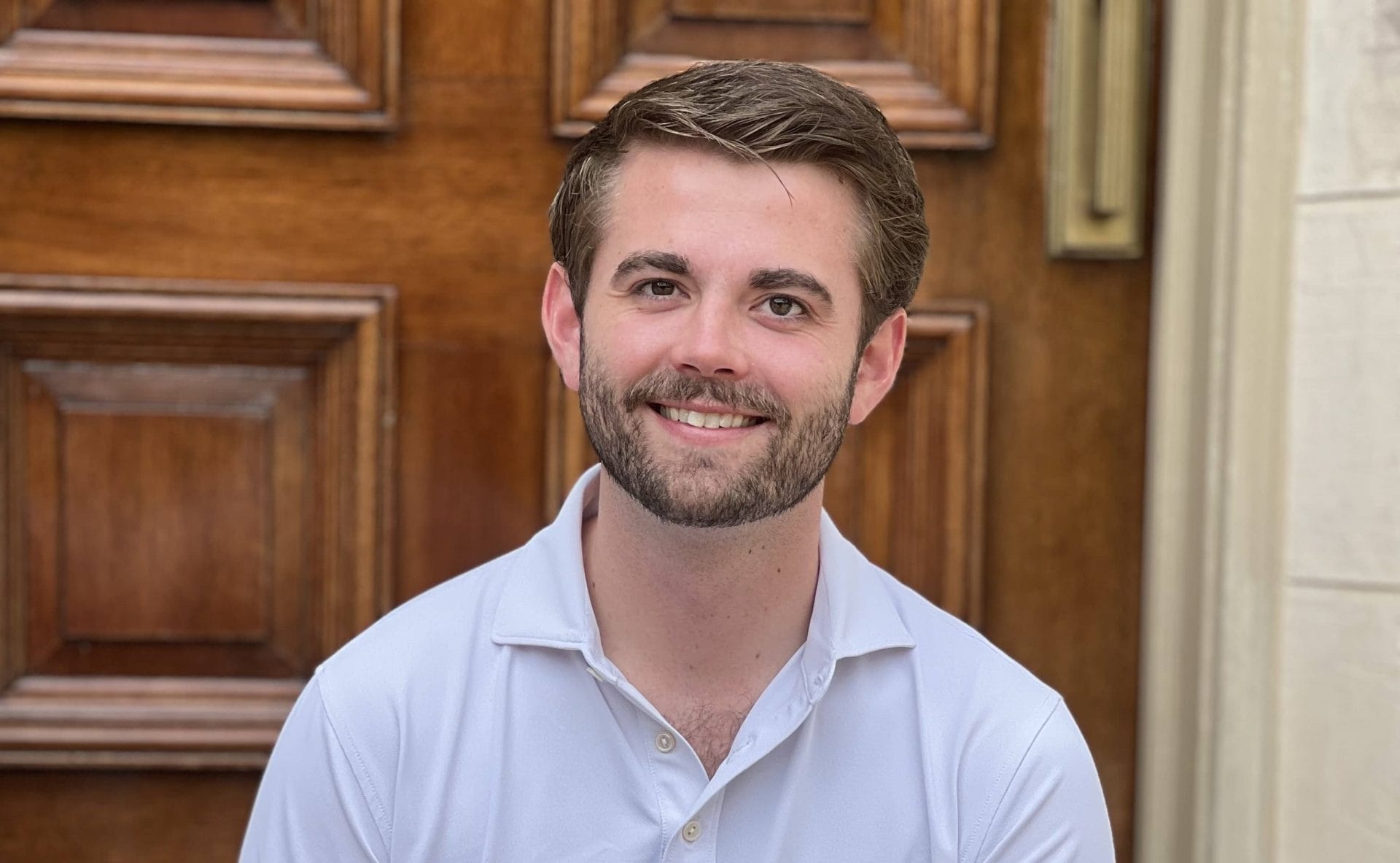
Spencer Schar has been a strategic advisor at DCS Real Estate Investments since 2020 and an operations manager at The Club at Bella Collina since 2019. In the latter role, Mr. Schar sits on the Architectural Control Board (for the entire 1,900-acre community), assists the general manager with day-to-day decision making, works to improve operational efficiencies and standards, sets the pricing structure for all business operations, guides the company’s branding and marketing efforts, and represents the owner’s interests in all matters relating to the community.
Having recently moved from Florida to Colorado, Mr. Schar finds the architectural styles of his new home state’s houses intriguing. He is enjoying educating himself about Colorado’s political environment, as well as its regulatory and planning landscape in terms of real estate development. Colorado’s vibrant, thriving industries were also a significant draw regarding Mr. Schar’s relocation. The state’s key industries include bioscience, aerospace, advanced manufacturing, electronics, defense and homeland security, energy and natural resources, financial services, health and wellness, food and agriculture, infrastructure engineering, technology and information, outdoor recreation, tourism, transportation and logistics, and the creative industries.
Mr. Schar holds a BSBA in finance from Elon University and an MBA from the University of Central Florida and will shortly begin his studies at the Denver campus of the University of Colorado, where he will work towards a dual master’s degree in finance and economics. The University of Colorado Denver is the state’s foremost public urban research university, offering over 100 top-ranked, in-demand bachelor’s, master’s, and doctoral degree programs and providing transformative educational experiences.
What is your typical day, and how do you make it productive?
My typical day starts around 6 a.m. or 7 a.m. I get up and freshen up – with a shower and a cup of coffee – before leaving my phone at the house and taking my dog for a walk. It’s quiet and peaceful.
I typically walk before people are up and heading to work, so that’s when I think about my day, my schedule, and when I’m doing what. What does the week have in store, or what do I not have on my schedule that I need to fit in? If my schedule allows it, I’ll go for an afternoon walk too. That’s when I’ll be mulling things over, whether good or bad. Usually, it’s more the bad stuff, thinking about problem-solving and whatnot, because I will think through all the conversations I had that day.
There’s a disconnect during my walks. It’s me and my dog. I’m fully offline. I don’t have my AirPods in, and I’m not talking on the phone or looking at my phone.
When I get back home I look at my schedule, see what I have planned for the day, and make the calls I need to make in the morning. Usually, it’s work calls and a few personal calls. I try to eat a fairly healthy lunch so I can indulge myself during dinner if I want to.
If I have time in the afternoon, I take my dog for another walk, and then I usually try to get some writing done. I write 500 to 1,000 words daily, whether it’s a journal entry about my day or writing about a specific topic. Getting ideas down on paper helps me clarify my thought processes, so I am diligent about that. So far, I’ve done that every day for the past six months, so it’s like a short novel when you look at it all.
At the end of the day, I usually watch a movie or read a book. I’m currently reading the Dune series, and I’m up to the 3rd book, Children of Dune. It’s such a great series; Frank Herbert is a brilliant writer who was ahead of his time. It’s a very relaxing way to end the day. My dog will hop up on the bed and hang out with me until I turn off the light – when he goes to bed, I go to bed.
How do you bring ideas to life?
I’m influenced by a few individuals whose business leadership I’ve found inspiring. For me, bringing business ideas to life is a process of going from brain to paper: writing a list of things, including the people involved and the steps that need to be taken, then going through a couple of iterations of that over time.
For instance, one of the business expansion plans that we currently have in progress started as just an item on a list. Then I built it out a little bit more, and it took four or five times to really draw it out on paper before I was comfortable bringing it up in a meeting. So, it goes from head to paper to discussion. We have a meeting with the key people involved to talk about it. We then break away. People think about it and talk about it again. Then, if we decide it’s something we want to do, it’s a case of building out that plan even further. In total, it goes from brain to paper to discussion, then to the planning phase, and finally to the iteration phase.
No idea prospers in a void. You often hear about the Steve Jobs of the world, who come up with grand ideas and can do it all on their own – but I think for most business leaders, it’s a team effort. I know that’s a cliche, but I believe in putting a group of heads together with different thinking processes to refine the ideas to their highest form. Bringing an analytical mind, a compassionate mind, and a serious mind together, you can come up with something that’s actually actionable.
I’m a young person; I’m not a seasoned business leader. I’ve been a business leader for three years, but my work experience after college is five years. Having started work at the age of 13 for the Washington Redskins (now the Washington Commanders) broadened my work experience. Not having the background of experience in decision-making on certain key factors is a handicap, so that’s why I rely on the experience and historical knowledge of the people around me. It’s about coming together with those people and refining ideas.
The reason why I go from brain to paper before bringing something to the discussion is that, during the paper phase, ideas often get thrown out. There are ideas I think would be great, but then I realize that it’s not realistic, it’s not the right time, or it’s not the right approach. For somebody trying to learn from the individuals around them, having these discussions is a must. No conversation’s off the table for me.
A crucial part of my working life comes from working in the family business. There’s a strong stigma around people coming up in the family business, as it’s a difficult balance. But coming from my work experience with the Redskins, I understood that you must know where you lie on the totem pole. While working at the Redskins, I was an intern at a very low level, doing players’ laundry. Picking up the field and setting up the field taught me to know your place on the totem pole and accept it. So, from my experience working in the family business, the only way to fight the nepotism stigma is to allow people to thrive at what they do and not artificially put yourself above them on the totem pole, where you don’t belong.
What’s one trend that excites you?
One thing that’s very interesting about the younger generation—not Gen Alpha, but Gen Z and some of the younger millennials—is the trend away from social media. There’s a bit of a separation happening between younger people. An example would be the rise in non-smartphone use or flip phones.
It’s like a counterculture. There are TED Talks and YouTube videos about it. The younger generations are seeing the damage social media is causing. I think a very positive awareness is happening, and I’m excited to see whether it fades away or continues to flourish. For all we know, it might just be a trend. Or there could be some crucial changes happening. While this happens, the opposite also happens – the ones that fully encapsulate what it means to be on social media and become quite wealthy.
I’ve been off social media for six years now. I think social media tends to be unhealthier for younger people than for older people. I can see that for Gen X and millennials from the ’90s and the ’80s, it’s a tool, but for people born after 1995, it’s their childhood. They grew up with it. I grew up with it. When you have something that you can’t remember life without, you start to question why. Why are we so reliant on it? If I say this to a group of people of all ages, there’s a generational separation in mindset. My brother, born in 1993, sees Facebook as a tool rather than a lifestyle or a cultural icon. I don’t see a reason why he should get off it. I think the same applies to anybody older than my brother.
What is one habit that helps you be productive?
Long-form writing is one of the best habits I’ve developed in the past six months. My most productive habit used to be list-making, which is how I generate my ideas. While I still do this, long-form writing has taken the number one spot.
Over the past six months, it has turned into 500 to 1,000 words a day. The most I’ve written in one day was around 6,000 words. That was an entire afternoon of just brain-dumping and mulling over things. It was 6,000 words spewed out about the current state of the U.S. I can go back and see a train of thought, but it was still just a word dump and not as refined as I would like. Returning to my writing and editing is not a top priority. Getting the thoughts written down is more important to me.
What advice would you give your younger self?
Generally, I think every mistake and issue I’ve encountered, every little problem or positive that has come out of my life, needed to happen to get me to the position I’m in today. I’m happy with my current position, but I wish I had paid more attention at school. I think there’s a lot that I just left on the table. So, I’d tell myself to pay more attention, but my younger self would probably not listen to me anyway.
Tell us something you believe almost nobody agrees with you on?
One of my more contentious views is about U.S. history and how we view and use it today. The U.S. was a very wild place for a long time. From the 1600s to the 1700s to the 1800s, the horrors that went on in the U.S. are hard to fathom nowadays.
When discussing what’s happening in the U.S. today, we don’t make nearly enough historical references to where we have come from. We use historical references purely to support and strengthen our political rhetoric. The economist and political commentator Thomas Sowell has spoken outwardly about our poor use of history and what we miss out on without it.
There are indeed a lot of things wrong with the U.S. nowadays. But I think there’s a lack of context. There’s always more to the story than people are willing to let on, such as the incredible chance that the U.S. became as strong as it did. For instance, the Louisiana Purchase only happened because Napoleon was preparing for an all-out war in Europe and decided to sell one of the most extensive swathes of the United States that was ever purchased. If an extensive list of events hadn’t happened, the United States may have never grown past the Mississippi River.
Decisions are made with the available resources, and if we disregard history rather than reason with it, we may end up painting a completely different picture of what happened.
Part of the issue is that if you don’t accept what happened you can’t learn from those mistakes. And I think that leads back to my previous answer, which is that if certain things hadn’t happened in my life, I wouldn’t be where I am today. And I’m pretty happy with where I am today.
Being retrospective and learning from the past is important to me. Americans lack the humility they should have because of past crimes committed by our ancestors. I mean, you can go all the way back to the American Revolution and look at the absolute atrocities that happened in the U.S. that we don’t bring into context when we talk about America’s greatness. We only talk about the atrocities which fit our political rhetoric, which is a shame.
What is the one thing you repeatedly do and recommend everyone else do?
Get outside and walk. I think there is a disconnect that is important in my daily life—just being with your thoughts and being outside.
When you feel overwhelmed or unfocused, what do you do?
If I’m getting overwhelmed and feel like I have a bit of frantic energy, I’ll usually call a colleague, a friend, or a family member. I think there’s a value in venting to others; they can help you navigate some of that overwhelming feeling, especially when putting things in context and perspective. If I need a wake-up call and somebody to slap me across the face and tell me how ridiculous I’m being, I won’t be able to do that myself.
What is one strategy that has helped you grow your business or advance in your career?
Not taking the status quo as the be-all and end-all. I think innovation can happen at any level, from re-envisioning how a maintenance department functions to how to market real estate lots. I believe change and adaptation must be taken at each level in a business, no matter what point. But with that said, it’s evolution, not revolution. I think that’s an essential aspect of business that is really pushed aside by a lot of tech nowadays. With startups, it’s all about speed, how fast you can integrate ideas, and how quickly you can turn them out. You don’t have time to really allow the idea to form into what it should be; you end up forcing square pegs into round holes. You’ve got to let things evolve naturally. You can’t let them stay the same. You’ve got to always look at things critically and think about changes that could help: evolution, not revolution.
What is one failure in your career, how did you overcome it, and what lessons did you take away from it?
I am fortunate not to have had any significant failures in my career, such as bankruptcy or closing the doors of a business. Still, I have had a handful of minor failures that have proven valuable.
The one that stands out the most is the improvement of the two restaurants in the community I help manage. It was one of my first tasks as a leader in the organization, and I just did horribly at it. Restaurants are challenging businesses. Ours weren’t doing too well. Long ticket times, poor service, and variations in food quality were just some of the issues we encountered. The solution was to expand the company’s knowledge in the restaurant business. We hired some talented individuals who could help fix the two restaurants. While this was a more expensive solution, it has saved us money and reputation in the long run.
I learned to put pride aside when things don’t go well. Accept failures soon, and they won’t get worse. It’s like the saying, “When you’re in a hole, stop digging.” Business is truly much more straightforward than many people make it out to be. There are a handful of principles that, if followed, should lead to success. The worst part is that luck is a fundamental factor in business success, and we were lucky enough to have been able to hire some fantastic food and beverage managers who were laid off during COVID. If COVID hadn’t happened, we may not have been able to hire the people who helped turn our restaurants around.
What is one business idea you’re willing to give away to our readers?
There’s always an app or some kind of tech that could be created. When it comes to the younger generation, an idea that I’ve been toying with—and I think it’s a complicated thing to actually pull off in practice—would be something to support young people’s mental health through in-person social connection. The apps that are currently available do more harm than good, so I mean a physical place—a third place—which is a big concern about our generation, the Gen Z generation.
I was born in 1997, which is a border year between millennials and Gen Z. Before the 2000s, it was common for people to have third places to go. The first place is your home, the second place is your workplace, and third places are places for social connection. It’s challenging to relay to people older than 40 because, for the most part, they see tech as an excellent third place where you can meet people. But you’re not actually meeting them in person. I think this business idea comes from the re-entry of something that used to be. It’s less of a profit-generation business than a societal-amplification business, where it’s more about the people than the profit.
The critical distinction between this and our current third-place choices of restaurants, bowling alleys, and movie theaters is that nobody talks to each other when they go to these current choices. No one introduces themselves, and you don’t have any opportunity to form new social connections. Young people lack the tools and environments to foster social wealth. There are stigmas behind these things. It’s dissonant that we joke about something that has such severe effects on mental health in society as a whole.
The idea relies on personal touch between the business and the customer. Casting a wide net and seeing who shows up wouldn’t cut it. This would be a time-intensive and uncertain endeavor, but I think that kind of business would be very impactful, albeit with a very low return. You could have some sort of membership model with a nominal fee to cover base costs. The person doing it wouldn’t get a lot out of it other than the pride of being able to help other people, but I don’t think there’s enough of that going on. It doesn’t even need to be a nonprofit. If you’re making 5% off that business, that’s fine, but you can’t expect 15 to 20% returns, is what I’m saying.
Again, it would take time and require a snowball effect, where the people being recruited would help build the network of people attending these social gatherings. Two significant challenges would be implementing age restrictions to allow for focus on younger people and countering the pull towards homogeneity since people want to be around similar people to themselves.
What is one piece of software that helps you be productive? How do you use it?
I would said Microsoft OneNote is the best productivity tool I use and we use at work. I use it for writing, note taking, task lists, and can collaborate with others on all of that.
Do you have a favorite book or podcast you’ve gotten a ton of value from and why?
Yes. The Dune series. I did not understand how unbelievably before his time Frank Herbert was before I started reading his books. I think some of the forethought that he put into the storyline and the plays on consciousness and physicality are very interesting. I’ve grown as a writer, thinker, and somebody interested in all facets of life since reading his Dune books.
I think one of the reasons why I love that series as much as I do is because it felt like they lifted all the restrictions, showing how you can let your imagination roam free and stretch its legs but with a certain degree of precision to it, too. He’s built a complex world and universe in the 6 Dune books. There have been a lot of comparisons drawn with Game of Thrones, the different families, etc.. Still, I think the Dune series is even more inspiring because he integrated real-life cultures into these sci-fi books. Take, for example, the Zensunni, a merger between two religions, where you had the Sunni Muslims and the Buddhists end up coming together, creating a new faction within the book. Integrating that into sci-fi was just phenomenal to read and consume.
What’s a movie or series you recently enjoyed and why?
Civil War, starring Kirsten Dunst, Wagner Moura, and Jesse Plemons, recently came out. It was shockingly realistic. There were no soft blows. There was no music or cinematic narrative with each firefight between opposing forces. It just showed people shooting other people and what it would feel like. It went full tilt into the potential for political unrest in the United States.
It took place in an alternate reality where Texas and California teamed up against D.C. That would be an outlandish thought in today’s political climate in the U.S. It’s hard to imagine more polar opposite states. Then, to think about the U.S. not being united and that another civil war could actually happen is very disturbing. I believe it marks an inflection point in the direction of films about the future of the U.S. There hasn’t been much about the U.S. that has been as impactful to an audience as the Civil War movie.
Key learnings
• It is important to take time to reflect on a daily basis to clear your mind and strategize effectively
• Our past experiences provide key learnings that can help us to drive our business ideas forward
• No idea prospers in a void – teamwork is essential for ideas to flourish
• Change and adaptation are essential for an individual or a business to thrive