
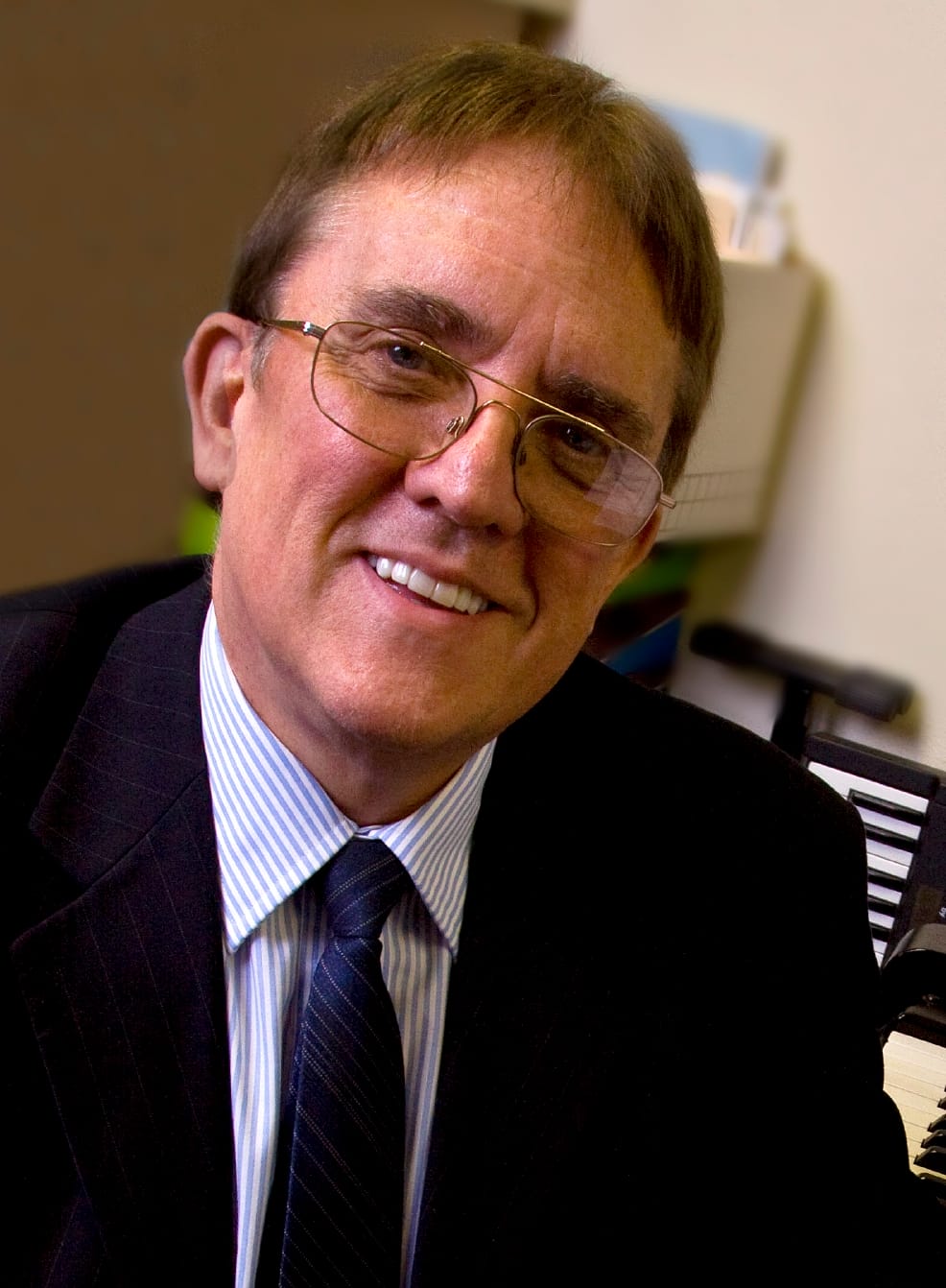
Stephen Husarik is a professor of humanities and music history at the University of Arkansas. He has taught at this university since 1992. Over the past three decades, he has educated more than 12,000 students, earning recognition for his nearly 90 percent course completion rate and inspiring numerous alumni to pursue advanced studies in music and the humanities. As a dedicated educator, Stephen Husarik uses a mix of interdisciplinary teaching, scholarship, and performance to help students understand the arts across various cultures and time periods.
In addition to his teaching, Stephen Husarik is widely published in the fields of music history and interdisciplinary humanities. His writing has appeared in leading journals such as The Musical Times, Interdisciplinary Humanities, and Clavier Magazine, and his scholarship has earned several national awards. His textbook, “Humanities Across the Arts,” is used in classrooms across the country. It reflects his commitment to making the arts accessible and engaging for students of all backgrounds.
Dr. Husarik is also well-versed in visual art, literature, and philosophy, frequently integrating these fields into his courses and research. The intersectional nature of his works is evident in his 1999 article “The Secret of Mona Lisa’s Smile: Integrating Renaissance Art and Mathematics.”
What is your typical day, and how do you make it productive?
At the office, I begin by preparing for classes—reviewing materials for each class that day. Most of my classes involve presenting material that is new to students who have experienced mainly popular culture. In the case of Humanities students, my aim is to introduce them to the intellectual tools they might use to evaluate traditional artworks and those they might find while traveling to other cultures around the world. I have a have similar aim with Music History students, though much of what we discuss is based on Western traditions.
My afternoons are spent consulting with individual students and writing research papers on technical subjects in music history. In past years, I was head carillonneur at the university, and this occupied much time throughout the week and on Sundays. I participate on university committees and this, too, takes up a portion of my day.
How do you bring ideas to life?
It is important to select examples from the daily lives of students to which they can relate. If you are going to talk about lyrics in the ancient world, it is appropriate to begin talking about someone like Don McLean and his celebrated “American Pie” to define that genre. One must accept students on their terms and gradually introduce them to ancient artworks and writings.
What’s one trend that excites you?
I am particularly excited by artificial intelligence and how it benefits and improves our understanding. It is the one thing that I promote more than anything else these days in my classes. I do not use it to write papers myself, but I discuss technical matters at any time the urge occurs—sometimes I wake up in bed late at night and get into a discussion with ChatGPT.
What is one habit that helps you be productive?
I go to the office regularly and that not only sets a pattern, but it results in my keeping up with things that might have gotten overlooked otherwise. I am also motivated in my field of interest.
What advice would you give your younger self?
Keep your opinions to yourself.
Tell us something you believe almost nobody agrees with you on?
Beethoven’s celebrated composition Grosse Fuge, Opus 133 is a musical comedy. Most music critics are unaware of the true definition of comedy and, therefore, think that I am mistaken in applying that term to this wonderful piece of music.
What is the one thing you repeatedly do and recommend everyone else do?
Find something that interests you—especially related to work— and do it.
When you feel overwhelmed or unfocused, what do you do?
I watch TV, fix things in the yard, go to the gym, or visit a shopping mall and people watch. Slow, steady swimming is a particularly good form of aerobic exercise and relaxation.
What is one strategy that has helped you grow your business or advance in your career?
The key to gaining any position is to have a mentor—each successful step in my career was due to the help of someone else. But beyond that, I believe a person must be flexible and adaptable to the needs and requirements of each position you hold. Be ready to do things that you did not expect to do on the job.
What is one failure in your career, how did you overcome it, and what lessons did you take away from it?
I was overly critical about people in a particular area of study, but it made little difference because I did not go into that area to find work.
What is one piece of software that helps you be productive? How do you use it?
I use Microsoft Word and PowerPoint all the time and use Excel in a large research project I am currently working on. I would have recommended FrontPage, but it is now defunct, and I expect that Access will suffer the same fate. So, I must recommend Wix as a web typesetting program. Increasingly, ChatGPT is taking over much of my interest.
Do you have a favorite book or podcast you’ve gotten a ton of value from and why?
I repeatedly read Dietrich Bartel’s Musica Poetica because it contains so many important terms and their definitions that apply to the music of Beethoven—a particular area of interest for me.
What’s a movie or series you recently enjoyed and why?
I have been insisting that my students view the film Le Roi Dance because it describes not only the life of Louis XIV, but also the life of his musical director Jean Baptiste Lully in very accurate costumes and settings at Versailles and Vaux le Vicomte, France, that whet one’s appetite for travel.
Key learnings
- Preparation for classwork and relating material to student’s interest is important.
- Artificial intelligence is the key to the future of education and research.
- Find a mentor who shares your interests and who can help advance your career.