
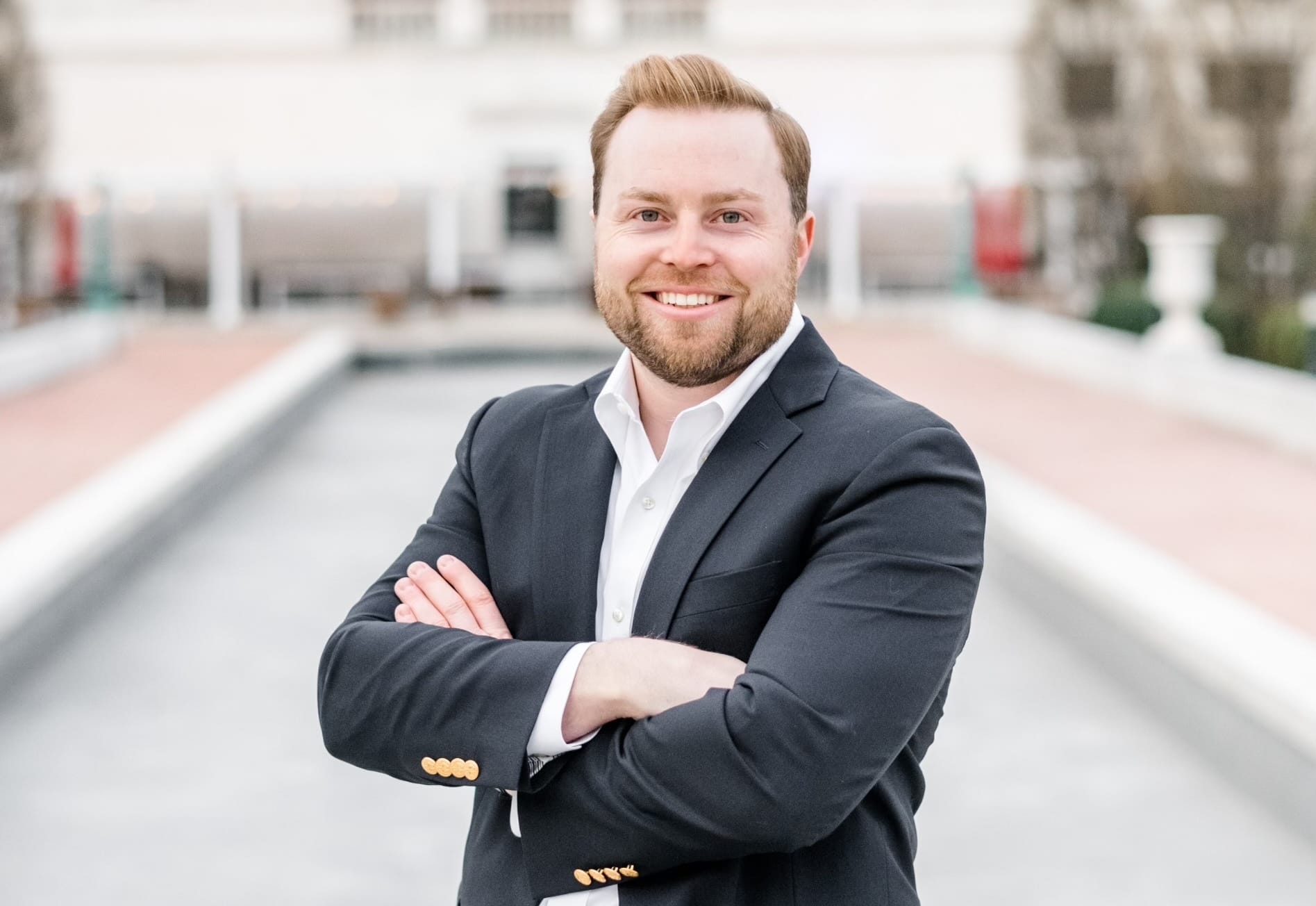
Taggart “Tagg” McGurrin is a pharmaceutical executive with expertise spanning finance, law, pharmaceuticals, and biotech. His multidisciplinary background enables him to navigate the complex drug development and commercialization landscape.
McGurrin holds a dual BS/MBA in accounting, completed within four years. He began his career in banking at Bank of America, during which time he obtained his CPA certification. Following this, McGurrin earned a law degree from Temple University Beasley School of Law, further broadening his professional arsenal.
In March 2017, McGurrin transitioned to the pharmaceutical industry, joining a startup focused on developing non-opioid analgesics. This move aligned with his interest in addressing critical healthcare challenges, including the opioid crisis.
Throughout his tenure in pharma, McGurrin has served in key leadership roles as President, Chief Financial Officer, and Chief Operating Officer. His approach to these positions is characterized by comprehensive risk management, strategic financing, and ethical drug development. McGurrin emphasizes transparent investor relations while promoting a patient-focused approach to balance investor returns with positive health outcomes.
McGurrin’s “creative pragmatism” governs his approach to solving industry challenges. He continues to focus on strategically financing and developing corporate strategy for high-growth pharma and biotech companies. Through his leadership, McGurrin strives to drive biotech innovation while maintaining a strong commitment to ethical drug development and patient welfare. He ultimately aims to align the interests of investors, patients, and regulatory bodies to drive sustainable progress within the pharmaceutical and biotech industries.
What is your typical day, and how do you make it productive?
My typical day is usually extremely busy, beginning early and ending late at night. I categorize action items that are preferences and those that are priorities. Ranking the day’s priorities and executing them accordingly is key to effective and efficient leadership.
How do you bring ideas to life?
I have always liked the phrase “it takes two to tango.” In biotech, there are visionaries and facilitators. I work closely with brilliant scientists to implement their creative innovations.
What’s one trend that excites you?
I have noticed a growing number of young biotech leaders in their 30s and 40s team with experienced industry leaders to flawlessly execute on complex biotech opportunities. The combination of young, fiery talent with experienced wisdom is lightning in a bottle.
What is one habit that helps you be productive?
I am an avid runner and I try to run about 3.5 miles per day. This not only boosts my energy, but running clears my mind and brings clarity to the constant challenges in biotech.
What advice would you give your younger self?
I would tell my younger self to not simply listen to, but also implement all of the great advice and wisdom passed to me from those more experienced in life. It’s not practical to apply 100% of each piece of advice one receives, but I wish I had effectuated at least a small percentage of some words of wisdom rather than disregarding it. It can’t be all or nothing.
Tell us something you believe almost nobody agrees with you on?
Sometimes the grass is greener right under where one is standing, but most people are in a constant race to find a “better” field.
What is the one thing you repeatedly do and recommend everyone else do?
Take calculated risks. Life becomes so much more fun when it’s a bit unpredictable.
When you feel overwhelmed or unfocused, what do you do?
I either run outside or talk to my wife; it’s usually wise to do both.
What is one strategy that has helped you grow your business or advance in your career?
Preserving a mindset of relentless resilience. Professional careers with a healthy amount of risk are never linear. If depicted as a chart, they would probably be more akin to a volatile stock market. However, injecting that “down, but far from over” attitude into tough times drives enthusiastic optimism and can be quite grounding.
What is one failure in your career, how did you overcome it, and what lessons did you take away from it?
I’m highly empathetic and I made the mistake of caring more about others’ well-being than my own. For instance, it’s a natural inclination to put the airplane oxygen mask on your child before yourself, but the child can’t care for the parent who can’t breathe. You can’t give to others what you don’t possess – beyond a wholesome discipline, be gentle with yourself.
What is one business idea you’re willing to give away to our readers?
Baby boomers are at a time in their lives when they wish to sell their businesses, and it would be exciting to create a portfolio of established businesses.
What is one piece of software that helps you be productive? How do you use it?
I live and die by Excel, and I believe in the phrase. “Trust in God, everyone else bring data.” Excel is the steward of that data for me.
What is the best $100 you recently spent? What and why?
I purchased several outfits with my wife for my soon-to-be-born first child. I think that speaks for itself!
Do you have a favorite book or podcast you’ve gotten a ton of value from and why?
Actually, I’ve derived immense value from a poem called “Desiderata” by Max Ehrmann. I find that it applies to every aspect of life and I read it frequently.
What’s a movie or series you recently enjoyed and why?
I recently finished watching “The Perfect Couple” with my wife on Netflix. Liev Schreiber’s character was named “Tagg,” and I felt represented!
Key learnings
- Effective leadership in biotech requires a dual focus on vision and execution – successful ventures often pair younger innovators (30s-40s) with experienced industry veterans to combine fresh perspectives with proven expertise.
- Maintaining resilience and adaptability is crucial for career growth – professional trajectories are rarely linear and often resemble volatile market patterns, but maintaining optimism through challenges drives success.
- Balance and self-care are fundamental to sustainable leadership – regular exercise (like daily running), maintaining work-life boundaries, and prioritizing personal well-being are essential for long-term effectiveness in demanding roles.