
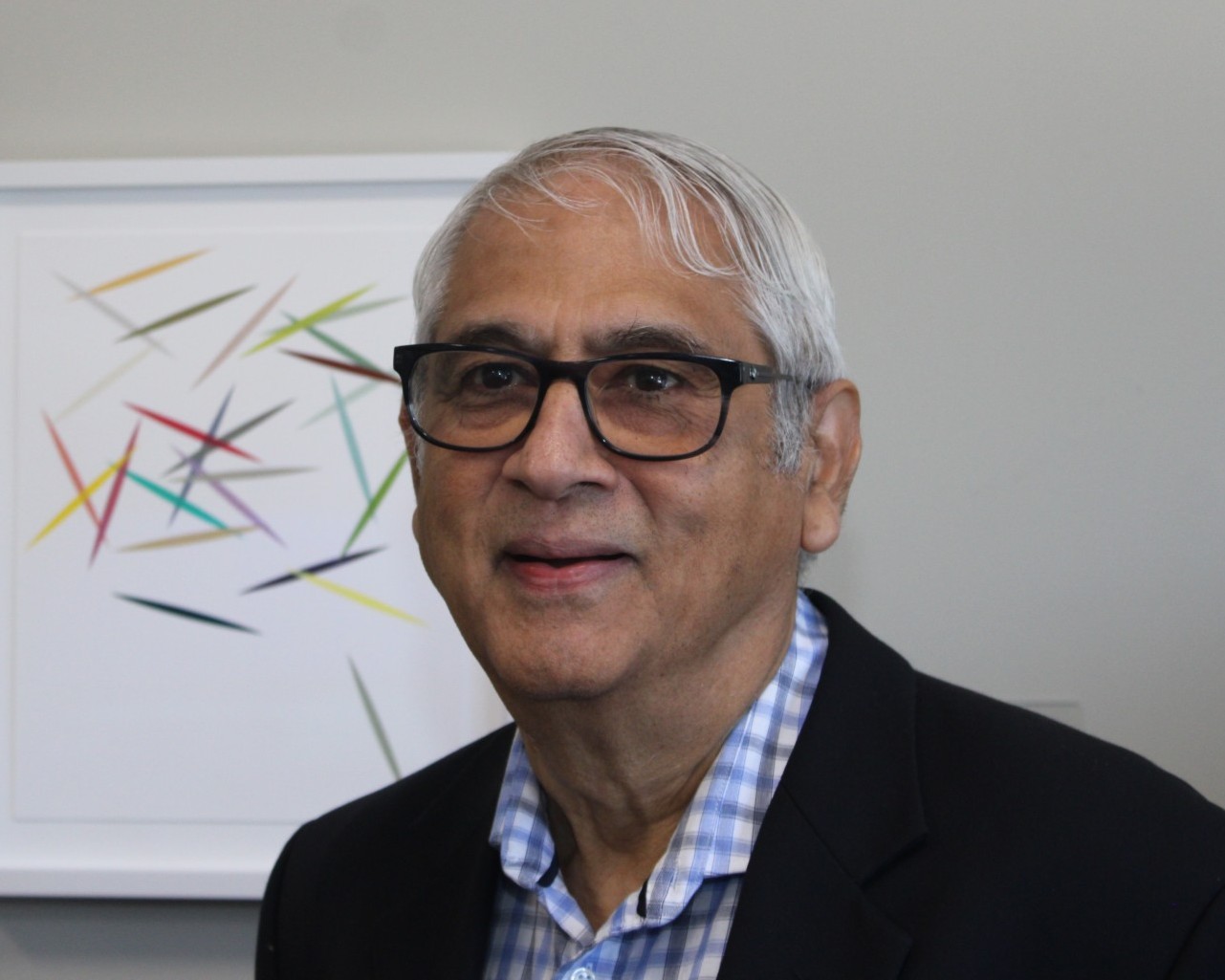
Based in Toronto, Trevor Borthwick spent nearly two decades in software development leadership roles at the Bank of Montreal. As a senior technical specialist in information technology and software development, Trevor Borthwick oversaw complete software development lifecycles for numerous projects and initiatives, including large-scale system migrations.
Between 2010 and 2012, Trevor Borthwick worked for BMO as a development manager for enterprise content management (ECM) in the bank’s commercial lending solutions division. He supported BMO through the implementation of several core ECM platforms, including OpenText ECM, ECM Captiva, and IBM Filenet, as well as other projects.
From 2012 to 2024, Trevor Borthwick served as the senior technology officer and development manager for emerging technologies. BMO entrusted him with the oversight and integration of artificial intelligence, machine learning, cloud, and other emerging technologies. His results-driven leadership and mentorship enabled BMO to execute several large-scale system migrations, acquisitions, and cloud infrastructure deployments. He concluded his time at the company as a two-time recipient of the prestigious BMO Best of the Best Award, denoting exemplary performance in technology delivery and innovation initiatives.
Trevor Borthwick earned a degree in electrical engineering from the Indian Institute of Technology, Bombay, with first-class honors. His love for technology is a part of his personal life, as well; he enjoys building and assembling customer computers, among other projects in the tech space.
What is your typical day, and how do you make it productive?
My day starts with a 5-kilometre jog—I use that time to mentally map out how I’d like the day to unfold, balancing routine tasks and meetings with space for innovative ideas. That mental picture becomes my anchor for the day. I prioritize creative and strategic thinking early when my energy is highest, and I try to batch meetings so I have meaningful stretches of uninterrupted time. Productivity for me isn’t about being busy—it’s about making sure the right things get my best attention.
How do you bring ideas to life?
I start with the essence of the idea and prototype its simplest form. Then I iterate and improvise—stretching it in all directions to maximize its surface area of impact. This is my approach when bringing technology ideas to life.
What’s one trend that excites you?
The trend that excites me most is agentic AI—and it’s not abstract for us. We have a significant portfolio of legacy commercial banking applications, and agentic AI represents the opportunity to breathe new life into them. Rather than replacing everything from scratch, we can layer intelligence on top—unlocking automation and creative workflows that were simply impossible before. The idea that these systems, which have years of institutional knowledge baked into them, can now act, decide and execute autonomously is genuinely transformative. We’re not just modernizing technology—we’re reimagining what these tools can do for our clients.
What is one habit that helps you be productive?
Energy management:
• Doing deep, creative work when your energy is highest (usually morning).
• Taking real breaks—stepping away to restores focus.
• Protecting sleep as a non-negotiable performance input.
What advice would you give your younger self?
The advice I would give my younger self is simple, but it took me years to truly live it: listen to your heart—and don’t follow someone else’s footsteps.
There were moments in my life—both personally and professionally—where I let the expectations of others drown out my own instincts. Where I chose the safer path, the more acceptable path, the path that made sense to everyone else. And while those detours taught me valuable lessons, I know deep down that my truest growth came every single time I trusted myself.
Here’s what I’ve learned: other people’s footsteps lead to other people’s destinations.
Your heart knows things your mind hasn’t caught up to yet. It knows what lights you up, what you’re capable of, and where you truly belong. The world will always have opinions about your choices—your family, your colleagues, your peers. And they’ll often mean well. But no one else is living your life.
So, to my younger self—trust yourself more than you trust the noise around you. Be bold enough to carve your own path, even when it’s uncertain, even when it’s lonely, even when no one else quite understands it yet.
Because the most fulfilling journey you will ever take is the one that is entirely, unapologetically yours.
Tell us something you believe that almost nobody agrees with you on.
I believe that failure is a gift—and most people spend their entire lives returning it unopened.
Now I know that sounds counterintuitive. We live in a world that celebrates success, posts about wins and quietly buries its losses. From a very young age we are conditioned to see failure as something to be ashamed of, something to avoid at all costs.
But here’s what I’ve come to know deeply, through my own lived experience: failure is where the real education happens.
Every setback I have ever faced taught me something that success simply couldn’t. It taught me resilience. It taught me humility. It taught me to look harder, think differently and come back stronger. The moments I fell short didn’t diminish me—they built me.
The problem is most people never unwrap that gift. They let the fear of failing stop them from trying. Or when they do fail, they move on too quickly—too embarrassed to sit with it, study it and extract everything it has to offer.
I don’t just accept failure—I’ve learned to get curious about it.
So, if I believe something that not everyone agrees with, it’s this: your failures are not the opposite of your success story. They are the most important chapters in it.
What is the one thing you repeatedly do and recommend everyone else do?
I take frequent breaks to stretch and do some deep breathing—and I recommend everyone do the same. We often underestimate how important breathing is. When we’re stressed, breathing becomes shallow, which actually reduces oxygen flow and compounds the stress further. A few intentional deep breaths can reset your focus and your state of mind remarkably quickly. It sounds simple, but most people never do it.
When you feel overwhelmed or unfocused, what do you do?
When I feel overwhelmed or unfocused, I’ve learned not to push through—that rarely works. I’ll put on some instrumental jazz for 15 to 20 minutes, which quiets the noise and lets my mind settle. Sometimes I’ll take a walk in the park to get out of my own head. And sometimes I’ll simply lie down for a short rest—because often what feels like overwhelm is just exhaustion in disguise. The goal is always the same: reset, not escape.
What is one strategy that has helped you grow your business or advance in your career?
One strategy that has genuinely shaped my career is being willing to step outside my comfort zone—even when, especially when, it feels uncomfortable.
Early in my career, I was tasked with being the architect for a telephone banking solution. Honestly? I had no idea what I was getting into. I didn’t know the technology, I didn’t know the landscape—I just knew it was an opportunity I couldn’t pass up.
So, I rolled up my sleeves. I immersed myself in understanding every component, every integration point, every moving piece. And gradually, that uncertainty turned into confidence. That confusion turned into command.
The result? I architected and implemented a solution that brought a major Canadian bank’s call center live—the first of its kind in Canada.
Looking back, that experience taught me something I carry with me to this day: you don’t need to have all the answers before you say yes. You just need the commitment to find them.
The comfort zone is a comfortable place—but nothing grows there.
What is one failure in your career, how did you overcome it, and what lessons did you take away from it?
One of the most significant failures of my career was also, in hindsight, the greatest gift it ever gave me—and you’ll notice that’s a theme in how I look at life.
Early on, I made a choice that many young people make: I followed in the footsteps of my elders. I took the path that was expected of me, the one that made sense to everyone around me. And for seven years, I walked that path.
But something was missing. No matter how hard I worked, no matter what I achieved, there was a quiet voice inside me that kept saying, “this isn’t it.”
Recognizing that after seven years wasn’t easy. Walking away from something you’ve invested that much time in feels like failure. People around you don’t always understand it. There’s doubt, there’s fear and there’s the very real question of “what now?”
I made the courageous decision to retool, restart and follow my instincts. I switched careers entirely and found my way into information technology.
And that’s where everything changed.
For 25-plus years, IT wasn’t just my career—it was my calling. It was where my curiosity thrived, where my ambition found its footing and where I did some of the most meaningful work of my life—including architecting a first-of-its-kind telephone banking solution for a major Canadian bank.
None of that happens if I don’t have the courage to walk away from the wrong path.
The lesson I took away? Seven years is not a waste—it’s the price I paid to find out exactly who I was meant to be. And that, I would argue, is the best investment I ever made in myself.
What is one business idea you’re willing to give away to our readers?
The business idea I’m willing to give away is one that sits at the intersection of two worlds I know intimately: decades of enterprise technology experience and the explosive power of AI. I call it an AI Legacy System Modernizer.
Here’s the problem it solves—and it’s a massive one. Right now, banks, insurance companies, government agencies and large corporations are sitting on mountains of outdated technology. Systems that were built 20, 30, sometimes 40 years ago. They’re expensive to maintain, impossible to scale and a constant source of risk. But they’re so deeply embedded in how these organizations operate that nobody knows how to touch them without breaking everything.
The traditional approach to modernizing these systems is slow, brutally expensive, and prone to failure. It requires armies of consultants, years of work and budgets that would make your eyes water.
Here’s where AI changes everything.
An AI Legacy System Modernizer would use artificial intelligence to do what used to take teams of people years to accomplish—analyzing existing codebases, mapping dependencies, documenting undocumented systems, identifying risks and generating a clear, executable modernization roadmap in a fraction of the time and cost.
I’ve spent 25-plus years in the trenches of enterprise technology. I’ve seen firsthand how crippling outdated systems can be—and how transformative it is when an organization finally breaks free from them. I architected solutions for major financial institutions when the technology was in its infancy. Imagine what’s possible now with AI in the toolkit.
This isn’t a futuristic idea. The problem exists today. The technology exists today. The market is enormous and largely untapped.
If I were starting a business tomorrow, this is exactly where I would plant my flag.
What is one piece of software that helps you be productive? How do you use it?
If there is one piece of software that has genuinely transformed my productivity, it’s Claude Desktop—an AI-powered thinking partner developed by Anthropic.
And I want to be clear—this isn’t just a tool I stumbled upon. This is something I have deliberately embraced because I believe, deeply, that the professionals who learn to harness AI today are the ones who will lead tomorrow.
Here’s how it shows up in my world every single day.
When I’m brainstorming, Claude is my sounding board. It challenges my thinking, surfaces angles I hadn’t considered and helps me pressure-test ideas before I ever take them to a room full of people.
When I’m coding and working through technical problems, it accelerates my ability to architect solutions, debug challenges and think through complex integrations—the kind of work I’ve been doing for over 25 years, now done faster and smarter.
When I need to research and learn something new—and in technology, that is a constant—Claude helps me get up to speed quickly, deeply and in a way that actually sticks.
And when I’m facing a complex problem that needs a strategy, it helps me organize my thinking, weigh my options and arrive at decisions with far more clarity and confidence. In short—Claude Desktop doesn’t replace my thinking. It amplifies it.
We are living through a moment where AI is rewriting the rules of productivity. And just like I retooled my career 25-plus years ago to find my calling in technology—I’m doing it again today, leaning into AI with the same curiosity and excitement I had back then.
The tools change. The mindset doesn’t.
What is the best $100 you recently spent? What and why?
Honestly, the best money I’ve spent recently has been on AI-powered tools—my Claude subscription and some of the new AI-based coding assistants that are out there right now.
And here’s why I say that without hesitation. We are living through one of the most significant technological shifts of our generation. AI isn’t coming—it’s here. And the professionals who are learning to work with it, rather than waiting on the sidelines, are the ones who are going to pull ahead.
For me, these tools haven’t just made me faster—they’ve made me sharper. They’ve become a thinking partner, a sounding board, a way to pressure-test ideas and accelerate execution in ways that simply weren’t possible before.
A few dollars a month for that kind of leverage? That’s not an expense. That’s one of the highest-return investments I’ve ever made.
And I think it says something important about how I approach my work—I’m always looking for ways to grow, to adapt and to stay ahead of the curve. Because in this field, standing still is the only real risk.
What’s a movie or series you recently enjoyed and why?
The series I’ve recently been enjoying is “Madam Secretary”—and I’ll be honest, I wasn’t sure what to expect when I started watching it.
The show follows Elizabeth McCord, a former CIA analyst who becomes the United States Secretary of State, navigating international diplomacy, office politics, and complex global conflicts, all while managing her personal life and family at home.
But here’s why it resonated with me so deeply.
Elizabeth McCord is not your typical leader. She doesn’t wait to be handed authority—she earns it, fight by fight, decision by decision. She faces situations where the easy path and the right path are rarely the same thing. And time and again, she chooses principle over convenience, courage over comfort.
Sound familiar? It should—because those are the same values I’ve tried to live by throughout my own career.
What I find most compelling about the show is that it reminds us that leadership isn’t about having all the answers. It’s about having the integrity to keep asking the right questions, the resilience to weather the storms and the conviction to stay true to yourself when everything around you is pulling you in a different direction.
In a world that often feels chaotic and cynical, “Madam Secretary” is a refreshing reminder that one principled person—in the right position, with the courage to act—can genuinely change things.
I’d recommend it to anyone who loves intelligent, character-driven storytelling. It’s the kind of show that doesn’t just entertain you—it makes you think.
Key learnings
- Discomfort is the birthplace of growth.
- The willingness to sit with failure, study it and extract its lessons separates those who grow from those who stagnate.
- Following your own path requires courage but leads to fulfillment.
- AI is not a future consideration—it is a present competitive advantage.
- Managing your energy is more important than managing your time.