
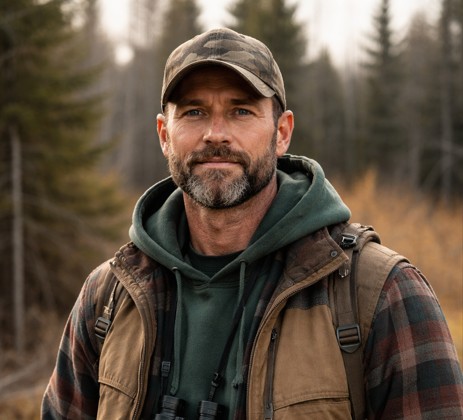
Tyler Andersen is a hunting and fishing guide based in Sheldon, Vermont, where he has spent most of his life working outdoors and building a career rooted in patience, consistency, and local knowledge.
Growing up just outside St. Albans, Andersen learned early lessons in hunting and fishing from his father and uncles along the Missisquoi River and throughout the woods of Franklin County. Those experiences shaped the way he approaches both work and life today. Quiet observation, preparation, and trust in experience became habits long before they became part of his business.
Before guiding full-time, Andersen worked in construction, on farms, and operating heavy equipment across northern Vermont. In his early 30s, he began taking friends and local connections on informal hunting trips. Over time, those outings turned into a steady guiding business built almost entirely through referrals and repeat clients.
Today, Andersen specializes in whitetail deer hunting, bass and pike fishing on Lake Champlain, and winter ice fishing. He is known for keeping things simple and focusing on timing, weather patterns, and understanding the land rather than relying heavily on technology or trends.
Outside of guiding, he stays busy with snowplowing and local equipment work during Vermont winters. He is also a father of two teenagers and remains closely tied to the community and the outdoors that shaped his life.
What is your typical day, and how do you make it productive?
Most days start early. If I’m guiding, I’m usually up before daylight, checking the weather and conditions before heading out. During hunting season, mornings are quiet and focused. Fishing season is different, but the routine is pretty similar.
I try not to overcomplicate productivity. I focus on doing one thing at a time and paying attention to it. A lot of mistakes happen when people rush.
Even during slower months, I stay busy. Snowplowing, equipment work, checking gear, and scouting. There’s always something that needs attention.
How do you bring ideas to life?
Usually, by keeping them simple first.
I think people get stuck trying to perfect ideas before they actually start. Most things improve as you go. That’s how guiding worked for me. I didn’t sit down with a business plan. I started taking people out hunting, learned what worked, and built from there.
If something makes sense long term, I stick with it.
What’s one trend that excites you?
Honestly, I think more young people are starting to appreciate slower activities again. Hunting, fishing, hiking, being outside without needing constant stimulation.
I notice a lot of people getting burned out from always being online. The outdoors gives people a break from that.
What is one habit that helps you be productive?
Paying attention to conditions instead of forcing plans.
That applies to almost everything. Weather, deer movement, fishing, even work in general. Sometimes the best thing you can do is slow down and adjust instead of pushing harder.
What advice would you give your younger self?
Be patient earlier.
When I was younger, I thought working harder always solved everything. Sometimes experience and timing matter more than effort alone.
I’d also say stop worrying so much about what everybody else is doing.
Tell us something you believe almost nobody agrees with you on?
I think people rely too much on technology outdoors now.
Trail cameras, apps, constant updates. Some of it helps, but I think people lose awareness when they stop paying attention to the woods themselves.
You still can’t replace time outside.
What is the one thing you repeatedly do and recommend everyone else do?
Spend more time observing before reacting.
Most people move too fast. Outdoors and in life. They make decisions before understanding what’s actually happening.
A lot of good outcomes come from patience.
When you feel overwhelmed or unfocused, what do you do?
Usually I go outside.
Even if it’s just walking through the woods or working in the garage for a while. Physical work helps clear my head better than sitting around thinking about things.
Quiet helps too.
What is one strategy that has helped you grow your business or advance in your career?
Consistency.
I never tried to grow fast or market heavily. I focused on showing up, being honest with people, and doing the work the same way every season.
Most of my clients came from referrals. That only happens if people trust you enough to recommend you to someone else.
What is one failure in your career, how did you overcome it, and what lessons did you take away from it?
Early on, I pressured areas too hard during deer season because I thought more scouting always helped.
I’d constantly check the cameras and move around too much. Eventually, deer movement dropped off completely in one area I relied on.
That taught me that sometimes doing less is smarter. Pressure changes animal behavior fast.
What is one business idea you’re willing to give away to our readers?
I think there’s room for more small local outdoor education programs for younger kids.
Not just hunting or fishing, but teaching basic outdoor awareness, weather, tracking, navigation, and conservation. A lot of kids don’t get exposed to that anymore.
What is one piece of software that helps you be productive? How do you use it?
Honestly, just weather apps.
I use Weather Underground and local radar constantly. Weather affects almost everything I do, whether it’s guiding, fishing, snowplowing, or planning work.
Do you have a favorite book or podcast you’ve gotten a ton of value from and why?
I still like reading old outdoor writing more than podcasts. Guys like Gordon MacQuarrie and some of the older hunting writers.
The stories felt real. Less polished. More about observation and experience than showing off success.
What’s a movie or series you recently enjoyed and why?
I watched “Yellowstone” for a while, mainly because parts of it reminded me of rural life and working outdoors, even if it gets exaggerated sometimes.
I think people connect with stories about land, work, and community because a lot of that still matters.
Key learnings
- Consistency and reliability often build stronger long-term careers than rapid growth or visibility.
- Spending time observing conditions carefully can lead to better decisions in business and life.
- Simplicity and patience still outperform overcomplication in many industries.
- Local knowledge and real-world experience remain valuable even in highly digital environments.
- Slowing down and paying attention can improve focus, judgment, and long-term results.