
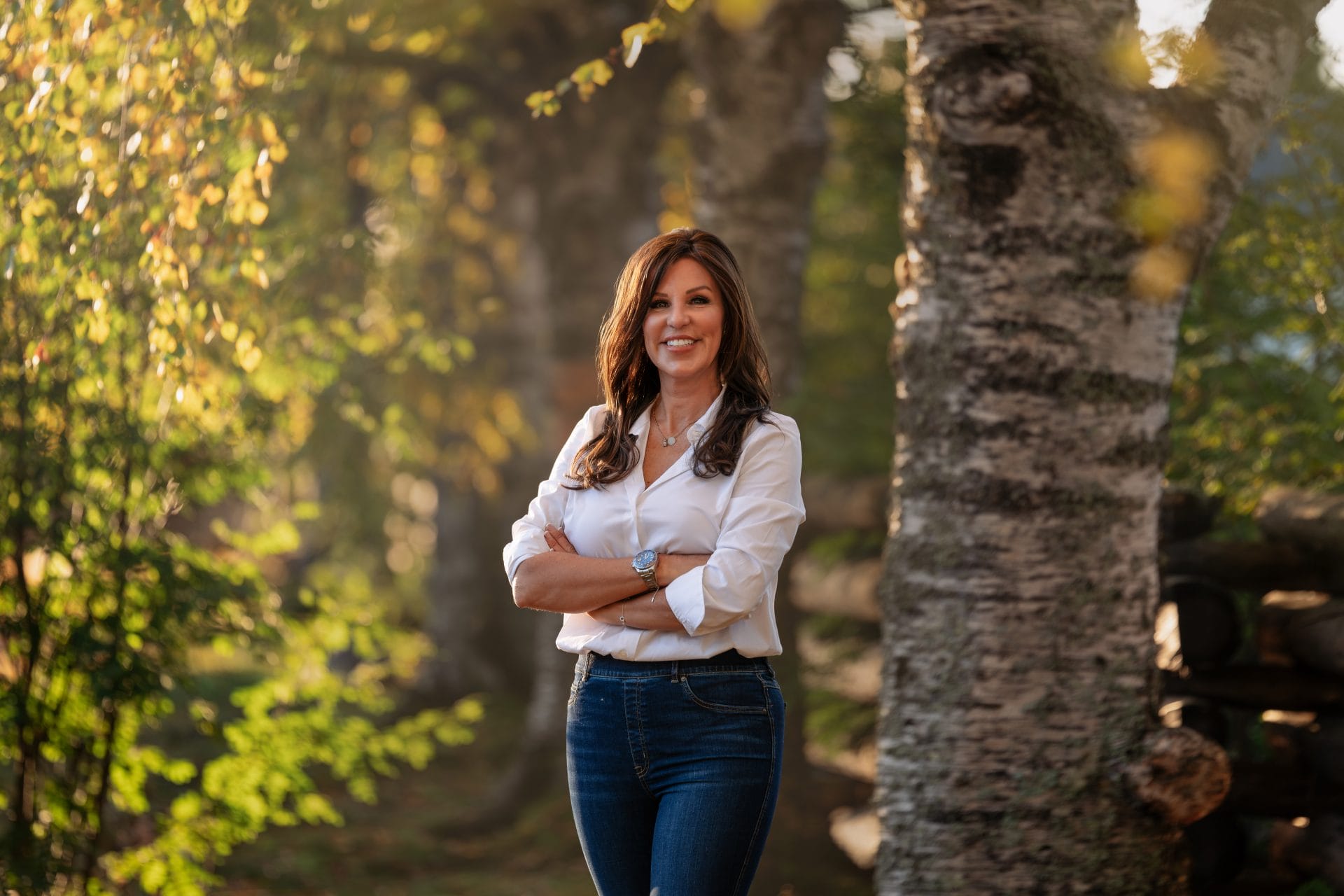
Ulrika Gustafson, LL.M, PCC, is a Global Executive Coach, Strategic Advisor, and three-time entrepreneur who has rebuilt her career across continents and industries. A lawyer by training, she founded one of Sweden’s first firms specializing in EU law before pivoting into asylum law during a surge of new arrivals – always ahead of the curve in seeing where systems were heading.
She later became one of Scandinavia’s youngest City Managers, responsible for turning around entire municipal systems under political and public scrutiny. From there, she moved into C-suite roles, leading high-visibility organizations where one misstep could end a career. These years forged her expertise in making decisions under pressure, rebuilding credibility, and resetting systems in turbulence.
When Ulrika relocated to the United States, her extensive track record was often misread and reduced to narrow boxes – “cutthroat attorney,” “public-sector executive,” nothing more. She recalibrated, re-establishing her authority in a new market from the ground up. That experience of reinvention defines her entrepreneurial story: resilience not as a slogan, but as a lived reality.
Today, as founder of Ulrika Gustafson Advisory, she works with Managing Directors, General Counsels, COOs, and executive teams across Fortune 500 companies and public organizations in finance, biotech, industrials, and law. Leaders bring her in when presence, tone, or political dynamics threaten to stall strategy or damage reputation. Her advisory work resets the room, sharpens authority, and restores traction before the cost compounds.
Known for her frankness, humor, and disarming clarity, Ulrika cuts through complexity without executive theater. She brings lived experience – not theory – to the rooms where one misstep can end a career. Her throughline, both as an entrepreneur and advisor, is helping leaders turn what sets them apart – their “uniqueness” – into their greatest source of power.
What is your typical day, and how do you make it productive?
I’ve been an early riser since I was a child. Most mornings I’m up before sunrise – coffee in hand, sitting with my Golden Retrievers before we head out for a long walk. That quiet space grounds me. It’s time for reflection, presence, and connecting with my husband before the day accelerates.
My work is highly flexible because of the nature of my advisory role – I do concierge contracts with senior executives, which means my schedule adapts to theirs. Some days are stacked with back-to-back coaching sessions and board prep calls. Other days are more spacious, designed for writing, thinking, or preparing strategy briefs. I’ve learned that productivity for me isn’t about cramming in more hours – it’s about protecting the energy I bring into each conversation.
One reason I was initially drawn to law and later to executive leadership roles is that I’m naturally organized. I structure my days tightly, but I also leave room for recalibration if something urgent shifts. That combination – discipline plus flexibility – is what keeps me effective in the unpredictable environments I work in.
How do you bring ideas to life?
I brainstorm by writing and drawing everything out. Every office I’ve ever had has included a huge whiteboard covered with mind maps, arrows, and messy sketches. My brain naturally works in systems and processes, but in a creative way – I can “see” the flow of steps, the opportunities and the challenges, before they exist. Once I map it, execution becomes simple.
The hardest part for me has always been patience. I’m wired to spot what needs to change, design the path forward, and put the right people in the right places. But once the framework is built, I lose interest in sitting with it. Early in my career as both a leader and entrepreneur, I learned to delegate execution to people who not only had more patience but far better skills than me in following things through. That became my winning recipe: know your own strengths, be honest about your weaknesses, and surround yourself with people who can take the baton and run further than you ever could alone.
What’s one trend that excites you?
I’m fascinated by how work cultures are shifting in different parts of the world. In the U.S., younger generations are pushing for a work environment that looks a lot like what Scandinavia has had for decades – more focus on balance, autonomy, and trust. At the same time, in Northern Europe, I see a slow movement toward the U.S. style of faster pace and higher visibility. It’s a reminder that everything runs in cycles, and that politics, generational attitudes, and workplace norms are deeply interconnected.
On top of that, I’m excited about the role AI is starting to play. I see enormous potential in how it can free leaders from repetitive work, sharpen decision-making, and create new efficiencies. But – and this is critical – leaders will need the discipline to recalibrate quickly when unintended consequences show up. The organizations that use AI well will be the ones that combine speed with reflection, innovation with responsibility.
What is one habit that helps you be productive?
I live by my calendar. I still use an old-school desk version – thick as a binder – alongside digital tools to manage complexity across clients and time zones. At the end of each year, I turn it into a system: milestones, markers, notes, everything I know I’ll need. That structure gives me clarity, but the real productivity comes from using it in a way that lets me shift fast. When something changes – and it always does – I already know the shape of my day and can adjust without losing focus.
What advice would you give your younger self?
Be kinder to yourself. I spent too much time trying to be the “good girl” – ambitious, responsible, caring, excelling at everything. And I constantly compared myself to others who seemed to do it all better. That’s a trap I see many ambitious women fall into even today. It fuels achievement, but it also feeds the sense of never being enough.
I’d tell my younger self this: stop measuring yourself against someone else’s story. Focus on what makes you thrive, and take pride in the things that come naturally to you. Every season – the wins and the setbacks – has something to teach you. Success isn’t about checking every box; it’s about learning to live on your own terms.
Tell us something you believe almost nobody agrees with you.
Leadership gets easier the higher you rise. Most people assume the opposite – that sitting in the CEO’s chair is the hardest job. It isn’t.
At the top, you have resources, authority, and experienced teams around you. The leaders with the hardest roles are often further down: middle managers with limited support, unclear mandates, and the responsibility of carrying out someone else’s strategy while still proving their own credibility.
But ease at the top comes with a paradox. The risk is far greater. Every decision is magnified, every misstep visible. One wrong call can ripple across an entire organization – destabilizing trust, teams, and results. That’s why top leaders are paid for judgment, presence, and their ability to align powerful peers who aren’t used to being aligned.
In other words: operationally, it does get much easier. Strategically, politically, and reputationally – the stakes couldn’t be higher.
What is the one thing you repeatedly do and recommend everyone else do?
I’ve spent my life and career moving through change – 19 moves, five countries, three continents, and many assaingments as a turnaround executive. Each time, I had to recalibrate: myself, my career, and the organizations I was leading. It was never comfortable, but it taught me the most important lesson of all – change is not something to avoid. It’s the training ground for resilience, clarity, and authority.
That’s why I make a habit of deliberately facing the things I instinctively want to resist. Managing change has become the muscle I train the most, and it’s the one I encourage leaders to build. Recalibration isn’t a one-time reset; it’s a discipline.
I see this in my work with executive teams as well. When leaders step away from the noise, go off the grid together, and recalibrate – the difference is visible. The alignment, the clarity, the sense of shared direction is often stronger than years of business-as-usual meetings could ever create.
For me, and for the leaders I work with, recalibration is the habit that keeps us ready for what comes next.
When you feel overwhelmed or unfocused, what do you do?
I step back and do things that ground me – talking it through with my husband, spending time with my dogs, or packing a little “fika” and heading outdoors. Whether it’s on skis, a snowmobile, or just a long walk, being in nature helps me reflect on what’s really behind the overwhelm.
Often the key is being brutally honest with myself about the true root cause – not just the convenient explanation I’d prefer. At this point in my life, I usually know instinctively what the issue is and can course-correct quickly. The funny part is that the root cause sometimes isn’t the one I wanted it to be. I’ve learned to smile at that, adjust, and move on.
For me, stepping away isn’t avoidance – it’s how I clear the noise so I can come back with clarity and focus.
What is one strategy that has helped you grow your business or advance in your career?
For me, it comes down to a combination of two disciplines: reading the room as currency and recalibration as a muscle, not a reaction.
Reading the room has been the throughline of my career. Leaders don’t fail because they aren’t smart or competent – they fail because they misread the dynamics in front of them. Power, timing, tone, and politics shape outcomes as much as logic or data ever will. If you can’t see the signals – who’s holding back, where trust is fraying, when a strategy has lost credibility – you can’t move the system forward. That awareness is what allowed me to step into rooms where I was “the only” – the youngest female City Manager under political scrutiny, a lawyer founding one of Sweden’s first EU law firms – and not just survive but influence.
But reading the room only matters if you act on it. That’s where recalibration comes in. I’ve rebuilt my career across five countries and three continents, as a founder, a turnaround executive, and later as an advisor. Each time, I could have clung to what worked before. Instead, I reset – the law firm into asylum work when the refugee wave hit, city government systems when public trust was collapsing, C-suite roles where credibility needed to be rebuilt, and in the U.S., where my track record was squeezed into boxes that didn’t fit. I had to recalibrate from the ground up – not because I wasn’t qualified, but because context always wins.
That combination – political clarity plus the courage to recalibrate – has been my strategy in every chapter. It’s what has allowed me to advance in environments where being “the only” could have been a liability, and it’s the same discipline I now help senior leaders and teams build before the cost of misreading the moment becomes visible on their reputation or results.
What is one failure in your career, how did you overcome it, and what lessons did you take away from it?
When I moved to the U.S., I assumed my career successes would transfer seamlessly. I had founded one of Sweden’s first EU law firms, become one of Scandinavia’s youngest female City Managers, and held C-suite roles under political fire. I thought that track record would speak for itself.
I was wrong.
Instead of being seen for the breadth of my leadership, I was reduced to narrow boxes – “cutthroat attorney,” “public-sector executive,” labels that didn’t fit the reality of what I’d built. It was disorienting. My confidence took a real hit. For the first time in my career, I really questioned whether I’d made the wrong decision leaving absolutely everything I had worked so hard for behind.
What got me through was twofold: a very small circle of trusted people who reminded me of everything I’d already navigated, and the discipline of recalibration that had carried me my whole career. I stopped trying to force the narrative I had in Sweden and rebuilt from the ground up – paying close attention to what the U.S. market valued, what it misunderstood, and how I needed to reposition myself without losing my edge.
The lesson was painful but invaluable: past achievements don’t travel on their own. Context wins. You can either fight it – or recalibrate. And when you do, you often end up building something stronger than before.
What is one business idea you’re willing to give away to our readers?
I’d launch an Executive Exchange Program designed to grow leadership skills that rarely get exercised inside a single culture or industry.
In Scandinavia, work culture prioritizes consensus, security, and balance. In the U.S., it’s often speed, scale, and visibility. Both have strengths, both have blind spots. In Asia, hierarchy plays out differently again. In emerging markets, leaders learn to move organizations forward with far fewer resources.
I’ve led across these systems, and one thing is clear: the leaders who thrive are the ones who can flex. They don’t just “manage” cultural differences – they learn to use them to build stronger strategies, sharper judgment, and more inclusive teams.
An Executive Exchange Program would give leaders the chance to step out of their echo chambers and into environments where their usual playbook doesn’t work. That’s where growth happens – when you’re forced to listen differently, make decisions with new constraints, and lead in ways that aren’t second nature.
Younger generations already expect this kind of fluency. They’re globally aware, deeply attuned to differences, and want leaders who can move confidently across boundaries. Giving executives this chance early on would pay dividends for decades – in innovation, trust, and organizational resilience.
What is one piece of software that helps you be productive? How do you use it?
I rely heavily on AI tools – everything from ChatGPT to Claude, Perplexity, and Otter.ai. I use them almost like a digital chief of staff.
When I’m reflecting, brainstorming, or mapping out an idea, I record my thoughts and let these tools transcribe, structure, and analyze them. Over time, they help me spot recurring patterns in my own thinking, highlight insights I might have missed, and turn raw reflections into practical tools for myself and my clients.
It’s like having a secretary, analyst, and thought partner rolled into one. Instead of spending hours organizing notes, I can focus on the decisions that matter – and move faster with a clearer head.
What excites me most is how this technology is evolving. For leaders, AI won’t replace judgment or presence, but it can take away the noise, streamline the process, and free up the mental space to think and lead at a higher level.
What is the best $100 you recently spent?
The best $100 I’ve spent recently was on throwing a small appreciation party for a group of teenage girls at a community stable in northern Sweden, where I happened to be doing a photo shoot.
These small stables are more than just a place to ride – they’re often a lifeline for young women. Working with horses teaches responsibility, discipline, and patience. Running lessons for younger riders builds leadership and communication skills. And the stable itself becomes a community where girls can find belonging, stability, and confidence during years that are often full of uncertainty.
I know this firsthand. I grew up with a grandfather who raised and trained horses, I took equestrian riding classes at a community stable, and I still ride today. Being around horses grounds you, challenges you, and teaches you how to earn trust – lessons that translate directly into how you show up as a leader.
That $100 went toward snacks, flowers, and a small celebration, but really it was a small part in a bigger investment in the kind of environment I believe every young woman deserves: one that teaches skills, builds resilience, and reminds them of their own strength.
Do you have a favorite book or podcast from which you’ve received much value?
For me, the most valuable “books” haven’t been business bestsellers at all – they’ve been the old Swedish church records and Household Exam Books from the counties where my ancestors lived. These records go back to the 1600s and are astonishing in their detail. They captured not just births, baptisms, marriages, and deaths, but occupations, movements in and out of parishes, and even personal notes about character – some of which are surprisingly funny to read centuries later.
Tracing my lineage through these records has taught me more than just family history. It’s given me a vivid picture of what everyday life looked like over the centuries in Sweden: the struggles, the routines, the resilience. It’s made me realize how much has changed – and how much hasn’t. People have always wrestled with uncertainty, ambition, belonging, and survival.
That perspective has been invaluable. It reminds me that while our contexts may shift – industries, politics, technology – the human experience at its core isn’t that different. For me as a leader and advisor, it reinforces both humility and clarity: the challenges we face today are part of a much longer story, and understanding that makes you steadier in the face of pressure.
What’s a movie or series you recently enjoyed and why?
Yellowstone. On the surface, it’s a modern Western drama. But for me, it resonates on several levels. I spent much of my childhood on my grandparents’ ranch, where caring for animals, working the land, and being outdoors were central to daily life. Watching Yellowstone takes me back to that grounding – the grit, the discipline, the values, and the stark beauty of ranch life.
What fascinates me just as much is the show’s backdrop: the history of U.S. settlement, the early immigrant experience, and the raw political and economic struggles tied to land, power, and legacy. I’ve always been drawn to these immigrant stories – their resilience, reinvention, and the complicated wins and losses along the way. Yellowstone mirrors that history, layered with the modern politics of influence and survival.
As someone who has led through politically charged environments, I can’t help but see the parallels. The show dramatizes power plays, loyalty tests, and high-stakes decisions that, while enhanced for television, aren’t so different from what plays out in boardrooms or executive teams under pressure. It makes me reflect, research, and question – not just for entertainment, but as a way to understand leadership, culture, and resilience in new ways.
Key learnings:
- Recalibration is a discipline, not a reaction. The most effective leaders know when the playbook no longer fits and have the courage to reset before the cost compounds.
- Reading the room is leadership currency. Influence comes not just from expertise but from the ability to sense timing, politics, and tone – and to act decisively on those signals.
- Resilience is built by moving through fire, not theory. True confidence comes from rebuilding when assumptions fail, and still choosing to grow forward.
- Productivity isn’t about doing more – it’s about creating space for reflection, clarity, and the right moves at the right moment.