
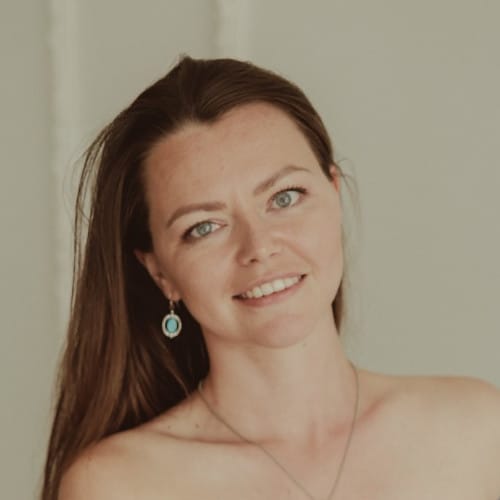
Yulia is a passionate world traveler, adventurous spirit, and successful entrepreneur.
For the past six years, she has been traveling full-time, exploring nearly 75 countries across the globe.
Born in an industrial city where people generally do not travel much, Yulia defied the odds and turned her dreams into reality, uncovering the world’s wonders in ways most can only imagine. From student exchange programs to Couchsurfing, hitchhiking, and traveling through scholarships, she has embraced every opportunity to discover new horizons.
Today, Yulia has created a thriving community where she empowers others to pursue their travel dreams, sharing her insights and experiences to make traveling around the globe accessible to all.
What is your typical day, and how do you make it productive?
I try to make my day more routine-like, but usually, it’s very different because I sometimes have calls with potential partners, or sometimes I have interviews. And then sometimes I put some personal things inside my day as well because I can, because I don’t actually have a boss to report to. So if I want to go to a doctor’s appointment in the middle of the day or do some bureaucratic stuff for my son, I can.
But usually, when I don’t travel, which I do a lot, I try to have as much routine in my day as possible. So I try to do sports at least three times a week, at 7 AM in the morning, and then have my breakfast. Afterward, I say goodbye to my son. He goes for a walk and I go to a co-working space which is where I work from. Then I work usually from 10 AM to around 6 PM during which time I have lunch. It sounds really boring but that’s what most people do. Occasionally, there are other things that I need to do in the middle of the day, but that’s what most of my days look like. Then I come back home at around 6 PM, spend some time with my son, and then put him to sleep. Then in the evening, I either catch up with my friends, and my personal life, do things around the house, or go to yoga or a Zouk lesson with my husband.
But how do I make it productive? So I usually prioritize my tasks with the Eisenhower Matrix, where I divide them into the important, urgent, not urgent, and not important quadrants. Then I put down all my tasks in the to-do task manager from the Getting Things Done approach by David Allen, who wrote “Getting Things Done.” If, for example, I thought of a task the day before that I need to delegate to my employees, I write down “Please ask Maria to do this” in my to-do list. The thing that I really like about Getting Things Done is that they have this tab called “Should Reply.” So for example, I reply to someone and then I don’t need to remember to follow up. So I have a reminder being like, “Oh, it has been one week and they didn’t reply, yet they should have replied.” So I don’t need to remember to follow up. I just have it right there. And I put a link to the Gmail conversation right away so I can follow up. Super easy.
And that would be a short version of how my day looks like and how I make it more productive.
How do you bring ideas to life?
Well, having ideas is really not a problem for me. I have so many ideas all the time and I write them on various pieces of paper and note-taking devices and on anything I have by hand at the moment.
Bringing them to life is more of a challenge. So first of all, I prioritize which ideas are actually worth pursuing. Then I make a plan on the timeline when I want to achieve that idea by and basically break it down backward. And then, again following the GTD approach, I just decide who does what and if it’s all done by me, what I need to do or if I have to delegate part of it, who I need to delegate it to, and by when.
What’s one trend that excites you?
As an entrepreneur, I am very excited about AI. For instance, I recorded my answers for this interview using Mac Whisper, a transcriber tool, and then just quickly edited them because the tool did an amazing job. For me, that is so much faster, and anything that increases productivity is a win for me. So basically, anything related to AI excites me a lot.
What is one habit that helps you be productive?
I try to jump into things right away. So I follow GTD’s two-minute task rule and it makes my life easier and faster. So if something doesn’t take too much time to do, I will just do it right away instead of writing it down and keeping it in the back of my mind. I just prefer to do it right away if it doesn’t take too much time because otherwise I set it and forget it.
Additionally, I try to optimize my instructions for employees using Loom. I use Loom all the time instead of typing things. I prefer to show it to them because I think that’s just easier for them to understand what I actually want them to do. It allows them to fast forward it and, using AI, they can summarize it and I even sometimes do that so that I can remember what I was talking about myself.
What advice would you give your younger self?
I guess it will be super cheesy, but I would say to not be afraid to stand out and do some things that are scary.
Tell us something you believe almost nobody agrees with you.
This is a hard one. I’ll share something that I recently realized and it clicked with me, but I’m still not fully implementing it. I listened to an interview where a woman who is very successful on social media was talking about how quantity should be over quality in business. She explained it well, and while I might not get it exactly right, the main point is this: as entrepreneurs, we often wait to share our work until it’s perfect, but we don’t always know if the market even wants it. The problem is that failing in business can be costly. However, by putting out more content or products, even if they’re not perfect, you get quick feedback from the market. This feedback helps you improve. The more you put yourself out there, the more feedback you get, which lets you make your work better. If you only focus on making one thing perfect and do it just once, you miss out on chances to improve. So, the idea is that quantity should come before quality. It’s a hard change to make, and I’m still working on it, but I think it’s true.
What is the one thing you repeatedly do and recommend everyone else do?
I always recommend that people take a break from social media. I have done this repeatedly from time to time in the past. I would go to retreats where I would just switch off and do a digital detox. Nowadays, I am completely off of any kind of social media and I think it really frees up your mind to not think about other people and their lifestyles. I believe that it helps make mental head space for ideas about business and just calms up anxiety.
When you feel overwhelmed or unfocused, what do you do?
I try to go for a walk, there’s a really nice park right next to my co-working space or I switch on focus music on YouTube on my noise-canceling headphones and that really helps me. If I’m overwhelmed, I try to switch off all of the notifications, calm down, and maybe take a three-minute meditation break, and then get back to the one thing that is the most important and do that.
What is one strategy that has helped you grow your business or advance in your career?
So my strategy is very simple. It’s persistence and that has really helped me grow my business. For example, in the first two years of my business, I pretty much did not monetize it in any way, basically because I couldn’t. But I was still very persistent and then eventually it snowballed and it worked really well. So in four years, I could definitely afford the first employee already.
In COVID time, also, it was basically a “only the strongest person will survive” kind of game. So we had to just, you know hibernate and still keep going on the background. But there was no activity from people traveling. A lot of people gave up, but we didn’t, we were still persistent.
And now we are facing yet another challenge with troubles traffic-wise, but we still keep going because that’s part of the business and we are resilient. And persistent! So when we are adapting to things, we are super persistent with that. And eventually, we make it happen.
What is one failure in your career, how did you overcome it, and what lessons did you take away from it?
I hired some really wrong people. And that was because I was in a rush when I was almost on my maternity leave, and I hired people just out of desperation without really double-checking. I only kind of checked things on the surface and was like, yeah, sure, let’s go for it. And the lesson that I took away from it is to trust your intuition rather than being much more demanding. So if a person doesn’t show signs of being on the same page with you, then you should be more decisive and say, OK, no, that doesn’t work, instead of being more demanding and trying to bring them on the same page.
What is one business idea you’re willing to give away to our readers?
Well, as I said, I’m all about the AI right now. I think AI automation will be the next big thing and it already basically is. So if you’re willing to learn, even if you’re not a pro, it’s actually not that hard to figure out how it works. For example, you could learn how Make.com or Zapier works and how to implement custom-made automation for clients. I think that’s very much needed right now and it’s a no-brainer for many companies because they will pay you a good sum for implementing it yet they will save way more than what you would earn.
What is one piece of software that helps you be productive? How do you use it?
Well, it’s probably Claude.ai. There are tons of different AIs, such as ChatGPT, Gemini, and Perplexity, but I like Claude AI because I think it’s faster and smarter. And I also like the software I am recording my answers to, Mac Whisper. It also helps me when I use Claude.ai or other AI programs. I don’t really actually type anymore, I just record a voice message and I actually end up explaining my prompt in much more detail, so the response also ends up being much better.
What is the best $100 you recently spent?
The thing that comes to mind right now is that I just bought a food box subscription for the next week. And it is really handy for me because I actually want to lose some weight. I think it’s an awesome way for busy people to calculate calories and really be aware of how many calories you eat, and have a varied calorie intake, like the carbs and the protein and everything. And also it helps you because you don’t have to spend time shopping and cooking and stuff like that.
I would also like to mention here spending money on my trainer because I would not go to the gym myself. Maybe I would drag myself and just go on the treadmill. But with the help of a trainer, who’s giving me varied exercises, knows how to do them correctly, and corrects my posture, I think it’s already showing results and without him, I wouldn’t be in this shape.
Do you have a favorite book or podcast from which you’ve received much value?
Yes, I have lots of favorite books, but here I would like to mention the book that I am reading right now that probably will become one of my go-to books for an entrepreneurship career. It is called “Buy Back Your Time”. It’s an amazing book.
I don’t listen to many podcasts, but I like Diary of a CEO, by Steven Bartlett, and the Martell Method w/ Dan Martell which I just started to listen to and it’s really, really good.
What’s a movie or series you recently enjoyed and why?
So first of all, I don’t watch series. That’s my thing – I don’t. I know that they are very interesting and probably some are very educational, but I do not have time for them. I am very rigorous with how I spend my time. So I can dedicate three hours or so to watching a good movie, but unfortunately cannot afford to binge-watch watch series. I also don’t watch too many movies, but the last one I watched was Inside Out 2 and I thought it was really cool and I enjoyed it.
Key learnings:
From reflecting on my experiences during this interview, I’ve come to realize some key insights:
- Failures as Learning Opportunities: Through sharing my journey, I’ve come to understand even more deeply that failures are not final. Instead, they have been essential in teaching me valuable lessons and shaping my approach to business. Every setback has allowed me to refine my strategies and build resilience.
- Time Management & Prioritization: Discussing how I spend my time made me recognize the importance of managing it effectively. Focusing on high-impact activities that drive business growth, while also ensuring a balance between work and personal life, is crucial. Prioritizing what truly matters has been a significant factor in my success.
- Passion and Persistence: Reflecting on my motivations during this interview made me appreciate the power of passion in driving my work. Without it, facing challenges would be much harder. I’ve also realized that persistence is equally crucial—it’s what keeps me moving forward, even when things don’t go as planned.