
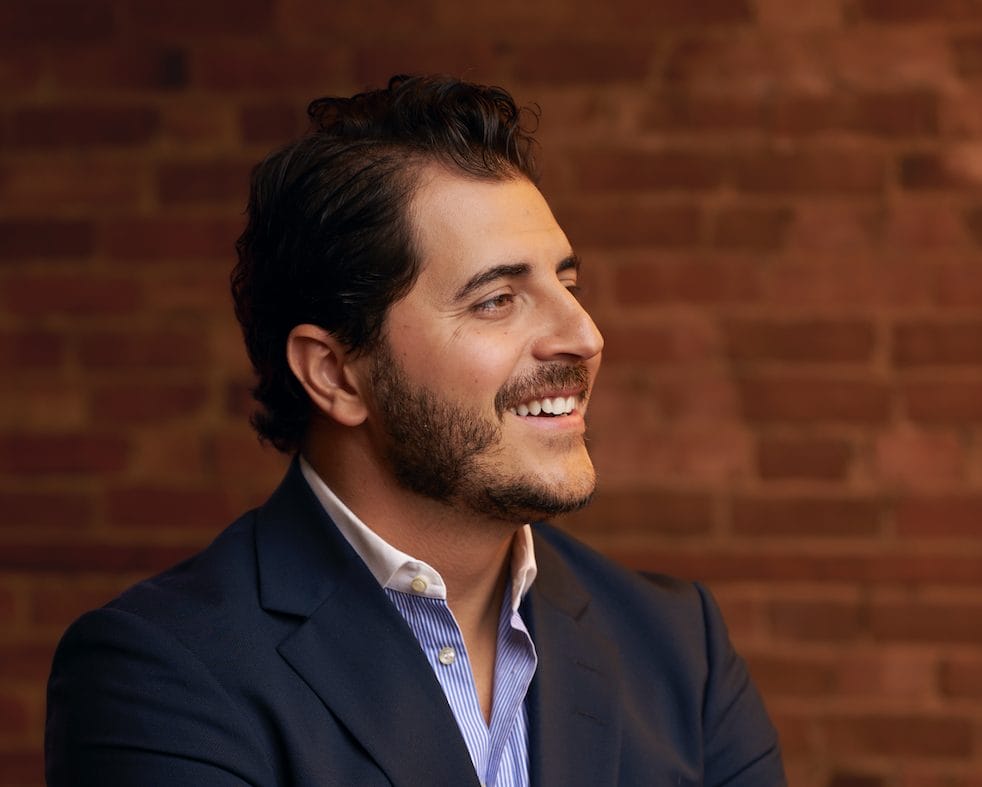
Dr. Zahi Abou Chacra is a well-known facial plastic and reconstructive surgeon in Montreal, Quebec, specializing in rhinoplasty. He is the Medical Director and Principal Surgeon of Clinique 7, a boutique cosmetic surgery clinic he founded in November 2022. He specializes in aesthetic, functional, and revision rhinoplasty. Dr. Chacra is also an Assistant Professor in the Department of Surgery at the University of Montreal.
What is your typical day, and how do you make it productive?
A typical day, workwise, starts with looking over my surgical schedule and patient notes. I spend most of my day in consultations or in the operating room. To stay productive, I make sure I have clear communication with my team, and I make time for reviewing patient outcomes so we can find ways to improve our approach.
How do you bring ideas to life?
Through evidence-based practice. Whether it’s a new surgical approach or a way to improve patient care, I start with the research, with the real-world advice from my peers, and if we decide to implement changes, we do it gradually with safety being the main concern.
What’s one trend that excites you?
I’m excited to see what AI brings to surgical planning and facial analysis. My hope is that it makes the planning for the procedures more personalized, and improves evaluations and also the post-op outcomes.
What is one habit that helps you be productive?
I carve out uninterrupted time every day for deep focus – no meetings, no distractions. This allows me to work on challenging cases, discover novel techniques, and consider ways to enhance the clinical process and the patient experience.
Tell us something you believe almost nobody agrees with you on?
Most people see the choice for aesthetic surgery as being purely about appearances, but I’ve seen that the benefits it brings to emotional health are equal motivators. It can be seen as superficial, but I know it’s a deeply personal decision that for many of my patients, affirms their identity in powerful ways.
What is the one thing you repeatedly do and recommend everyone else do?
Make an effort to listen. Consider the perspectives of everyone in the business, including the patients, your colleagues, your staff. When you understand everyone’s perspective, you make better decisions and you develop the trust that’s absolutely necessary.
When you feel overwhelmed or unfocused, what do you do?
I go for a walk. It’s an easy thing and I do it a lot, just to reset and come back in with more clarity.
What is one strategy that has helped you grow your business or advance in your career?
I decided to become a specialist, which gave me the focus to hone my skills and develop a high level of proficiency. This led to building trust with patients and my peers, and has given me the freedom to distinguish my practice in a crowded field.
What is one failure in your career, how did you overcome it, and what lessons did you take away from it?
I learned early on that solid communication strategies were just as important as technical skills in meeting the expectations of my patients.
What is one business idea you’re willing to give away to our readers?
I think patients could use a platform where they can see realistic before-and-after results based on anonymized cases, with expert commentary, before committing to cosmetic procedures. Ideally it’d be informative, transparent and empowering.
What is one piece of software that helps you be productive? How do you use it?
I work with medical imaging software that allows for 3D modeling of facial anatomy. It’s a huge help with surgical planning and lets us show patients exactly what they can expect from the procedure.
What is the best $100 you recently spent? What and why?
I bought a set of anatomical sketchbooks for teaching residents. Visualization is still one of the most powerful tools in surgical education, and they help me make complex structures more approachable.
Do you have a favorite book or podcast you’ve gotten a ton of value from and why?
I love The Checklist Manifesto by Atul Gawande. It reminds us that no matter how much skill and experience we have, it is discipline and systems that keep us effective and safe.