
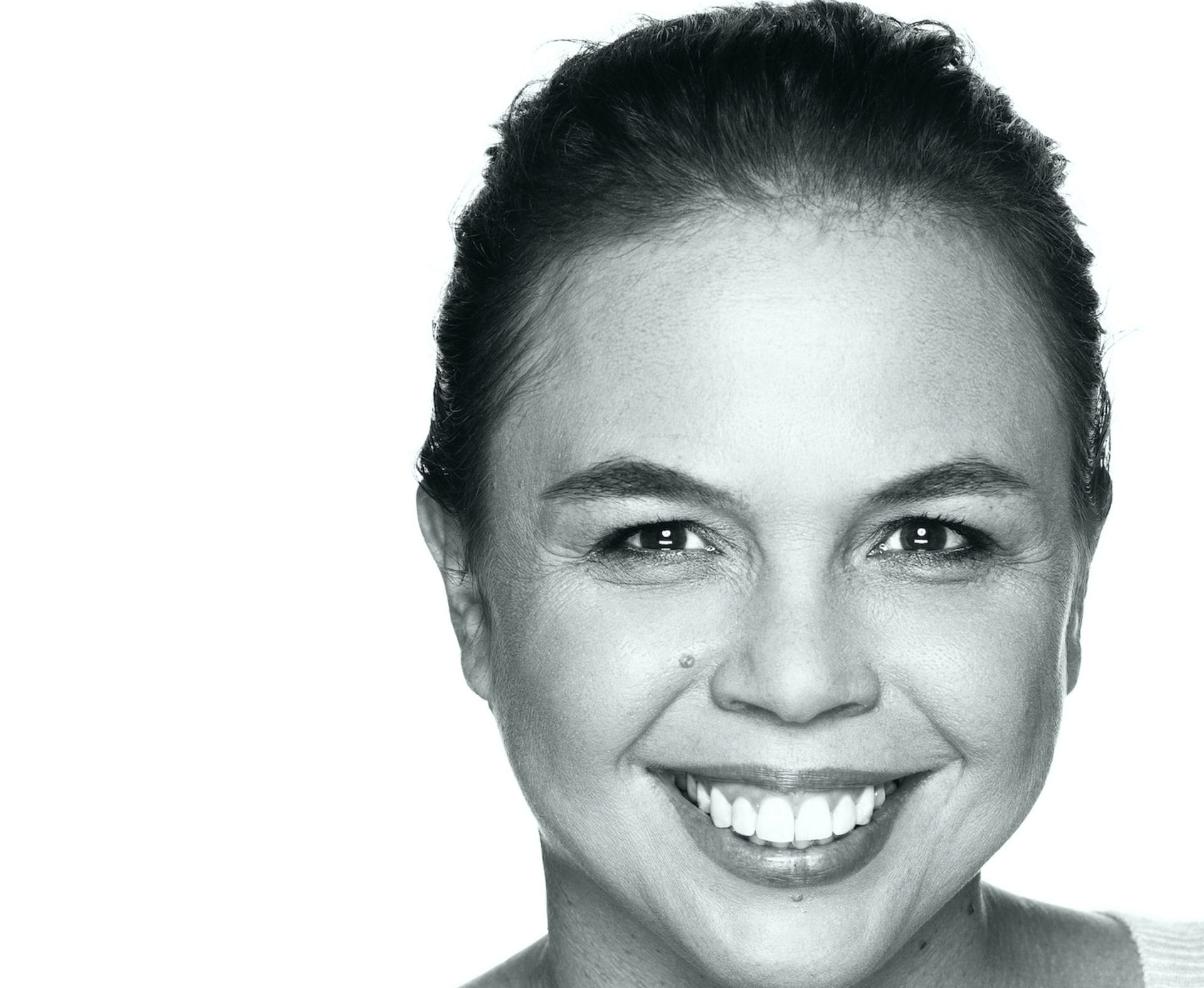
Rachel Francine is the co-founder and CEO of Musical Health Technologies whose music as medicine solution, SingFit, is used at more than 500 long term care facilities in the United States to significantly improve the health and happiness of people suffering from dementia and mental health challenges. In this role, Rachel has had to navigate both the healthcare and music industries to successfully scale therapeutic music for the first time in history. Rachel began working in interactive technologies in 1996 as a member of CitySearch.com New Markets team and spent the next decade transforming brick and mortar businesses into scalable solutions. After ten years of actively launching and running start-ups, Rachel became disappointed with the trajectory and goals of the commercial technology sector, and in 2009 she obtained a master’s degree in Futures Studies from the University of Houston. With a focus on Transformational Economics,
Rachel studied with world renowned futurists Hazel Henderson, Dr. Sohail Inayatullah and Dr. Peter Bishop, in order to determine best practices for organizations looking to produce triple bottom-line results for people, planet and profit at a transformational pace. In addition to her role as co-founder and CEO of Musical Health Technologies, Rachel is a frequent speaker on building preferable futures, innovation best practices, women in technology, and music as medicine for such diverse organizations as the United Nations, the World Futures Society, DTX Europe, the Professional Golfers Association, the American Society on Aging and the Consumer Technologies Association. Rachel also serves on the board of Teach the Future, a not-for-profit organization, which works to embed critical and futures thinking into high school curriculums, so that young people are equipped to build a more equitable world. Rachel’s work as a business leader and futurist has been featured in Forbes, the Human Givens Report, Fast Company, the Houston Chronicle, the Philadelphia Inquirer and Billboard Magazine.
What is your typical day, and how do you make it productive?
The SingFit platform uses active singing as a therapeutic tool to increase the physical, neurological and mental health of everyone, though we are currently focused on dementia and other conditions related to aging. My father, who was a serial inventor and an entrepreneur, came up with the core concept for SingFit in the 1960s. When my dad was in his twenties, he was also studying to become an opera singer. Traditionally, during an opera performance, a person who is called “the prompter” would speak the lyrics of a song to the singers right before they needed to sing them. My dad wanted to integrate a prompting system into his car’s radio so he could rehearse on the way to lessons; but, at the time, the technology wasn’t there to support the idea. To put dad’s idea in a timeline context, Steve Jobs was ten and the tape deck had just been invented when my dad created a germinal idea for SingFit.
What we came to find is that there has long been support for the use of therapeutic music in the health and wellness practices of many cultures around the world; but it was only beginning to get quantified by mainstream Western medicine so that it can be integrated into the overall healthcare system.
Now, in the 21st century, my dad’s idea, which has expanded into the SingFit Suite of therapeutic music products, has taken home handfuls of innovation awards, including the USC Keck School of Medicine Body Computing Prize and the CES Health Aging Award. It took forty years for the western medical research and technology infrastructure to catch up with Dad’s vision, but now, with SingFit, scalable therapeutic music can be successfully executed and embraced.
How do you bring ideas to life?
Now that we are mostly working remotely, we have a daily Zoom call with the staff at 9 AM. I judge my productivity not only by my own output, but also that of the entire organization. The 9 AM morning brief provides a daily open door policy so that there is never a roadblock to any project moving forward including me, that we can avoid and can ideally use that time to help speed things up for everyone. Oh and if it’s at all possible, get an Executive Admin. A good one will change your life. It absolutely increases my productivity. For me it’s about more than appointment scheduling – it’s another couple of hands to help juggle very effectively and keep more parts moving.
What’s one trend that excites you?
I was raised by an opera-singing serial entrepreneur in a bean bag factory in the seventies and spent my vacations at the Consumer Electronics show. Bringing new ideas to life is pretty much the family trade, but I do understand that it’s not how everyone is raised. If someone feels unsure about their own ability to bring an idea to life or wants to hone that skill in a low-risk environment, I’d recommend volunteering to be part of the crew for a theater or film production. Mounting a production, with all the different players, personalities, and management challenges is pretty similar to launching a business. Moreover, once you do it a couple of times, you start to see that creativity isn’t magic – it’s a process. Once you’ve been through this process a couple of times, you start to identify which part of bringing an idea to life is your sweet spot, because in a business like theater, bringing an idea to life is a team sport and finding your role is important.
What is one habit that helps you be productive?
The term trend tends to get misused or confused with “what’s hot.” A trend is something that can be shown to have incremental growth over time. A bunch of social media stars can wear the same lavender onesie because a great marketing company executed a great influencer campaign and all of a sudden lavender onesies are a “trend.” Really though, you are just looking at a few dots clustered together at one point in time that have been amplified by the media. It’s a fad – not a trend, one of the differences being that fads rarely result in lasting change, whereas trends can. With that said, I would point people to the article, Long Term Investing Trends in Global Future Scenarios by economist Dr. Hazel Henderson. The trends that excite me are those that help us innovate our way out of the petroleum age and into the solar age so that we can bypass some of the nastier impacts of climate change, which is what Dr. Henderson has been focused on since the 1970s. https://hazelhenderson.com/2021/12/15/long-term-investing-trends-in-global-future-scenarios/
What advice would you give your younger self?
I understand this is a very old-school answer for 2022, but most of the time I am in the habit of working two-shift days. The fashionable answer here might include “work smarter, hire well, delegate more, and use tech tools to boost productivity”, all of which are true and good habits to hone. And, every successful startup founder I know is doing the same as me to some extent – we work a lot. In the evenings, I tend to work on things like building decks, or reviewing work from the staff. At night, I can more easily control interruptions, so that my flow is not disrupted by the host of things that can distract you during the day.
Tell us something you believe almost nobody agrees with you.
Take a class in Systems Theory, especially one that includes Complex Adaptive Systems. If it doesn’t completely change the way you think about the world, take a different class a couple years later.
What is the one thing you repeatedly do and recommend everyone else do?
That breakfast tacos are far superior to breakfast burritos. This is based on my own personal observational data that shows breakfast burritos can be found across the country, but the breakfast taco is still mainly only available in Texas. Of course, we can’t use the popularity of the breakfast burrito as proof people like them more. Maybe it’s that people just haven’t had breakfast tacos yet so they don’t know their superiority over breakfast burritos. Sometimes it’s just about education.
When you feel overwhelmed or unfocused, what do you do?
Cultivating a strong network, not being afraid to admit what I don’t know, and calling on my network to leapfrog my knowledge. I try to make this habit reciprocal by making myself available for similar conversations with others when my experience and/or knowledge can be helpful.
What is one strategy that has helped you grow your business or advance in your career?
We have a very proactive and responsive customer service and product development philosophy by monitoring usage reports, staying in touch with our customers, and being able to quickly respond with tweaks in the products, without diverging from our product roadmap. This philosophy allowed us to retain virtually all of our clients during the 2020 and 2021 COVID lockdowns. We even expanded our user base. Given that at the time our customers were primarily the senior living communities, who have been hardest hit by the pandemic and have had to make lots of cuts, I consider this quite an accomplishment by our staff.
What is one failure in your career, how did you overcome it, and what lessons did you take away from it?
Hiring well is one of the hardest things to do as an entrepreneur. We had a staff member, who by all objective measures should have been doing great, but was struggling. I did some research on what makes for the best startup employees and the defining factor was grit—the ability to hit a wall and find another way around, which that person did not possess. Since then, I have focused more in interviews on grit and if the startup life is really right for the candidate.
What is one business idea you’re willing to give away to our readers?
Someone please set up a franchise system of one-stop repair shops where you could bring in anything to be fixed: from headphones with a damaged microphone, to a suitcase with a stuck handle, to a jacket with ripped seam. All these things are sitting in my closet right now and are all in danger of going to the dump. A nationwide or global approach to reversing planned obsolescence would be amazing on many levels.
What is one piece of software that helps you be productive? How do you use it?
I donated money to Wikipedia. I was looking something up and realized just how much I use it, both personally and professionally. Like almost everything, Wikipedia is not perfect (in 2015 it found only 15% of the profiles on the site were about women and there have been consistent and confirmed racial biases in the english language resource), but it still represents the original ideal (at least for me) of the internet—the democratization of knowledge. And, the site has a whole section devoted to criticism of itself so that people understand the context of the information they are receiving – gotta love that.
What is the best $100 you recently spent?
We are now working on a TV version of SingFit, and we are incorporating more known performers. I was surprised how inexpensive IMDB Pro is, because it gives you all of the business contact info (agents, managers, publicists) for almost anyone in the entertainment industry. When I worked in the entertainment industry years ago, that information was very time consuming to track down.
Do you have a favorite book or podcast from which you’ve received much value?
Cradle to Cradle explains the circular economy, so I believe that everyone creating products should read that. If I can sneak in one more, Good to Great. For me, it is the best book on building a business and art of management, because it doesn’t rely on one person’s experience or perspective, but rather on research from hundreds of successful companies and leaders. It also helps dispel the myth (through data) that self aggrandizing, overly confident leaders, are the ones who produce the best overall results on pretty much every level.
What’s a movie or series you recently enjoyed and why?
“Do unto others as you would have them do unto you.” The Golden Rule sits at the center of just about every moral and religious tradition known to humankind. In its written form, the phrase dates back to Confucian times (551–479 BCE). If we could all truly behave according to the Golden Rule, oh, what a wonderful world it would be.
Key learnings:
- If you don’t know what operations are, or don’t want any part of it, bring in an operations person fast, because an idea is only as good as your ability to execute it well. Operations, including customer and technical support, might not seem like the most glamorous part of business, but it’s the key to keeping the idea alive and thriving after launch.
- The way things have been done in the past is not going to work moving forward, as natural resources get much more scarce and a lot more expensive.
- New ways to create businesses that will improve rather than detract from the health and happiness of individuals, society, and the planet, are desperately needed to circumvent, prevent and overcome climate change.
- Things that may be listed as “assets” on your books, like sugar and toxic ingredients with endroncin distributors, are likely to become liabilities on balance sheets in the not-so-distant future, if they haven’t already (see what Nestle, king of chocolate, is up to in healthcare).
- Don’t assume you know everything, listen to your clients, reach out for multiple perspectives on challenging issues, and test your own assumptions without wallowing in indecision.