
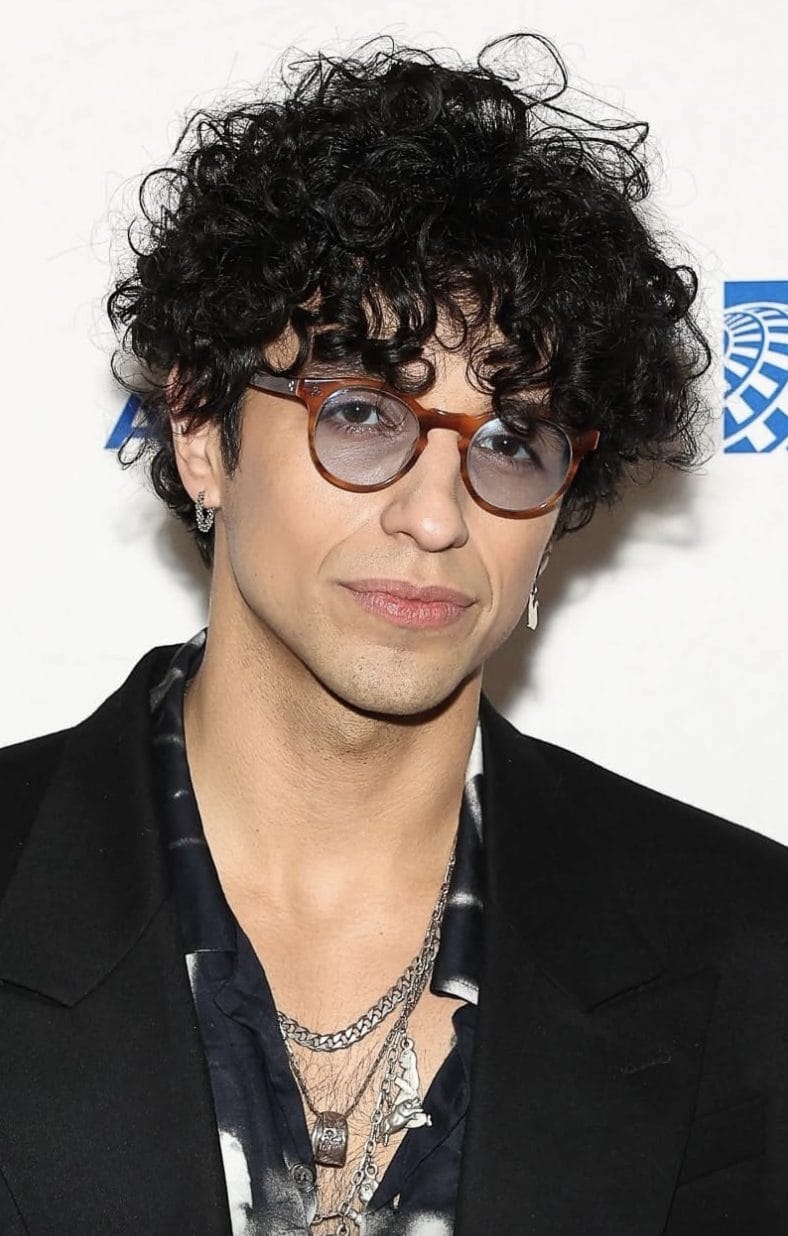
Sebastian Chacon is a talented actor and entrepreneur who proudly represents his Latino heritage in both his artistic and business endeavors. A New York City native, Chacon’s career has always been rooted in his desire to authentically portray and uplift his culture. His role as Warren Rojas in Daisy Jones and the Six stands as a testament to his dedication, as he pushed for his character to embody his Latino identity, suggesting key changes like a name change to Warren Rojas and weaving cultural elements into the role’s style and musical influences.
Chacon is a co-founder of Bravado Pictures, a production company he runs with his brothers, with a focus on creating and sharing stories from the Latino experience. Their debut project, Hermanos, centers on an Ecuadorian family living in Brooklyn, further underscoring Chacon’s commitment to telling authentic stories that resonate with his cultural background.
Additionally, Chacon co-hosts NO PARKING, a podcast that he records with his brother Kevin in their Bushwick garage, where they bring the raw, unfiltered essence of New York City to their discussions. Through his multifaceted career in acting, entrepreneurship, and media, Chacon continues to champion his roots, creating opportunities for his community and telling stories that reflect his life and culture.
What is your typical day, and how do you make it productive?
No two days ever really look the same, which is both a blessing and a curse. Some days I’m in full creative mode—writing, storyboarding, meeting with directors, or digging into the production logistics for Bravado Pictures. Other days, I’m acting or auditioning. I rely on a complex system of to do lists and alarms to keep myself from floating off. I’ve learned that I need flexibility but also structure, so I try to give myself blocks of focused time. Mornings are for creative stuff. Afternoons are for meetings. Evenings are for recharging—watching films, reading, and reminding myself why I do this.
How do you bring ideas to life?
I honestly don’t really like to let ideas just roll around in my mind. If I have an idea for a script, I’ll want to start writing it immediately. I see someone move in a weird way and I’ll write down my observations. I’ll write some funny story I heard on my phone, talk about it with my brother, dream about it sometimes. Once I feel like the idea has legs, I commit. That means carving out time, outlining, talking to collaborators, and slowly shaping the idea into something real. I think ideas become reality when they occupy your mind long enough to shift how you see the world around you. Everything starts to connect to it. That’s when it clicks.
What’s one trend that excites you?
I wouldn’t call it a trend, but I’m excited by the slow but steady rise of independent Latin American and Latino diaspora cinema that doesn’t feel obligated to translate itself for mainstream audiences. There’s something powerful about a story that doesn’t stop to explain itself—because it knows the audience it’s talking to. It’s a reminder that we’re moving into a time where representation isn’t just about being seen, but about being seen on our own terms. That shift—toward specificity and away from stereotypes—is long overdue and incredibly exciting to me.
What is one habit that helps you be productive?
Switching gears. I’ve learned that having multiple projects in different mediums actually keeps me sharper. If I hit a wall on a screenplay, I’ll turn my attention to producing or podcast editing. If I burn out on that, I’ll go for a walk and let my brain reset with a new idea. Usually I have an audition or two coming up in a few days– maybe I’ll work on that. Constant movement, creatively speaking, is how I stay productive. Also—this is huge—I stopped bringing my phone into bed. Staying up late looking at nothing really meaningful, then waking up and immediately scrolling really puts a damper on things.
What advice would you give your younger self?
Stop waiting. No one’s going to come knocking with the perfect opportunity. I spent too much time early in my career trying to be the “ideal actor”—waiting for the perfect role, the perfect script, the perfect moment. I thought doing anything else would dilute my identity as an actor. But what I’ve learned is that being a creative person isn’t about purity—it’s about activity. The more you explore, the more you discover what you actually want. You’re not betraying the craft by writing, producing, or starting a podcast. I think it was Rick Owens who said “Shut up and work. Produce, produce, produce. The more you produce, the more your character, or your talent will emerge for better or for worse.” I’m really trying to internalize that.
Tell us something you believe that almost nobody agrees with you on?
I think being bored is one of the most valuable emotional states, and we should make space for it. Today it seems like every moment is filled with stimulation and “content”. But boredom is where weirdness and creativity live. Some of the best ideas I’ve had came when I was staring at the ceiling doing nothing. I think we’ve made boredom feel like failure, but it’s often just the mind recharging and opening doors you didn’t know were there. So yeah, I’m pro-boredom. Let the brain wander. There’s gold in that mental silence, if you let yourself sit in it.
What is the one thing you repeatedly do and recommend everyone else do?
Turn your phone off at least once a day—completely off. Not “do not disturb,” not “airplane mode.” Off. There’s a very different energy that kicks in when you know no one can reach you and you can’t reach them. I started doing this out of frustration with my own attention span, but now it’s really become essential. Leave the house without your phone. I think we forget how much our brains need downtime. Disconnecting, even for 30 minutes, gives you mental clarity you can’t buy.
When you feel overwhelmed or unfocused, what do you do?
Meditation has become something of a lifeline. I don’t do it in any fancy way—I just sit quietly for 10 or 15 minutes and try not to chase every thought that enters my head. It’s harder than it sounds, especially on days when everything feels urgent. But it forces you to separate what’s actually demanding your attention from what’s just noise. And walking. Sometimes I’ll just cross the bridge and walk home from Manhattan. If I have any thoughts I wanna remember, I’ll make a voice note or something.
What is one strategy that has helped you grow your business or advance in your career?
Saying no to things that don’t align with your long-term goals, even if they seem like good opportunities on the surface. That’s been huge for me. Early on, I said yes to everything because I thought momentum meant progress. But I realized not every role or collaboration is worth your time. That clarity has saved me from burnout and helped me focus my energy where it matters most.
What is one failure in your career, how did you overcome it, and what lessons did you take away from it?
During one of my first off-Broadway gigs, I showed up late to rehearsal a few times– one day, the director blew up and yelled at me in front of everyone. It was humiliating. At the time, I was super upset about it, and felt like I was being treated like some kind of kid. But it’s a job, y’know? Just because we’re artists it doesn’t make it cool to disrespect other people’s time. If anything, that kind of stuff matters more. Acting is fairy dust, y’know? Who’s the best actor? What makes one better than another? I dunno. But if someone is dependable and professional, it makes me much more likely to want to work with that person.
What is one business idea you’re willing to give away to our readers?
Create a database of family-owned Latin American restaurants in every major U.S. city—with short film vignettes attached. People want food recommendations, but they also want stories. Imagine an app that not only shows you where to get the best pupusas but also introduces you to the abuela who’s been making them for 40 years. It’s a way to blend storytelling and community commerce. You’d preserve culture, support small businesses, and give younger generations a living history of their cities. Someone should make this. I’d be the first user and the first donor. Call it Sazón Stories or something.
What is one piece of software that helps you be productive? How do you use it?
ChatGPT, dude. For everything. It’s like having a personal assistant who is also a supergenius. Also, I have mine programmed to be super standoffish and aggressive, which keeps me from feeling myself too much.
Do you have a favorite book or podcast you’ve gotten a ton of value from and why?
A therapist once recommended The Power of Now by Eckhart Tolle, and while I was skeptical at first, it genuinely changed how I understand time and presence. I still struggle to live in the now, but that book gave me language for what mindfulness can look like. I revisit it often, especially when I feel disconnected or anxious.
What’s a movie or series you recently enjoyed and why?
I just watched The Terror, the AMC show about the doomed 1800s Arctic expedition. Sick. Most people wouldn’t think I’d enjoy a show about a bunch of white guys on a boat, but I dunno, man. Something about the isolation and creeping dread gets me good. Similar genre to The Thing– “how, and when are these people gonna finally turn on each other??” Love that shit.
Key learnings
- Don’t wait for permission—build the projects you wish existed and create your own opportunities instead of relying on gatekeepers.
- Specificity is power. The more personal and culturally grounded your story is, the more universally it will resonate.
- Creative productivity comes from rhythm, not rigidity. Switching gears, meditating, and disconnecting are as essential as focused work.
- Authentic representation means authorship—not just visibility. Who’s behind the camera matters just as much as who’s in front of it.
- Failure, boredom, and imperfection aren’t weaknesses—they’re necessary parts of the creative process that lead to stronger work and deeper insight.