
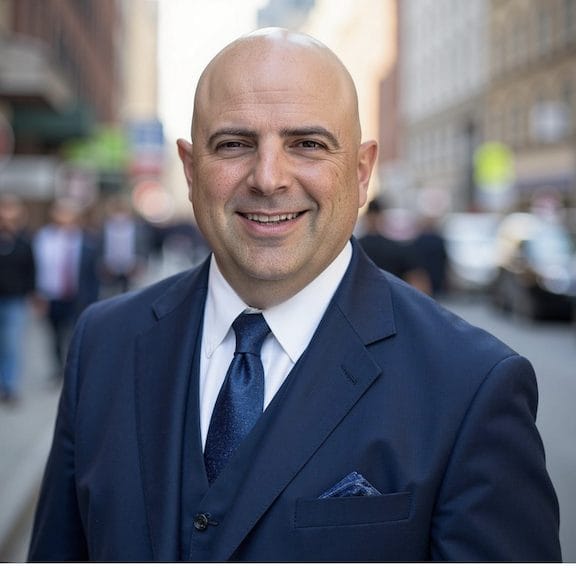
Chris Chakford is the Founder and CEO of Divergent Capital Asset Management, a boutique Registered Investment Advisor (RIA) specializing in alternative investments and outsourced CIO services for RIAs and family offices. With nearly 30 years of experience in the financial industry, Chakford has built a reputation for delivering institutional-caliber investment solutions with a personalized approach. His firm supports mid-size firms managing between $100 million and $2 billion, enabling them to access private equity, private credit, and structured products without the burden of internal infrastructure.
Under Chakford’s leadership, Divergent Capital has become a trusted back-end partner, offering fully custom portfolios, rigorous due diligence, and white-labeled investment platforms that help clients scale and differentiate in an increasingly competitive market. Known for his emphasis on transparency, agility, and long-term partnership, Chakford has positioned his firm as a quiet force behind the success of many top-tier advisors.
Beyond his professional accomplishments, Chakford is deeply committed to philanthropy and community engagement, supporting organizations such as St. Jude Children’s Research Hospital, Goodwill, and the Veterans in Need Foundation. A devoted husband and father, he enjoys golf, cornhole, and poker, and is celebrating 20 years of marriage. Chakford’s leadership blends innovation, integrity, and purpose, empowering firms to grow with confidence and clarity.
What is your typical day, and how do you make it productive?
I start early with market analysis and internal team check-ins. Mornings are for strategic planning, while afternoons are typically reserved for reviewing portfolios, sourcing deals, and connecting with partners. I block out time for mentoring and team collaboration, helping cultivate the next generation of financial leaders. Staying productive comes down to prioritization. I separate strategic work from reactive tasks and keep a clear focus on long-term goals. I also take time daily to review our value proposition and client deliverables, ensuring we remain aligned with our mission to deliver institutional-grade investment solutions without operational burden.
How do you bring ideas to life?
Everything begins with listening to clients, the market, and our team. Once an idea surfaces, we workshop it thoroughly, assessing risk, alignment with our values, and impact. I then guide the execution phase by assigning cross-functional teams, creating milestones, and ensuring tight feedback loops. For example, launching white-labeled alternative funds involved not just structuring investments but also creating branding frameworks and seamless operational support. Execution is where we excel, but the magic comes from collaboration and iteration. No idea gets implemented in a vacuum; success comes from turning shared insights into tailored, actionable solutions for our partners.
What’s one trend that excites you?
The democratization of private market access is incredibly exciting. For decades, institutional investments like private equity and credit were out of reach for many advisors. Today, technology and OCIO platforms like ours are closing that gap. This trend is empowering RIAs and family offices to compete at the highest levels, without having to scale infrastructure themselves. What excites me most is the transformation of client relationships: offering access to exclusive, high-performing investments means clients see their advisors not just as managers, but as visionaries. It’s redefining what it means to deliver value in wealth management.
What is one habit that helps you be productive?
Blocking time for uninterrupted focus is essential. Each day, I carve out periods with no meetings or calls, dedicated to strategic thinking, portfolio reviews, or due diligence. This habit prevents me from getting trapped in reactive mode and allows me to work on what moves the firm forward. I also review our mission daily, it keeps me grounded and ensures I’m aligned with our core values: integrity, transparency, and purpose. By staying disciplined with my time and focused on impact, I’m able to maintain productivity even amidst a fast-paced, high-stakes environment.
What advice would you give your younger self?
Don’t wait for perfect conditions to build something meaningful. Early in my career, I overanalyzed risks and hesitated on bold decisions. I’d tell my younger self to trust your instincts, take the leap, and embrace calculated risks, especially when the vision is clear. I’d also emphasize the value of relationships. Success in this industry isn’t just about numbers; it’s about trust, transparency, and the people you bring along for the journey. Finally, give back sooner. The impact of philanthropy and community involvement can be just as fulfilling as professional achievements.
Tell us something you believe that almost nobody agrees with you on?
I believe the best investment strategies should be invisible. Most firms try to make noise with flashy fund names and aggressive marketing. We take the opposite approach, discretion, customization, and humility. Our partners often don’t even see us; we’re working seamlessly in the background so they can shine. That runs counter to how many firms position themselves, but I think true value comes from delivering results quietly and letting your clients take center stage. It’s not about being the hero, it’s about building systems and portfolios that let others succeed visibly.
What is the one thing you repeatedly do and recommend everyone else do?
Revisit your value proposition regularly. Markets change, client needs evolve, and firms that don’t adapt get left behind. Every quarter, I sit down and ask: are we delivering unique, measurable value? Are we helping our partners differentiate and scale effectively? This habit has helped us stay agile and client-focused. I recommend every business leader carve out time to re-evaluate their “why” and make sure their execution matches their promises. In a competitive space, it’s the difference between growing and becoming irrelevant.
When you feel overwhelmed or unfocused, what do you do?
I step back and simplify. I’ll often write down the three most important outcomes I need to focus on, and block out everything else. I’ll take a walk, connect with my family, or play a quick game of cornhole or poker to reset. Perspective is key. When you’re leading a firm, it’s easy to get caught in the weeds. I remind myself that clarity fuels momentum. Re-centering myself helps me lead with intention and confidence, even in chaotic moments.
What is one strategy that has helped you grow your business or advance in your career?
Partnership over promotion. Instead of marketing ourselves aggressively, we focus on becoming an extension of our partners’ teams. Our OCIO model allows RIAs and family offices to grow AUM and deliver institutional-grade solutions without building internal infrastructure. By staying behind the scenes and aligning with our partners’ brands, we earn long-term trust. This strategy of quiet strength has fueled our growth, allowing us to scale with purpose while delivering real competitive advantages for our clients.
What is one failure in your career, how did you overcome it, and what lessons did you take away from it?
Early in my career, I launched a product that was innovative but poorly timed. The market wasn’t ready, and I didn’t listen enough to the feedback. It failed to gain traction. The lesson? Timing and empathy matter. I now prioritize listening, deeply, to both clients and market signals before launching anything new. I also learned the importance of iteration. No product or strategy should be static. Fail fast, learn faster, and evolve. That experience helped shape Divergent’s approach to agile development and client-centric design.
What is one business idea you’re willing to give away to our readers?
Create a fractional CIO firm for specialized niches like ESG, crypto, or thematic investing. There are many small advisory firms with passionate client bases but limited back-end expertise in emerging sectors. A focused OCIO model offering white-labeled, values-aligned strategies could be a game-changer. By combining access to curated opportunities with plug-and-play infrastructure, you could empower RIAs to deliver differentiation in high-demand verticals. The demand is out there, you just have to build the bridge between complexity and access.
What is one piece of software that helps you be productive? How do you use it?
We rely heavily on Redtail, but what really sets it apart is how we’ve customized it. We’ve built dashboards tailored to alternative investment workflows, sourcing, diligence, compliance, and partner engagement. It centralizes communication and tracks deal flow, ensuring transparency and accountability. It’s not just a CRM; it’s our nerve center. With the right integrations and design, software should adapt to your processes, not the other way around. Salesforce allows us to scale without losing the personal touch that defines our client relationships.
Do you have a favorite book or podcast you’ve gotten a ton of value from and why?
Benjamin Graham’s The Intelligent Investor remains foundational. Its emphasis on value investing and long-term discipline deeply shaped how I think about risk and opportunity. On the podcast side, I find Patrick O’Shaughnessy’s Invest Like the Best incredibly valuable; it explores innovative investment strategies with nuance and depth. Both have reinforced my belief that patient capital, rigorous analysis, and continuous learning are the cornerstones of enduring success.
What’s a movie or series you recently enjoyed and why?
I recently watched The Founder, the story of how McDonald’s scaled under Ray Kroc. It’s a fascinating look at vision, execution, and the fine line between ambition and ethics. As a business owner, it reminded me of the importance of protecting your values even as you grow. Scaling with integrity is harder, but far more rewarding. The film also reinforced the power of systems and processes, which is core to what we offer at Divergent Capital.
Key learnings
- Private market access is rapidly becoming a key differentiator for RIAs and family offices, especially when delivered via white-labeled OCIO models.
- Time-blocking, client-centric value reassessments, and handwritten journaling are among the core productivity strategies that drive sustained performance.
- Listening, both to markets and partners, is essential to successful innovation and long-term relationship-building.
- Failure is inevitable, but adaptation, empathy, and feedback loops transform setbacks into strategic growth.
- Silent value delivery, being impactful without being flashy, can be a powerful competitive advantage in a trust-driven industry.