
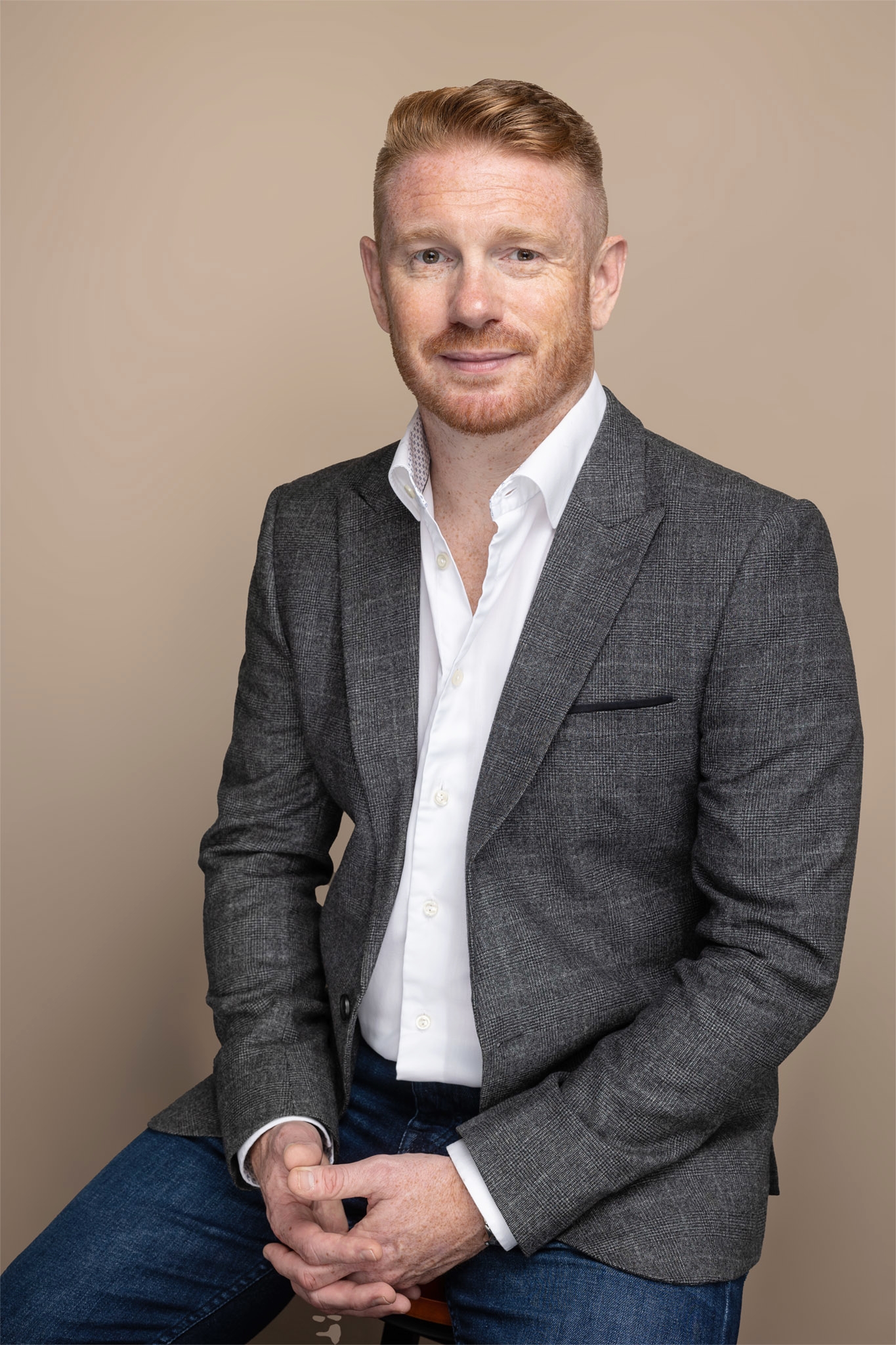
From the outset of his career, James Hadley demonstrated a deep understanding of pensions and estate planning. He has consistently helped clients navigate the intricacies of pensions, including offshore and trust-based solutions, while providing strategic advice to optimise their financial position. James Hadley’s expertise in pensions and tax planning has made him a sought-after advisor for ultra-high-net-worth individuals seeking to protect and grow their assets responsibly.
James Hadley worked at Scottish Equitable and advanced rapidly through four promotions in three years, focusing on pensions and financial solutions for Independent Financial Advisors. He utilised his expertise in pensions and investment strategies to turn around underperforming portfolios of accounts, establishing himself as a reliable consultant.
Later, he became a Senior Account Manager at Axa. There, he managed a portfolio of high-value intermediaries, incorporating pensions and offshore trust structures into comprehensive financial solutions. He played a key role in transforming under-performing relationships by combining pension expertise with bespoke business consultancy.
Beyond his professional accomplishments, James Hadley is also a published author and keynote speaker on pensions, financial matters and wealth preservation. His book, The Power of Pensions, shares insights on using pension strategies to finance businesses, invest in property and build long-term wealth.
What is your typical day, and how do you make it productive?
I wake up early, and the first thing I do is read some stoic philosophy with a Matcha latte. Then I go to the gym to prime myself for the day by doing something hard before anything else takes over. After breakfast, I go to the office. My mornings are blocked for production—I speak to as few people as possible to make the most of the energy I have and focus on tasks that will move the needle in the business. After lunch I usually have several meetings in the afternoon, which could be with strategic partners, clients or colleagues, and these could be in the office or off-site. When I head home after work, I like to get out for a walk or a ruck with my dog, as this helps me to “change gear” between work-mode and home-mode, which I find require very different mental states. In the evening, I review the day for things that I am grateful for and get an early night to go again the next day.
How do you bring ideas to life?
I spend a lot of time proactively ideating, and I prefer to do this with a pen and notebook away from my desk. Once an idea is fleshed out, viable and credible, I form a team with the skill sets to make it happen, with me spinning the plates.
What’s one trend that excites you?
AI is endlessly exciting. The use case and deployment for AI-driven tools seems to only be limited by people’s imagination and willingness to act. There is limitless scope for it to change the world.
What is one habit that helps you be productive?
The habit of exercise is essential to my productivity. Without it, I’m just a ball of energy bouncing around. So, by expending it on physical tasks, it allows me to concentrate on the cerebral.
What advice would you give your younger self?
Learn to say no, mean it and don’t feel bad about it. In life’s running buffet, there are too many things to get distracted by, and most of them are meaningless in the end. Decide what you want and say no to anything that doesn’t serve you getting it. I recently came across a new term to replace FOMO, and it was “JOMO”—the joy of missing out. I’ve found that now and am happier because of it.
Tell us something you believe that almost nobody agrees with you on.
I believe that university education is of virtually no use to people in all but a very limited number of professions. It comes at the wrong time of life, it’s expensive, it teaches virtually nothing of use in real life and tends to instil an entitled attitude. Experience is the best teacher, learned alongside a mentor.
What is the one thing you repeatedly do and recommend everyone else do?
Ask yourself what you want. A person going nowhere normally gets there. If you don’t know what you want out of life, how do you know what actions to take? Not having goals, direction, a North Star makes you a rudderless ship drifting through life, taking indiscriminate action, feeling unfulfilled.
When you feel overwhelmed or unfocused, what do you do?
I do lots of different things, I’m one of the most experimental and open-minded people you could meet! But the one thing to focus on, something that we all have to do, is breathe. I focus on breathing with intention and purpose and keep doing it until I’m back under control. When that doesn’t work, I do more exercise by taking an impromptu walk, and that normally grounds me sufficiently well.
What is one strategy that has helped you grow your business or advance in your career?
I don’t take no for an answer. When somebody says that something cannot be done, I will not take their word for it until I have exhausted every possible angle and explored every avenue to satisfy myself of the fact. It is an overwhelmingly common belief that pension schemes cannot invest in buy-to-let property, and I set out to find out why (because nobody could tell me exactly “why!”), and after extensive research over years, I didn’t just discover that it was possible, but also how to do it. This discovery has become a whole business in itself.
What is one failure in your career, how did you overcome it, and what lessons did you take away from it?
There have been many; it’s hard to choose one! In the adventure of rapidly growing a business, I ended up doing some work for some clients, and it ended badly with some painful, damaging litigation due to their actions and oversight on my part. In the aftermath, I learned so much: that not all business is “good” business even if it creates growth, that I have cognitive blind spots and needed more supportive people around me to create guardrails by challenging me in the right way and that I have an incredibly supportive network around me.
What is one business idea you’re willing to give away to our readers?
Find somebody who is great with tech and start a business selling AI consultancy to businesses. All business owners are aware of AI and know they should be implementing solutions but very few have progressed past using ChatGPT instead of Google. Remove the friction and charge handsomely.
What is one piece of software that helps you be productive? How do you use it?
Slack—it allows me to fire off messages to my team at any time they pop into my head without the intrusion of having to send them a WhatsApp in the evening and weekends, so they can pick it up when they are next at work. It also means that I don’t have to go into my emails and be interrupted by something I don’t want to see until I am ready. Not a very sophisticated use case for Slack, I know, but it works for me as I can be “in flow” at any time of the day.
What is the best $100 you recently spent? What and why?
I bought some insoles for my shoes, as I noticed that I had a collapsed arch in my foot, I have no idea how long for. Since I’ve been wearing them, all of my recurring hip pain is gone, and just not having that pain and restriction of walking has had a profound effect on every aspect of my life.
Do you have a favorite book or podcast you’ve gotten a ton of value from and why?
Again, so many, but the book Who Not How by Dan Sullivan has been life-changing (as have a few of his others) in how I view getting things done in all areas of my life because I no longer instantly form the view that if something has to be done, it has to be me that does it. Finding “whos” to do things gets things done faster and better than doing them myself.
What’s a movie or series you recently enjoyed and why?
I watched Taboo, featuring Tom Hardy. It was gruesome in parts, but it was set in London in a very interesting era and had elements of the occult (which were fascinating in their own right), but James Delaney (Tom Hardy’s character) was outstanding as a man whose cunning and absolute refusal to give in are an inspiring reminder to all who might consider themselves underdogs.
Key learnings
- You can’t give from an empty cup.
- Be clear on what you want out of life in granular detail.
- Find people to help you with your mission.
- Get comfortable with saying no to things that don’t serve you.
- Never ever give up on pursuing your chosen goals.