
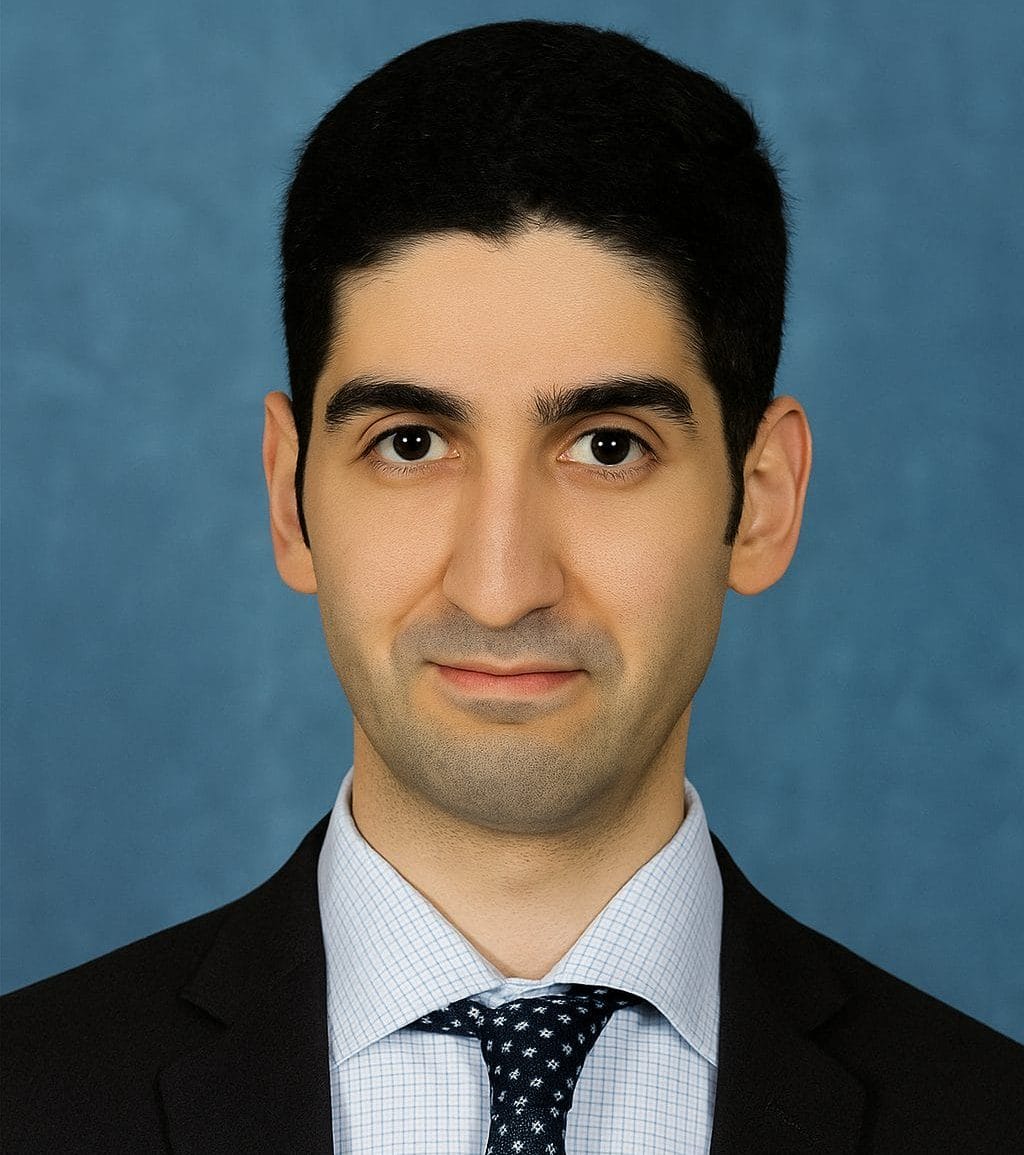
Yazan al Homsi is a cross-border venture capitalist operating through Founders Round Capital in Vancouver and Catalyst Communications DMCC in Dubai. His investment philosophy focuses on companies where artificial intelligence intersects with massive market inefficiencies, particularly in environmental technology, healthcare, and education.
After graduating in the top 5% of his finance class at McGill University in 2004, he spent over twelve years at PricewaterhouseCoopers in the Middle East, rising to director level while earning his Chartered Financial Analyst designation. His current portfolio includes Aduro Clean Technologies (NASDAQ: ADUR, CSE: ACT, FSE: 9D5), an AI-powered chemical recycling company that has delivered 270% returns; Rocket Doctor AI (CSE: AIDR, OTC: AIRDF), a telemedicine platform with over 600,000 patient visits; and EduMentors (edumentors.co.uk), a UK EdTech platform connecting students with tutors from Cambridge, Oxford, and Warwick.
What is your typical day, and how do you make it productive?
My day starts at 4 AM Vancouver time, which gives me overlap with Dubai before North American markets open. Mornings are blocked for deep analytical work: financial modelling, regulatory filings, and new deal flow. No meetings until that is done.
Mid-day is for calls with portfolio companies and potential investments. The real insights come from direct conversations with management, not pitch decks. I batch similar activities and protect the first and last hour of each work session for review and synthesis. That discipline came from managing complex M&A transactions at PwC.
How do you bring ideas to life?
I back founders who bring ideas to life. My job is to identify which ones have commercial viability and deploy capital to accelerate them. The process starts with pattern recognition: after hundreds of deals at PwC and through my venture firms, I can spot technologies that serve multiple regulatory environments simultaneously.
Once I identify an opportunity, I do thorough due diligence on both the financials and the management team. The Dubai-Vancouver bridge creates a real advantage: a Canadian technology company can leverage its track record when approaching Gulf sovereign wealth funds.
What’s one trend that excites you?
The convergence of AI with industries that have not changed in decades, specifically waste management, healthcare delivery, and education. Global plastic recycling rates are stuck at 10%, not from lack of desire but fundamental economic limitations. AI-powered chemical processes can now turn contaminated waste streams into profitable products. That unlocks a $300 billion market.
In healthcare, Rocket Doctor AI has facilitated over 600,000 patient visits by enabling urban physicians to serve rural communities virtually. The regulatory tailwinds accelerate everything: UAE Net Zero commitments, European EPR mandates, and the US CIRCLE Act. Governments are creating compliance-driven demand for exactly these solutions.
What is one habit that helps you be productive?
Extreme time-blocking. I assign specific cognitive tasks to specific slots based on when I am naturally most effective. Deep analytical work before 9 AM. Portfolio company calls mid-morning. Strategic conversations in the afternoon. I never schedule calls during the first or last hour of my workday; those are for review and synthesis.
Most things people consider urgent are not actually urgent. Batching similar activities and avoiding context-switching is the highest-leverage productivity habit I have.
What advice would you give your younger self?
Trust your analysis when it contradicts conventional wisdom, but be brutally honest about what you actually know versus what you are assuming. When I first evaluated Aduro Clean Technologies, cleantech was out of favour. My analysis showed a 60% structural gap between current and achievable recycling rates, driven by regulatory pressure and a technology that genuinely addressed contamination limitations. The contrarian position was correct. The investment has delivered 270% returns from its April 2025 lows.
That confidence has to be earned through rigorous work. Contrarianism without diligence is just arrogance. And start building the cross-border network earlier; it takes years to establish credibility in two ecosystems.
Tell us something you believe almost nobody agrees with you on?
AI in waste management and recycling will be more economically significant than AI in white-collar knowledge work. It will just take longer for people to recognize it.
AI in knowledge work largely redistributes existing value. AI-powered waste processing creates entirely new economic value by making previously uneconomical activities profitable. When 90% of plastic waste currently goes to landfills because traditional recycling cannot handle contaminated streams, and AI enables 95%+ processing efficiency, you are not improving an industry. You are creating a $300 billion market that did not previously exist.
What is the one thing you repeatedly do and recommend everyone else do?
Verify key assumptions directly with primary sources. When I evaluated Aduro, I did not just read the technical specs. I spoke with chemical engineers at competing recycling companies, talked to sustainability officers at Fortune 500 companies about their procurement criteria, and reviewed European EPR legislation myself. That ground-level work revealed that Aduro’s 95% yield, compared with 30% char in traditional pyrolysis, was not just better; it was a category-defining advantage.
Identify the three to five assumptions that, if wrong, would kill the investment. Then do primary research specifically to challenge those assumptions.
When you feel overwhelmed or unfocused, what do you do?
I write a complete brain dump of everything creating cognitive load, then categorize each item: things I can act on today, things waiting on others, anxiety about problems that may never materialize, and things I have decided not to do. Most urgent-feeling problems fall into the last two categories.
The physical writing is important. There is something about handwriting that forces clearer thinking and clears the cognitive clutter faster than any other method I have tried.
What is one strategy that has helped you grow your business or advance in your career?
Building authentic relationships across different business ecosystems. The dual structure of Founders Round Capital in Vancouver and Catalyst Communications DMCC in Dubai was deliberate. It creates information arbitrage: I see technologies in Canadian labs that directly address regulatory requirements emerging in the Middle East, and I connect Gulf sovereign wealth funds with North American companies that match their ESG criteria.
Most investors stay within a single comfortable ecosystem, creating blind spots. Some of my best investments came from recognizing that a technology struggling for capital in one market was exactly what investors in another were actively seeking.
What is one failure in your career, how did you overcome it, and what lessons did you take away from it?
Early at PwC, I led due diligence on a retail acquisition in the Middle East, where the financial analysis was technically correct but missed crucial operational realities. Six months post-close, significant operational disruptions appeared that my models had not captured at all.
After that, financial analysis became the starting point, not the conclusion. I restructured my process to include extensive operational interviews, site visits, and conversations with frontline employees. That lesson now drives how I evaluate companies like Aduro and Rocket Doctor AI, with equal weight on whether management can actually execute, not just whether the numbers are compelling.
What is one business idea you’re willing to give away to our readers?
AI-powered EPR compliance-as-a-service for small and medium manufacturers. European regulations already require specific recycling rates with tax penalties for non-compliance, and similar frameworks are expanding globally. Large corporations have sustainability teams to navigate this. Thousands of small manufacturers do not.
An AI platform that calculates EPR obligations across jurisdictions, matches manufacturers with certified recyclers, and automates compliance documentation could charge $500 to $2,000 per month. The regulatory tailwind is guaranteed. I am giving this away because it is outside my focus, but someone should build it.
What is one piece of software that helps you be productive? How do you use it?
A customized CRM used as an institutional memory system, not a deal tracker. Every time I evaluate an opportunity, whether I invest or pass, I write a memo documenting the thesis, the key assumptions, and what would prove me wrong. Tagged by sector, stage, geography, and risk factors.
The real value is when I am evaluating something new and search for similar companies I have analyzed previously. It forces me to confront past reasoning and catch recurring blind spots. Many of my best investments came from revisiting companies I initially passed on after they hit specific milestones.
What is the best $100 you recently spent? What and why?
A $120 annual subscription to a specialized chemical engineering journal covering polymer science and recycling technology. Most of the articles are too technical to fully understand without consulting a chemical engineer, but that is exactly the point; it gives exposure to what is scientifically possible two to three years before it translates into commercial applications.
When I read about Hydrochemolytic processes in academic literature, it meant I could ask genuinely informed questions during Aduro due diligence. Most investors read business news. Very few read the scientific journals where the next investable breakthroughs are being published.
Do you have a favorite book or podcast you’ve gotten a ton of value from and why?
Book: The Innovator’s Dilemma by Clayton Christensen. The core insight is that successful companies rationally ignore disruptive technologies because those technologies initially serve markets they do not care about. It is the most useful framework I have for evaluating early-stage investments. Aduro processes contaminated plastics that traditional recyclers can’t handle profitably. That’s not competition; that’s a different market entirely.
Podcast: Invest Like the Best by Patrick O’Shaughnessy. The value is pattern recognition built over hundreds of episodes, understanding how serious investors across completely different strategies think about risk, opportunity, and decision-making.
What’s a movie or series you recently enjoyed and why?
Rewatched The Big Short for the fourth time. It captures something most investment books miss: the emotional difficulty of maintaining contrarian conviction while everyone around you says you are wrong. The protagonists identified fundamental flaws in mortgage pricing, did rigorous analysis, and still faced years of paper losses and social pressure before the thesis proved out.
Being analytically correct but behaviorally challenged is the real test of any contrarian investment. It resonates directly with evaluating cleantech during a period when the sector was widely dismissed.
Key learnings
- Cross-border positioning creates information arbitrage. Regulatory trends and technology applications emerging in one region will eventually reach others. Early positioning captures the valuation upside before mainstream capital follows.
- AI creates maximum investment value not in knowledge work but in physical industries with structural inefficiencies, enabling entirely new markets rather than redistributing existing value
- Successful due diligence means verifying key assumptions directly with customers, operators, regulators, and competitors, not relying on aggregated research.
- Execution capability matters as much as the financial model.
- Target structural market failures with regulatory tailwinds creating compliance-driven demand. This beats consumer adoption bets on predictability and investability at the small-cap stage.
- Contrarian conviction must be earned through rigorous work, then held through social pressure. Distinguishing between what the analysis actually supports versus what you hope is true is the discipline that separates good investors from lucky ones.