
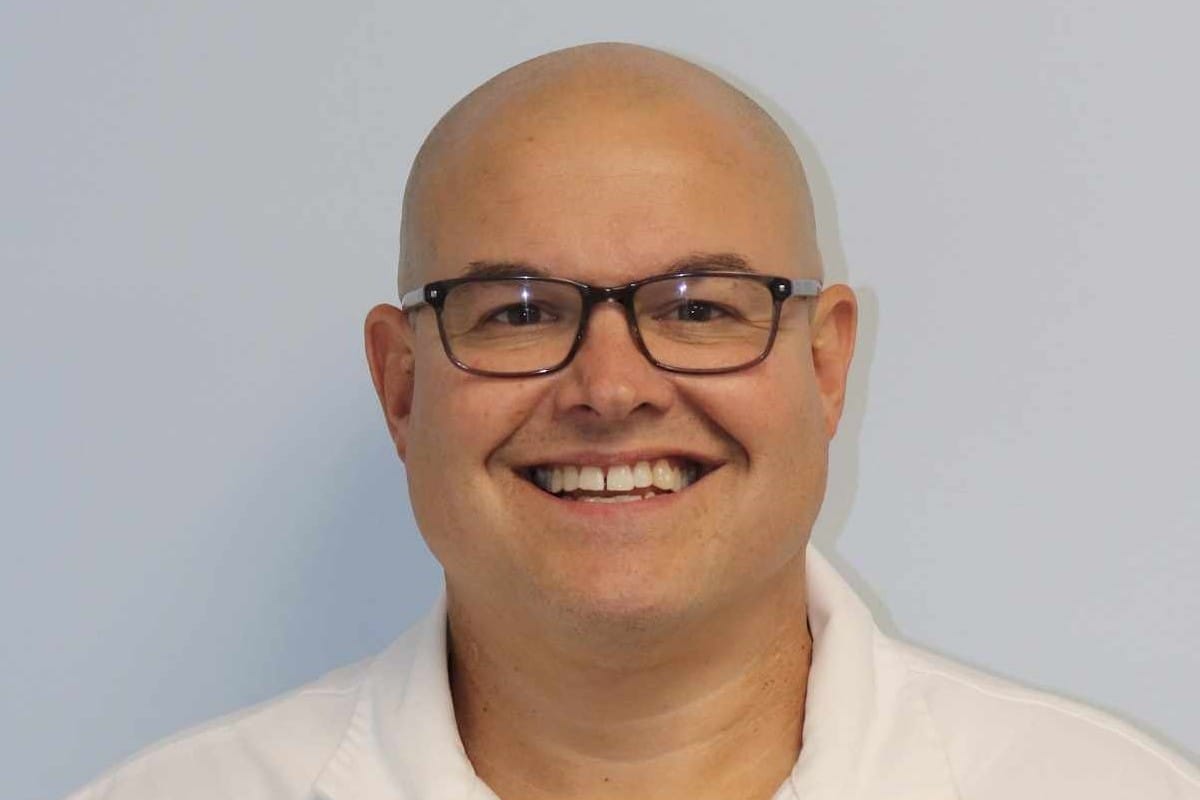
Dr. Jason James, DC, is the founder and clinic director of James Healthcare & Associates, Inc. in Keokuk, Iowa. A Gonstead chiropractor with a passion for evidence-informed, patient-centered care, Dr. James is dedicated to identifying the underlying cause of health concerns rather than simply treating symptoms. His practice focuses on Gonstead chiropractic care, physiotherapy, hormone optimization, neuropathy treatment, weight loss, and comprehensive wellness services designed to help patients restore function and improve their quality of life.
Dr. James’ commitment to chiropractic began through personal experience. While serving as an Infantry Paratrooper with the U.S. Army’s 82nd Airborne Division, he sustained significant injuries during a military parachute jump that resulted in chronic spinal pain and long-term physical challenges. After struggling with persistent symptoms, he received his first Gonstead chiropractic adjustment. The dramatic improvement he experienced inspired him to pursue chiropractic as a career, with the goal of helping others regain their health and function through precise, individualized care.
Today, Dr. James combines that firsthand understanding of injury and recovery with years of clinical
experience to care for patients of all ages. He believes every patient deserves a thorough evaluation, clear explanation of their condition, and a personalized treatment plan based on their specific needs and goals. His approach emphasizes structural correction, patient education, and long-term wellness rather than temporary symptom relief.
At James Healthcare & Associates, patients benefit from a collaborative healthcare environment where advanced technology, conservative treatment options, and compassionate care come together under one roof. Dr. James and his team are committed to building lasting relationships with patients by providing honest recommendations, exceptional service, and individualized care in a welcoming environment.
Whether treating acute injuries, chronic spinal conditions, sports-related injuries, neuropathy, hormonal imbalances, or helping patients improve their overall health, Dr. James remains focused on one mission: helping people move better, feel better, and live healthier lives. His military service, personal recovery journey, and dedication to the Gonstead System continue to shape the compassionate, results-driven care that has made James Healthcare & Associates a trusted healthcare provider for families throughout southeast Iowa and the surrounding region.
What is your typical day, and how do you make it productive?
No two days are exactly the same for me, and that’s one of the things I enjoy most about what I do. I
usually start my morning by reviewing the day’s schedule and any imaging or patient notes that need my attention before the first patient arrives. I like to be prepared so that when I walk into the exam room, I can focus entirely on the person in front of me instead of looking at a computer screen.
Most of my day is spent listening to patients, examining them, reviewing X-rays when needed, and
providing Gonstead chiropractic care. I’ve learned that the best outcomes often come from taking the time to truly understand what someone is experiencing rather than assuming every back or neck pain is the same. Every patient has a different story, and I try to treat them as an individual, not as a diagnosis.
I also spend time working with my team. We review cases, discuss ways to improve the patient
experience, and look for opportunities to make our systems more efficient. I believe a great healthcare practice isn’t built by one person it’s built by a team that genuinely cares about serving others.
One thing that has shaped how I practice is my own experience with injury. After being injured as an Army paratrooper, I know what it’s like to live with pain and wonder if you’ll ever feel normal again. That experience reminds me every day that the person sitting across from me isn’t just dealing with physical symptoms they’re often dealing with frustration, fear, and uncertainty as well.
To stay productive, I try to focus on what matters most. When I’m with a patient, they have my full
attention. When I’m working on the business, I work on improving systems so our team can provide even better care. At the end of the day, I want to leave knowing I helped people, supported my staff, and made the practice just a little better than it was the day before.
How do you bring ideas to life?
For me, every idea starts with a simple question: “How can we help people better?” Whether I’m
developing a new program, improving patient education, or making changes in our office, I try to look at
things through the patient’s eyes. If something is confusing, inconvenient, or isn’t producing the results I’d expect for my own family, I know it can be improved.
When I have an idea, I don’t rush to implement it. I spend time researching, learning from experts, and looking at the evidence. Then I work with my team to develop a process that is practical, consistent, and centered around the patient. I believe the best ideas aren’t usually the most complicated they’re often the ones that solve a real problem in a simple, thoughtful way.
What’s one trend that excites you?
One trend that genuinely excites me is the shift toward healthcare that focuses on identifying and
addressing the root cause of a patient’s problem rather than simply managing symptoms. More people are asking better questions about their health. They want to understand why they’re experiencing pain, fatigue, or declining function instead of just receiving another prescription. I think that’s a positive change for both patients and healthcare providers.
I also believe patients are looking for healthcare providers who will spend time listening. Technology has advanced tremendously, and many of those advances are beneficial, but technology should never replace the relationship between a doctor and a patient. Some of the most valuable information I receive comes from simply listening to someone’s story and performing a thorough examination.
What is one habit that helps you be productive?
One habit that has made the biggest difference in my productivity is staying focused on the task that’s
directly in front of me. When I’m with a patient, my attention is on that patient not my phone, not my
email, and not the next appointment. I believe people can tell when they’re truly being listened to, and that focus leads to better care and better outcomes.
I also believe in preparation. Before my day begins, I review my schedule, look over any imaging or notes that need my attention, and make sure I’m ready for each patient. That simple routine helps me stay organized and allows me to spend more time connecting with people instead of catching up throughout the day.
Another habit I’ve developed is continuously learning. Healthcare is always changing, and I make it a
priority to read, attend training, and learn from other professionals. I don’t think you ever reach a point
where you’ve learned everything. Staying curious helps me become a better doctor and helps our practice continue to improve.
Most importantly, I try to end each day asking myself one question: “Did I leave things better than I found them?” Whether that’s helping a patient, encouraging a team member, or improving a process in the office, making small improvements every day has a much bigger impact than trying to make huge changes all at once.
What advice would you give your younger self?
If I could give my younger self one piece of advice, it would be this: be patient and trust the process. Early in my career, I felt like I had to have all the answers right away and that success should happen quickly. Looking back, I realize that becoming a good doctor and building a practice people truly trust takes time. Those experiences both the successes and the setbacks are what shape you.
I would also tell myself not to be afraid to ask for help. There are mentors who have already faced the challenges you’re about to encounter, and learning from their experience can save you a lot of time and frustration. None of us succeeds entirely on our own.
Tell us something you believe almost nobody agrees with you.
This is always a tough question because I don’t think most worthwhile ideas are about being contrarian for the sake of it. But if there’s one belief I hold that isn’t always popular, it’s this: I don’t believe pain is the problem it’s usually the body’s way of telling us there’s a problem.
In today’s world, we’re often conditioned to look for the fastest way to make symptoms disappear. While there are certainly times when medications and other interventions are necessary, I’ve always believed we should ask a deeper question: Why is this happening in the first place?
That belief has shaped the way I practice. Rather than focusing only on reducing pain, I want to
understand what’s contributing to it. Is there a structural issue? A lifestyle factor? A functional imbalance? My goal is to help patients address those underlying factors whenever possible so they’re not just feeling better temporarily but functioning better over the long term.
I know not everyone shares that perspective, and I respect that healthcare is complex. There isn’t one solution for every person or every condition. But my own experience both as someone who was injured during military service and later as a healthcare provider has reinforced the importance of looking beyond symptoms whenever we can.
Ultimately, I believe some of the best healthcare happens when we stop asking, “How do we cover up this problem?” and start asking, “What is the body trying to tell us?”
What is the one thing you repeatedly do and recommend everyone else do?
The one thing I do consistently and encourage everyone else to do is commit to lifelong learning and don’t be afraid of hard work. Whether you’re trying to become healthier, build a business, or master a skill, there isn’t a shortcut that replaces discipline and consistency
When you feel overwhelmed or unfocused, what do you do?
Like everyone else, I have days when I feel overwhelmed. When that happens, I’ve learned that the worst thing I can do is try to solve every problem at once. Instead, I take a step back, prioritize what truly matters, and focus on the next right thing. Once I gain a little momentum, everything else becomes more manageable.
One thing that helps me is remembering my purpose. I think back to why I became a chiropractor in the first place. My own military injury and recovery changed the course of my life, and remembering that keeps the day-to-day challenges in perspective. When I focus on serving the patient in front of me instead of everything else on my to-do list, my mindset usually shifts.
My faith also plays an important role. Spending time in prayer and reading Scripture reminds me that I don’t have to carry every burden on my own. It helps me refocus on what’s truly important and gives me peace when life feels chaotic.
What is one strategy that has helped you grow your business or advance in your career?
One strategy that has helped me grow my practice is focusing on excellence instead of growth. Early in my career, I realized that if I concentrated on giving every patient the best care possible, treated people with honesty and respect, and consistently delivered on my promises, growth would follow naturally. Word-of-mouth has always been one of the most powerful ways to build a practice, and that only happens when people genuinely trust you.
I’ve also never stopped learning. Healthcare is constantly evolving, and I believe a good healthcare provider should never become complacent. Whether it’s improving my Gonstead adjusting skills, studying new treatment options, or finding better ways to serve patients, I’ve always believed that if I continue to grow personally and professionally, my practice will grow as well.
I think one mistake many entrepreneurs make is chasing every opportunity. I’ve learned that saying “no” can be just as important as saying “yes.” Staying focused on your mission and doing a few things exceptionally well is often more valuable than trying to do everything.
What is one failure in your career, how did you overcome it, and what lessons did you take away from it?
That experience was difficult, but it became one of the most valuable lessons of my career. It taught me that patients hire me for my knowledge, training, and experience not simply to do what they ask. My responsibility is to recommend what I genuinely believe is in their best interest, even if it’s not what they were hoping to hear.
Since then, I’ve learned that good healthcare sometimes means saying “not today” or recommending a different course of treatment. Patients deserve honesty more than they deserve agreement. In the long run, people respect a doctor who is willing to make decisions based on what’s safest and most appropriate rather than what’s most popular.
That experience also gave me greater confidence in my clinical decision-making. Today, I’m much more comfortable having difficult conversations because I know they’re rooted in doing what’s best for the patient. Looking back, I don’t see that experience as a failure I see it as a turning point. It reinforced that my job isn’t to please every patient; my job is to provide the best care I can, guided by sound clinical judgment, integrity, and a commitment to doing what’s right.
What is one business idea you’re willing to give away to our readers?
One of my favorite healthcare business ideas came from a chiropractor I met years ago. He loved golf so much that he decided to build an entire practice around helping golfers improve their performance and recover from injuries. Almost every chiropractor he talked to thought he was making a huge mistake. They told him he was limiting himself by focusing on such a specific group of patients.
He ignored the criticism and stayed committed to his vision.
That idea eventually became what many people now know as the Titleist Performance Institute (TPI) a world-renowned program that combines golf performance, movement assessment, fitness, and healthcare. Today, golfers from amateurs to PGA Tour professionals seek out TPI-certified providers.
The lesson isn’t necessarily that everyone should start a golf clinic. It’s that sometimes the best business ideas come from combining your profession with something you’re genuinely passionate about. Instead of trying to be everything to everyone, you become the best solution for a specific group of people.
I think there are still countless opportunities like that in healthcare. Whether it’s caring for runners, firefighters, first responders, musicians, pilots, farmers, or veterans, there’s tremendous value in deeply understanding the unique challenges of a particular community.
Sometimes the idea everyone tells you is “too narrow” becomes the very thing that sets you apart.
What is one piece of software that helps you be productive? How do you use it?
One piece of technology that has significantly improved my productivity is our digital X-ray system . While it’s not traditional business software, it’s one of the most valuable tools we use every day.
Digital imaging allows me to review X-rays within seconds instead of waiting for films to be developed. I can enlarge images, adjust the contrast, and closely evaluate spinal alignment with much greater efficiency. That means I spend less time waiting on technology and more time focused on the patient. 8 It’s also a tremendous educational tool. Rather than simply explaining what I see, I can review the X-rays with patients in real time. When people can actually see and understand what’s going on with their spine, they’re much more engaged in their care and better equipped to make informed decisions about their health.
Beyond improving efficiency, digital X-rays have helped improve communication, accuracy, and the overall patient experience. For me, the best technology isn’t the newest or most complicated it’s the technology that allows me to spend more quality time helping patients and less time dealing with unnecessary delays.
What is the best $100 you recently spent?
One of the best $100 purchases I’ve made recently was taking my grandchildren out to spend quality time together. Whether it’s going out for a meal, getting ice cream, or doing something fun they enjoy, those moments are worth far more than the money spent.
As I’ve gotten older, I’ve realized that experiences are often a better investment than things. My career has been incredibly rewarding, but at the end of the day, it’s my faith and my family that matter most. Spending intentional time with my grandchildren allows me to slow down, be present, and create memories that I hope they’ll carry with them for the rest of their lives.
It’s easy to get caught up in work and the demands of running a business, but those moments remind me why I work so hard in the first place. The return on that investment isn’t measured in dollars it’s measured in laughter, conversations, and relationships that last a lifetime.
If I have $100 to spend, I’m much more likely to spend it creating memories with the people I love than buying something that will eventually be forgotten.
Do you have a favorite book or podcast from which you’ve received much value?
If I had to recommend one book that has influenced me the most, it would be The 21 Irrefutable Laws of Leadership by John C. Maxwell.
One of the reasons I value this book is that it taught me leadership isn’t about a title it’s about influence. Whether you’re leading a healthcare team, running a business, or raising a family, people respond to trust, integrity, and the example you set every day.
As my practice has grown, I’ve realized that being a good chiropractor is only part of the job. To build a successful organization, you also have to become a better leader. Maxwell’s principles have helped me communicate more effectively, build a stronger team, delegate responsibilities, and create a culture where people can grow and succeed.
One lesson that has stayed with me is that everything rises and falls on leadership. If I want my practice to improve, I have to improve first. That mindset has challenged me to continue learning, developing, and becoming a better leader for my staff, my patients, and my family.
It’s a book I’ve returned to multiple times because each time I read it, I come away with a new perspective. I believe it’s a valuable resource not only for entrepreneurs, but for anyone who wants to have a positive influence on the people around them.
What’s a movie or series you recently enjoyed and why?
Honestly, I don’t watch a lot of television. During the winter months, I’ll occasionally watch sports, especially when there’s a big game on. I’ll also sit down and watch a show or movie with my wife because it’s a simple way for us to relax and spend quality time together. Those evenings aren’t really about what’s on the screen they’re about being together.
For the most part, though, I’d rather spend my free time outdoors. When the weather is nice, you’ll usually find me outside with my family, relaxing by the pool, working on projects around the house, or simply enjoying the sunshine. After spending most of the day indoors caring for patients and running a business, being outside helps me recharge both physically and mentally.
I think we’re all so connected to screens these days that it’s important to intentionally disconnect once in a while. For me, time outdoors is far more refreshing than sitting in front of a television. It’s a chance to slow down, spend quality time with my wife, children, and grandchildren, and appreciate the things that matter most.
If I have the choice, I’ll almost always choose an afternoon outside with my family over binge-watching a television series.
Key learnings:
- Personal adversity can become a powerful source of purpose. A military injury ultimately led Dr.
Jason James to Gonstead chiropractic care and inspired a career dedicated to helping others regain
their health and function. - Building a successful business is rarely easy. Entrepreneurship often
requires longer hours, greater financial sacrifice, and unwavering perseverance before success
becomes visible. - Great healthcare starts by identifying and addressing the root cause of a patient’s
condition rather than simply managing symptoms. Listening carefully, performing a thorough
evaluation, and developing an individualized plan remain the foundation of quality care. - Leadership begins with personal growth. The principles found in John C. Maxwell’s The 21 Irrefutable Laws of Leadership have influenced Dr. James’ approach to leading his team, communicating effectively, and continually improving both personally and professionally.
- Lasting success is measured by impact, not income. Faith, family, integrity, and serving others are the values that guide both Dr. James’ practice and his life, with meaningful relationships and transformed lives considered the greatest achievements.