
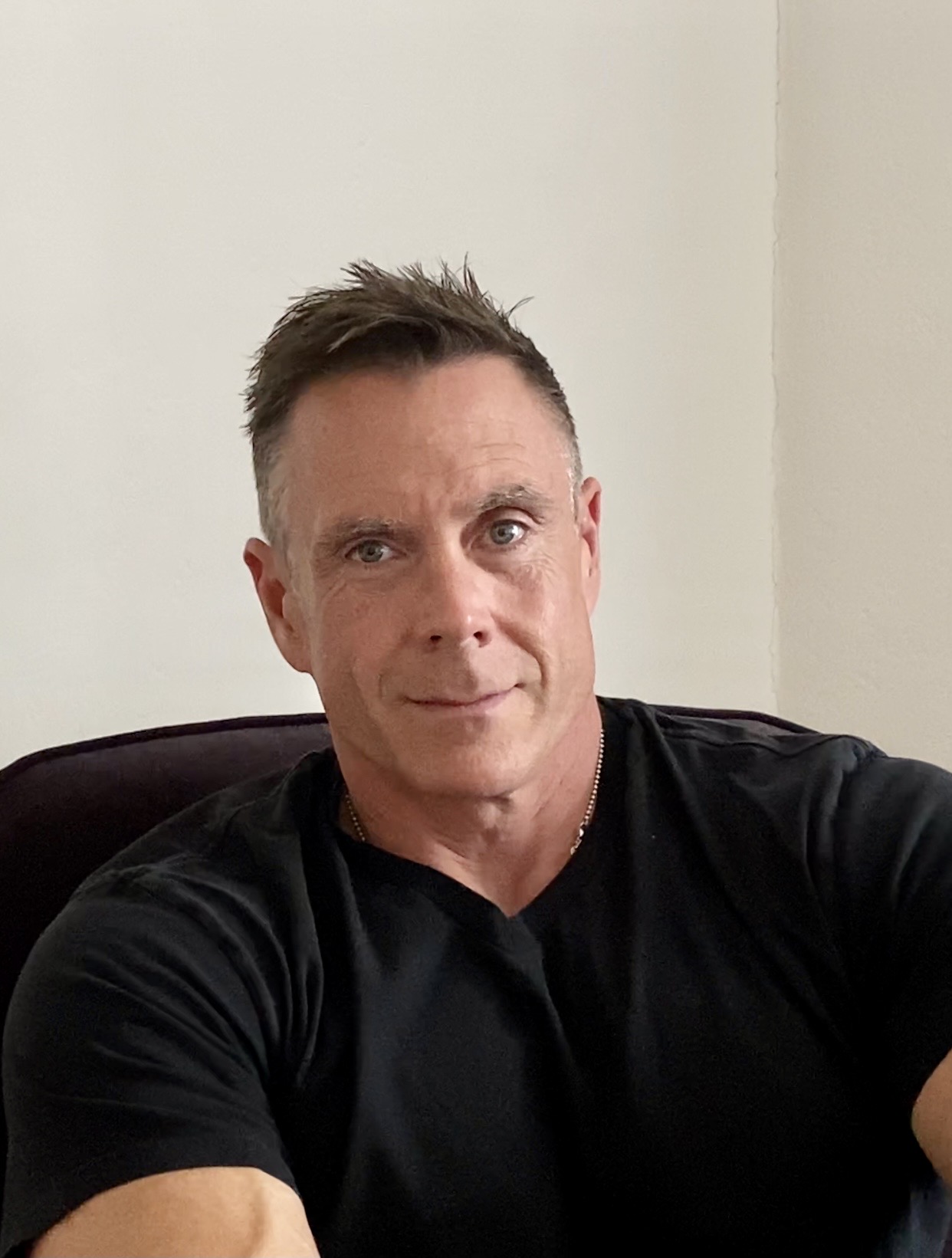
Dr. Robert McGrath learned early that physical limitations do not have to decide what comes next. Born with two clubbed feet, he grew up in Southern New Jersey at a time when doctors questioned how well he would be able to walk. He eventually became a competitive ice hockey player, captained his team at Trinity Pawling Preparatory School, trained at the Olympic Training Center in Marquette, Michigan, and attended training camps with the Philadelphia Flyers and Pittsburgh Penguins.
His academic path required a similar kind of persistence. McGrath struggled in elementary school with an undiagnosed learning disability and did not initially see himself as a strong student. Years later, he graduated cum laude from Life University with his Doctor of Chiropractic degree.
His career has since moved through healthcare, entrepreneurship, consulting, and longevity. He founded The Barbell Doctor, where his work focuses on men over 40 and the changing demands of strength, recovery, nutrition, hormones, and long-term performance. He also founded Integrated Health Consultants NJ LLC, where he works in longevity and medical aesthetics.
McGrath still trains and maintains interests outside work, including coffee roasting, bonsai, and fine cigars. He also supports animal rescue organizations.
Across hockey, healthcare, and business, one principle has remained remarkably consistent. McGrath has never depended on feeling naturally gifted. He has built his life around preparation, continued learning, and a willingness to keep working when the easier option would be to stop.
What is your typical day, and how do you make it productive?
I treat my schedule seriously. Work, training, family responsibilities, and personal development all need a place on the calendar. I actually schedule personal development like I would a business meeting. It is non-negotiable.
I also try to identify what genuinely needs my attention. Earlier in my career, I wasted too much time answering questions other people could solve themselves. Productivity improved when I stopped assuming that being busy meant I was being useful.
How do you bring ideas to life?
I turn ideas into action steps. I use a quarterly goal system built around six areas of my life. Each goal goes on an index card, with the goal on the front and the steps required to accomplish it on the back.
That same thinking applies to business ideas. A big idea becomes much less intimidating once you identify the first three or four actions required to test it.
What’s one trend that excites you?
I am interested in the continued growth of longevity and regenerative health. What’s exciting isn’t any single treatment. Procedures and protocols can have surprisingly short lifecycles. What interests me is how quickly the science continues to develop and how much more attention people are giving to healthspan rather than simply lifespan.
What is one habit that helps you be productive?
Writing goals down. I do not want important goals living only in my head. Putting them on paper forces me to define what success actually looks like and what I need to do next.
What advice would you give your younger self?
I would tell myself not to confuse difficulty with inability. I was born with clubbed feet and struggled academically because of an undiagnosed learning disability. Neither predicted where I eventually went physically or academically. I would have spent less time worrying about whether I was naturally good at something and more time asking how much I was willing to work at it.
Tell us something you believe almost nobody agrees with you on?
I do not believe in work-life balance in the conventional sense. I think life moves through seasons. Sometimes business requires more of you. Sometimes your family does. Trying to divide everything into perfectly equal portions can become another source of frustration. The real skill is being fully present for what matters when it matters.
What is the one thing you repeatedly do and recommend everyone else do?
Invest in personal development. Your professional abilities eventually run into the limits of your personal growth. Read, learn, ask questions, and deliberately work on your weaknesses.
When you feel overwhelmed or unfocused, what do you do?
I reduce the number of decisions in front of me. I go back to my written goals and ask which action actually moves something forward. Training also helps. There is something useful about putting the phone away, getting under a barbell, and having one very clear job for the next hour.
What is one strategy that has helped you grow your business or advance in your career?
Learning to stop solving every problem myself was important. A mentor once told me that when an employee brought me a problem, I should ask them to write down three solutions they would consider if they were in my position.
It changed the conversation. Instead of becoming the answer machine, I became a sounding board. Employees developed better judgment, and I regained time to focus on responsibilities that actually required me.
What is one failure in your career, how did you overcome it, and what lessons did you take away from it?
In my first company, I became a bottleneck. Employees came to me with questions all day, and I kept answering them because I thought that was leadership. Eventually my own performance suffered.
The lesson was uncomfortable but valuable. Helping people does not always mean giving them the answer. Sometimes good leadership means requiring people to think through the problem themselves. I still believe you learn more from a loss than a win because losses force you to examine what actually happened.
What is one business idea you’re willing to give away to our readers?
I think there is room for a highly structured health-performance service built specifically around executives who travel frequently. Instead of pretending someone with flights, dinners, hotels, and unpredictable meetings can follow a fitness influencer’s routine, build the entire program around travel realities. Training, meals, sleep, and recovery protocols could change automatically based on the person’s travel schedule.
What is one piece of software that helps you be productive? How do you use it?
My calendar is probably the most useful software I have. If something matters, I make time for it. I block out meetings, work, training, and personal development instead of trusting myself to magically find time later.
Do you have a favorite book or podcast you’ve gotten a ton of value from and why?
The 7 Habits of Highly Effective People has stayed useful because the principles are bigger than any particular productivity trick. The idea of being proactive and deciding what deserves priority fits closely with how I approach quarterly goals and personal development.
What’s a movie or series you recently enjoyed and why?
I recently watched Formula 1: Drive to Survive. I like the combination of competition, preparation, technology, and pressure. At that level, everyone is talented, so small decisions can make a huge difference. I also find the relationship between the drivers and their teams interesting. Individual performance gets the attention, but hundreds of decisions and people drive every result. Coming from a competitive sports background, I appreciate that mindset.
Key learnings
- -An initial diagnosis is not a future destiny. Where you start says very little about where you’ll finish.
- Choose your Hard. It’s hard to live with limitations placed on you. It’s just as hard to put your head down and work through them, regardless of the amount of effort required
- Urgent vs Important: Urgent demands attention now, a phone ringing, a person waiting at your office door, a patient showing up unannounced… But those demands are almost always defined by someone else and rarely move you towards future goals. Important is defined by you. Important items have real consequences and always move you towards long-term goals.
- Serenity is Priceless. Never allow anyone or anything to rob you of your serenity. You can’t put a price on serenity. It allows me to recharge my battery; it affords me the clarity to be creative, to problem-solve, or just to be without the noise and chatter. Schedule it into your day like any other meeting, but give it priority because what it produces can be truly transformative.