
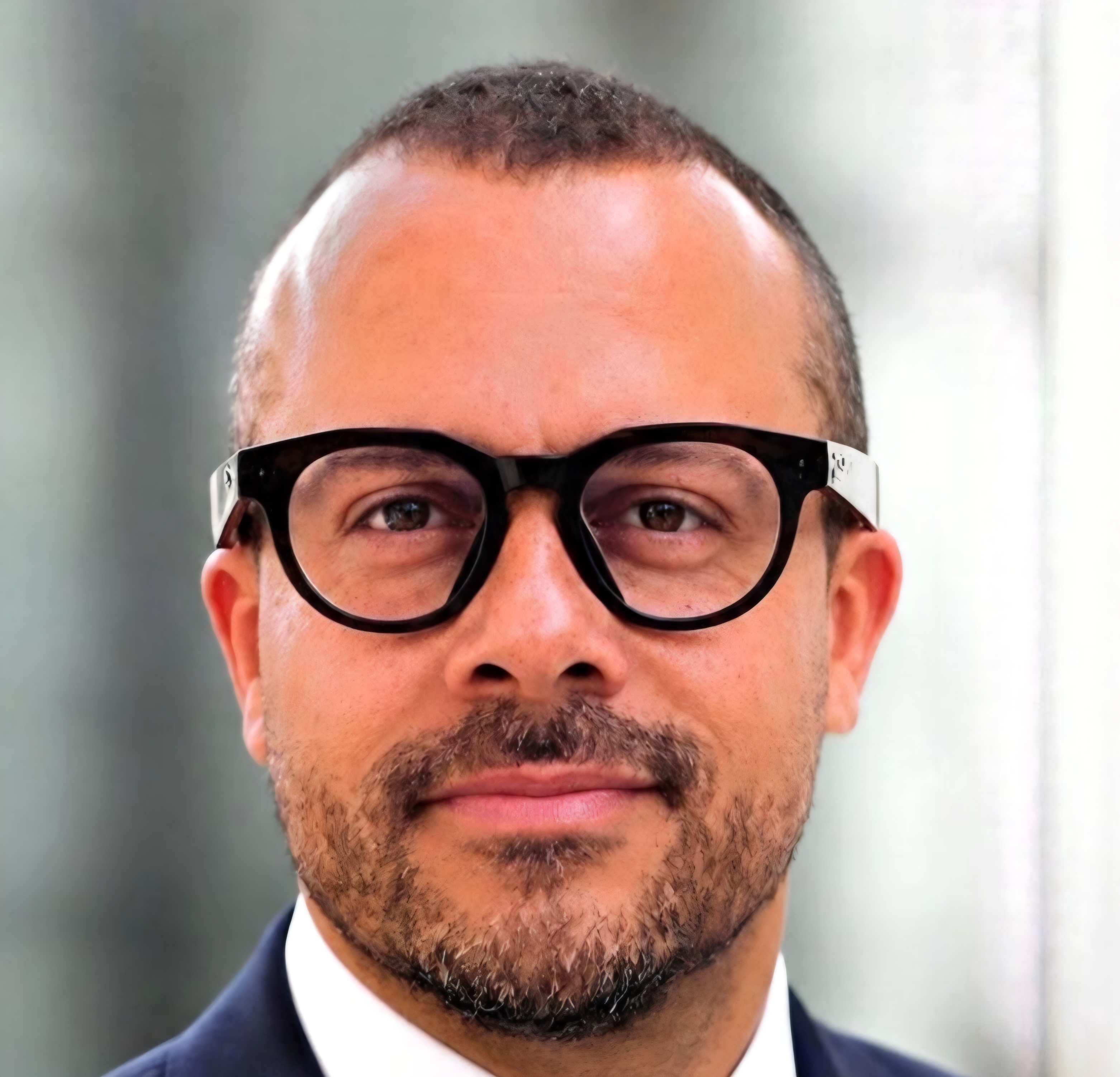
Anton Alexander Palmer is a UK entrepreneur, investor and healthcare infrastructure executive with more than two decades of experience across regulated care, institutional real estate, financial services and complex development programmes. Based in Cheltenham, Gloucestershire, his work has centred on building, scaling and restructuring businesses and property platforms at the intersection of healthcare, housing, infrastructure and long-term investment.
Palmer is Managing Director and Principal Investor of the Octane Capital & Infrastructure Platform, where he oversees strategy, governance, capital allocation and the structuring of regulated care and property investments. His experience includes OpCo/PropCo models, institutional lease frameworks and buy-and-build strategies designed to create long-term value across healthcare operating businesses and associated real estate.
Earlier in his career, Palmer founded and scaled a regulated supported-living platform from a standing start to more than 20 specialist assets supporting over 100 high-acuity service users. The operating business was sold to private equity for £15 million in 2012, while the underlying property interests were retained and developed into a separate institutional healthcare property portfolio. That portfolio was later sold for £18 million, bringing the combined value realised across the two transactions to £33 million.
His current work includes the acquisition and expansion of CQC-regulated healthcare businesses and the development of long-income property strategies connected to supported living. He is directing a strategic land and development programme in the Cotswolds, Gloucestershire, involving planning, environmental and stakeholder considerations across Green Belt and Area of Outstanding Natural Beauty settings, with a projected development pipeline exceeding £50 million in gross development value.
Before moving fully into investment and infrastructure, Palmer worked as a high-net-worth financial adviser with Lloyds Bank. He is also an incoming MSc Major Programme Management candidate at the University of Oxford’s Saïd Business School. His qualifications include a BSc in Medical Biochemistry from the University of Birmingham, postgraduate study in Strategy, Leadership and Change at the University of Bristol, and financial-planning qualifications through the Chartered Insurance Institute. He is a Chartered Manager Fellow and an MRICS candidate on the executive accelerated pathway.
What is your typical day, and how do you make it productive?
My day usually moves between property, care operations, finance, advisers and the teams delivering the work. I start by identifying the few decisions that can genuinely move a project forward, rather than simply clearing an inbox. I then work through calls, site or operational issues, funding and planning matters, and the people needed to execute. I also protect time for study and reading. Productivity, for me, comes from being clear about the next decision and who owns it.
How do you bring ideas to life?
I start with the end state and ask what has to be true for the idea to work. Then I break it into finance, legal, operational, planning and people workstreams, identify the critical dependencies, and put named owners and dates against them. I prefer an imperfect first version that can be tested to a perfect concept that never leaves the page. The discipline is to turn enthusiasm into a sequence of decisions, evidence and accountable actions.
What’s one trend that excites you?
The professionalisation of supported living and social infrastructure excites me. There is a real opportunity to align better housing, long-term capital and high-quality care without losing sight of the individual receiving support. Property is too often treated as separate from care, when the home environment, maintenance standard, location and stability can materially affect outcomes. I am interested in models where the operating and real-estate sides are designed around the same long-term purpose.
What is one habit that helps you be productive?
I keep a written list of the three or four outcomes that matter most that day. Everything else is secondary until those are moving. It sounds simple, but it stops activity becoming a substitute for progress. I also write down assumptions when a decision is important. Once assumptions are visible, you can challenge them, allocate responsibility and return to the decision later without relying on memory or emotion
What advice would you give your younger self?
I would tell my younger self to build the right team earlier, ask for specialist advice sooner and keep learning. You rarely have every fact, so judgement matters, but strong advisers and clear documentation make difficult decisions much easier. I would also say that education should never stop when formal education ends. Some of my most useful learning has come much later in life because I could connect theory directly to real problems.
Tell us something you believe almost nobody agrees with you on?
I think delay is often riskier than speed once the important facts are known. Organisations can spend enormous amounts of time trying to remove uncertainty that cannot actually be removed. My preference is to identify the genuinely irreversible decisions, spend the time there, and move quickly on the reversible ones. Speed without thought is reckless; but disciplined speed, with clear assumptions and accountability, can reduce risk rather than increase it.
What is the one thing you repeatedly do and recommend everyone else do?
Ask, ‘What has to be true?’ It is a simple question that exposes assumptions quickly. Whether I am looking at a property, a financing structure, an acquisition or an operating problem, I write down the conditions that must hold for the plan to work. That makes it easier to distinguish facts from hopes, identify what needs verifying and decide which issue could actually kill the project.
When you feel overwhelmed or unfocused, what do you do?
When I feel overwhelmed or unfocused, I reduce the problem to three decisions: what matters most, what can wait, and what needs to happen next. As a Gloucester boy, I am relatively straight-talking, and I try not to overcomplicate things! When everything feels urgent, it is usually because too many issues are being held at the same level. I separate what is genuinely important from what is simply noise and write down the next actions.
I also find that creating some physical distance from a problem helps. Walking has always been a passion of mine. I am fortunate to live in Gloucestershire and also spend a good deal of time in London, so I get the benefit of two very different environments. In Gloucestershire, I have beautiful countryside on my doorstep, and I will often go for a long walk and work through those three questions as I go. London gives me a different kind of energy, but the Gloucestershire countryside is usually where I go when I really need to clear my head.
By the time I return, I usually have a much clearer sense of what actually matters, what can wait, and where the real constraint lies.
What is one strategy that has helped you grow your business or advance in your career?
One strategy that has helped me is combining an operator’s view with an investor’s view. In property, it is easy to focus only on the asset; in care, it is easy to focus only on the service. Looking at both forces better questions about suitability, cash flow, maintenance, regulation, customer need and long-term value. That broader perspective has shaped the way I approach supported living and other complex property-backed businesses.
What is one failure in your career, how did you overcome it, and what lessons did you take away from it?
A recurring mistake earlier in my career was trying to carry too much personally and bringing specialist advice in later than I should have. It can feel efficient in the short term, but complexity compounds. The lesson was to assemble the right legal, finance, operational and technical people earlier, be explicit about what I do not know, and make sure responsibility is clear. Good judgement includes knowing when expertise is worth paying for.
What is one business idea you’re willing to give away to our readers?
I would build a platform that helps good care operators access professionally owned and managed homes without requiring them to become property developers. The platform would combine property sourcing, adaptation, long-term maintenance standards and transparent lease structures. The aim would be simple: let care teams concentrate on care while property specialists make sure the homes remain suitable, safe and investable over the long term.
What is one piece of software that helps you be productive? How do you use it?
ChatGPT is one of the tools I use most. I use it to structure information, stress-test ideas, summarise documents, prepare questions for advisers and accelerate first drafts. The value is not that it replaces judgement; it gives me a fast second pair of eyes and helps turn a large amount of information into something I can interrogate. I treat the output as a starting point that still needs checking and decision-making.
Do you have a favorite book or podcast you’ve gotten a ton of value from and why?
The Pilgrimage by Paulo Coelho. I like the idea that progress is found in the journey rather than only at the destination. It is reflective without being abstract, and it reinforces the value of discipline, self-examination and being open to lessons from unexpected places.
What’s a movie or series you recently enjoyed and why?
I love The Sopranos and have been watching it with my older sons. What I find compelling is how raw it is: the characters deal with ordinary family life and everyday routines while carrying a completely different hidden world underneath. Tony’s therapy, and the way his past shapes his present, is particularly interesting. It is a reminder that we are all products of our environment and experiences, which I find quite humbling. I also watched The Equalizer 3 recently and thought it was awesome.
Key learnings
- Complex projects become more manageable when assumptions, decision rights and owners are made explicit.
- Property and care work better when the physical asset and the operating model are designed around the same long-term purpose.
- Disciplined speed can reduce risk when reversible and irreversible decisions are treated differently.
- Lifelong learning is most valuable when theory is applied directly to live problems.