
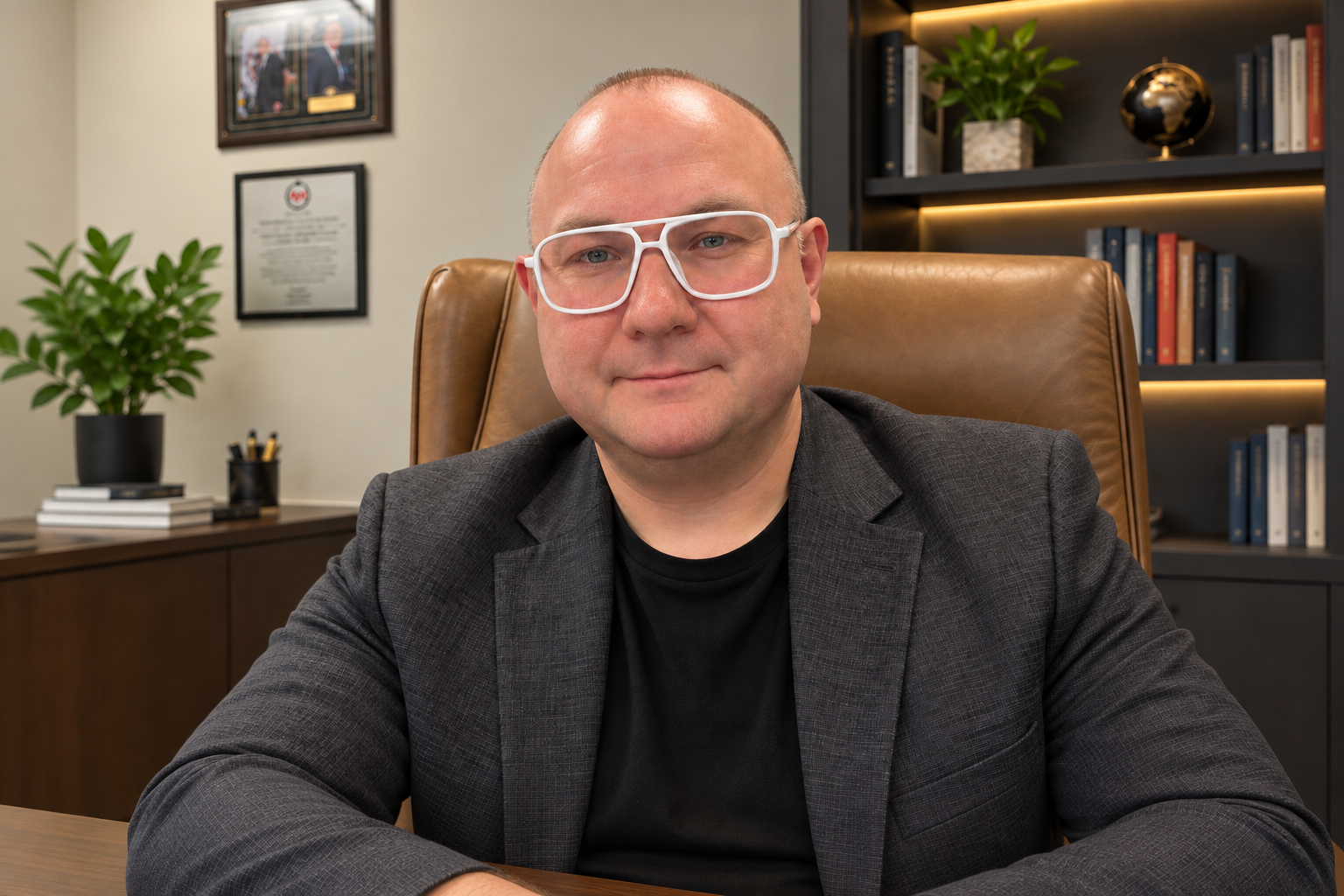
Danis Fickewirth is an American entrepreneur and investor focused on building durable, practical businesses. Through Alafina Capital, he works at the intersection of capital, operating discipline, technology, and cross-border collaboration.
Alafina Capital’s work is rooted in a simple principle: capital is most valuable when it is paired with real operational support. The goal is not merely to invest in an idea, but to help capable people clarify a strategy, build reliable systems, solve problems, and create companies that can sustain themselves over time.
Danis has maintained long-standing ties to Moldova and sees the country as an underappreciated place to build: a market with technically capable people, entrepreneurial energy, international perspective, and room for serious long-term partnerships. He believes Moldova’s opportunity is about building credible companies, helping local talent access larger markets, and creating businesses that deliver genuine value to customers and communities.
His approach is hands-on and grounded in questions that matter: Is there real customer demand? Does the team have the discipline to execute? Are the economics sound? Can a company build systems that make it stronger with each year?
What is your typical day, and how do you make it productive?
My days are built around people, priorities, and decisions. I start by identifying the few issues that can genuinely move a business forward: a customer problem, an operational bottleneck, a hiring decision, a capital need, or a partnership that requires attention.
A large part of my work is speaking with founders, managers, specialists, and partners. I do not believe good investment work happens only in spreadsheets. Numbers matter, but you also need to understand how a business actually operates: what customers are saying, where the team is getting stuck, and which decisions are being delayed.
I try to end every meaningful conversation with a clear next step, an owner, and a timeline. Clarity is one of the most valuable things a business can have.
How do you bring ideas to life?
The first step is reducing an idea to a real problem worth solving. Many ideas sound impressive when they are broad. The hard work is defining who the customer is, what they need, why they would pay, and what must be true for the business to work.
From there, I prefer a practical operating plan: the first customer, the first market test, the first responsible person, the first budget, and the first measurable milestone. Small tests replace assumptions with information.
What’s one trend that excites you?
I am excited by Moldova’s growing ability to participate in international business without losing its local character. Technology, remote collaboration, specialized services, and cross-border entrepreneurship make it possible for talented people and businesses in Moldova to work with customers and partners far beyond the country’s borders.
The opportunity is to build capable companies with strong standards, trusted relationships, and products or services that solve real problems internationally.
What is one habit that helps you be productive?
Writing things down. A clear written question is often more useful than a long meeting.
When a business issue is complicated, I write down the actual problem, the facts we know, the assumptions we are making, the decision required, and the next action. This forces discipline and helps separate urgent noise from important work.
What advice would you give your younger self?
Learn how businesses really work before becoming too attached to any one idea.
I would tell my younger self to spend more time with customers, operators, accountants, and people doing the day-to-day work. Big visions matter, but execution is built through details: cash flow, hiring, service quality, communication, timing, and trust.
Tell us something you believe almost nobody agrees with you.
I believe that many promising markets do not need more grand promises. They need more reliable execution.
It is easy to talk about transformation or innovation. It is much harder to build a company that serves customers well, pays people on time, keeps accurate records, improves its systems, and earns trust year after year. Those things are the foundation of lasting business value.
What is the one thing you repeatedly do and recommend everyone else do?
Talk directly to the people closest to the work.
Founders and investors can become too distant from customers, frontline employees, suppliers, and operational realities. I recommend regularly asking: What is working? What is not working? What do customers complain about? What problem is costing us the most time or money?
When you feel overwhelmed or unfocused, what do you do?
I reduce the situation to one question: what is the most important decision or action that cannot wait?
Then I step away from the noise, write the issue down, and identify the next concrete step. Often, overwhelm comes from trying to carry ten unresolved issues in your head at once. A written list with clear priorities restores perspective.
What is one strategy that has helped you grow your business or advance in your career?
Building relationships before there is an immediate transaction.
The strongest opportunities often come from people who have had time to understand each other’s judgment, values, and reliability. In Moldova and in any market, trust is not a soft concept. It is a business advantage.
What is one failure in your career, how did you overcome it, and what lessons did you take away from it?
Earlier in my career, I was sometimes too willing to be persuaded by a compelling idea before fully testing the operating reality behind it. A strong presentation is not the same thing as a strong business.
The lesson was to ask more basic questions earlier: Who is the customer? What are the economics? What capability does the team already have? What must be built? What happens if the plan takes twice as long as expected?
What is one business idea you’re willing to give away to our readers?
I would like to see more practical market-entry partnerships for international companies interested in Moldova.
A small “Moldova Market-Entry Studio” could help foreign businesses test demand, identify local partners, understand operating realities, hire initial talent, and launch a focused pilot before committing to a major expansion.
What is one piece of software that helps you be productive? How do you use it?
Slack is one of the most useful tools in my working life because it keeps teams connected without turning every issue into a meeting.
I use it to give each project a clear home for decisions, progress updates, and fast questions. For teams working across locations, the important part is not constant messaging; it is making information easy to find and making ownership visible. A concise update in the right channel can prevent weeks of confusion.
What is the best $100 you recently spent?
I recently spent about $100 experimenting with an AI agent workflow. The value was not in handing decisions to software; it was in seeing how much faster a small, well-defined research or preparation task can begin.
Used thoughtfully, AI can help people organize information, identify questions, and create a useful first draft. The human still has to apply judgment, verify the work, and decide what matters. That combination—speed plus accountability—is where I think the real value is.
Do you have a favorite book or podcast from which you’ve received much value?
One book I continue to find interesting is Snow Crash by Neal Stephenson. It is entertaining, but it also asks enduring questions about technology, information, networks, language, and the systems that shape people’s lives.
I do not read it as a prediction. I read it as a reminder that technology is never just technical. It changes how people communicate, organize, make decisions, and build power. Those questions are as relevant to an entrepreneur as they are to a novelist.
What’s a movie or series you recently enjoyed and why?
I enjoyed the Moldovan film Puterea Probabilității. Beyond being an ambitious local thriller, it was memorable because it put Chișinău itself on screen in a contemporary, cinematic way.
The car-and-trolleybus sequence was especially striking. It was a large, visible production moment in the city, and it captured something I appreciate about Moldova: capable people can create work with real scale and ambition when they decide not to think small.
Key learnings:
- Danis Fickewirth focuses on building practical, durable businesses through capital, operating discipline, and long-term partnerships.
- He sees Moldova as a serious place to build internationally connected companies, not as a short-term opportunity.
- Alafina Capital’s approach emphasizes hands-on support, clear strategy, and patient execution.
- Trusted local partnerships and direct contact with customers and operators are essential to good decisions.
- Lasting business value comes from reliable execution, not just ambitious ideas.