
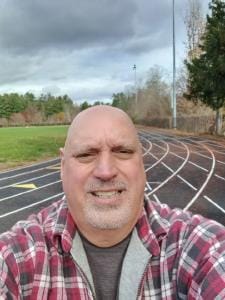
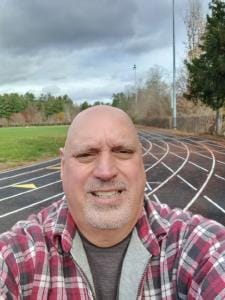
Barry Gallant was born in 1967 in New Hampshire, and grew up in the small town of Chester. He never left the state. He still lives in Manchester today.
School was never where he was headed. Once high school ended, Barry went straight to work, and he has been working ever since. Over the years, he picked up paving, landscaping, concrete work, and masonry, along with plenty of general labor in between. He later moved into warehouse work, trading outdoor job sites for a different kind of physical routine.
Barry has two daughters and eight grandchildren, and family sits at the center of his life outside of work. He goes to the gym almost every day, rain or shine, and when the weather lets him, he is outside walking local parks or taking rides to the ocean. He feeds the birds and whatever wildlife wanders into his yard, a habit he keeps up year-round. Seafood and Chinese food are his go-to meals. He used to own a Harley Davidson and still loves the idea of the open road. More recently, he started taking a weekly dance class, something new for a man who built his career with his hands and his back.
There is nothing flashy about the path Barry Gallant has taken. It is just decades of showing up, staying active, and making room for the people and small routines that matter to him.
What is your typical day, and how do you make it productive?
I am up early most mornings. I try to get to the gym before anything else pulls my attention away, because once the day gets going, it is easy to let that slide. After the gym, it is work, and work has always meant being on my feet and using my hands. In the evenings, I try to leave time for family, even if it is just sitting around talking. Keeping that order, gym first, then work, then family, is what keeps the day from running me instead of the other way around.
How do you bring ideas to life?
I do not spend a lot of time planning things out on paper. If I have an idea, whether it is about a project around the house or something for the yard, I usually just start working with my hands and figure out the details as I go. That is how I learned most of what I know, by doing it, not by thinking it through first.
What’s one trend that excites you?
The equipment in warehouse and labor work keeps getting lighter and easier on the body. Tools and machines that used to wear a person down over the years are being built smarter now. After decades of physical work, that matters to me more than most people would guess.
What is one habit that helps you be productive?
Going to the gym daily, or as close to daily as I can manage. It is not about how I look. It is about keeping my body able to do the next day’s work, whatever that work turns out to be.
What advice would you give your younger self?
I would tell him to take the body more seriously, earlier. When you are young and strong, it feels like nothing will ever slow you down, so you push through things you probably should not. I would tell him to build the gym habit decades sooner than he did.
Tell us something you believe almost nobody agrees with you on?
I believe starting the day outside, even in cold weather, does more for you than coffee does. People reach for caffeine first thing. I would rather step outside, feed the birds, and let the cold air wake me up before I touch anything hot.
What is the one thing you repeatedly do and recommend everyone else do?
Spend time outside, even just a little, every single day. It does not have to be a hike or a long walk. Feeding the birds in my own yard does the same thing for my head that a longer outing would.
When you feel overwhelmed or unfocused, what do you do?
I go for a walk, usually at one of the local parks. Being outside and moving tends to sort my head out faster than sitting still and trying to think my way through it.
What is one strategy that has helped you grow your business or advance in your career?
Being someone people can count on to show up and do the job right has carried me further than anything else. In this kind of work, your reputation travels by word of mouth. People remember who showed up when they said they would and who didn’t.
What is one failure in your career, how did you overcome it, and what lessons did you take away from it?
Early on, I took on more physical work than I should have in a short window, trying to prove I could handle anything. I fell behind and wore myself down doing it. I learned to pace the work and build in more time than feels necessary, because rushing a physical job almost always costs you more time later than it saves you up front.
What is one business idea you’re willing to give away to our readers?
A simple subscription service that restocks birdseed and suet for people who feed wildlife in their yard, delivered on a schedule so they never run out in the middle of winter when the birds need it most.
What is one piece of software that helps you be productive? How do you use it?
I keep a basic workout log app on my phone. I use it to track what I did at the gym each day, nothing complicated, just enough to see the pattern and notice if I am slacking.
Do you have a favorite book or podcast you’ve gotten a ton of value from and why?
I listen to a podcast about classic motorcycles when I am driving or working around the house. I never got into reading much, but hearing people talk about restoring old Harleys scratches an itch for me, since I used to own one myself.
What’s a movie or series you recently enjoyed and why?
I watched some episodes of a show about people mining for gold out in rough country. I like watching people work with their hands outdoors, even when it is a kind of work I have never done myself.
Key learnings:
- Decades of physical labor make daily movement and recovery, not just effort, the real foundation of a long career.
- A reputation built on reliability and follow-through tends to generate more opportunity than any single skill does.
- Treating setbacks as pacing problems, rather than effort problems, changes how people plan physical work going forward.
- Simple outdoor routines, like feeding backyard wildlife, can serve the same mental reset function as more structured habits.