
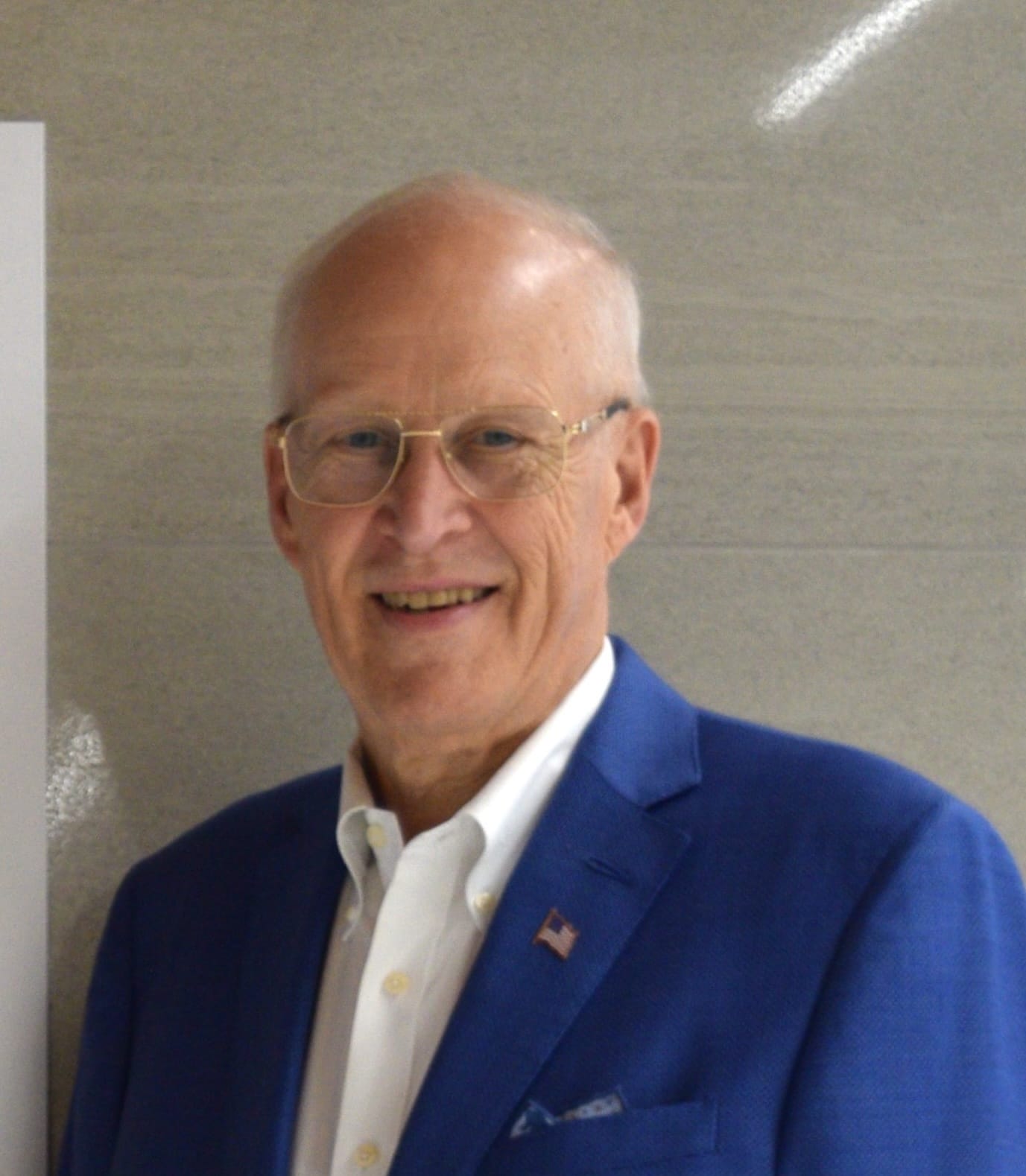
Louis Chênevert is a philanthropist and retired business leader in the aerospace and automotive industries. Previously, Mr. Chênevert was chairman and CEO of United Technologies Corporation (UTC). In 2006, he became COO and a director of UTC before being named president and CEO in 2008 and chairman in 2010.
Louis Chênevert was president of Pratt & Whitney, a UTC subsidiary, from 1999 to 2006. He joined Pratt & Whitney Canada in 1993 following a 14-year career with General Motors. He last served the American automaker as a production general manager responsible for oversight of Pontiac Firebird and Chevrolet Camaro assembly in Sainte-Thérèse, Quebec.
Complementing his professional titles, Louis Chênevert has served on several boards and committees. He is a former vice chairman of The Business Council’s executive committee, served on the US-India CEO Forum, and is chairman emeritus of the Congressional Medal of Honor Foundation, having served on its board of directors since 2008. In addition, he is a fellow of the American Institute of Aeronautics and Astronautics and, in 2011, was named Person of the Year by Aviation Week & Space Technology.
With his wife, Debbie, Mr. Chênevert launched the Chênevert Family Foundation in 2009 to support educational and healthcare initiatives benefiting the next generation. The foundation’s largest gift was a 2020 donation of $4.3 million to Yale Cancer Center for the establishment of the Chênevert Family Brain Tumor Center, which brings together researchers and clinicians to advance the standard of diagnosis, treatment, and care for patients with brain cancer. Mr. Chênevert has also served on the Yale Cancer Center Advisory Board since 1999 and has presided as chair since 2013.
In addition, Mr. Chênevert is chairman of the HEC Montréal International Advisory Board and a founding director and chairman of Friends of HEC Montréal, which encourages philanthropy among US-based alumni of the university. He holds a bachelor of commerce in production management from HEC Montréal and received honorary doctorate degrees from his alma mater and Concordia University.
Where did the idea for United Technologies come from?
As CEO of a multi-national global company, many ideas were brought with the key executives, strategic small group in a small team, with a profound understanding of customer needs and a passion to deliver game changing products in a 30-year product cycle. That approach would drive profound change combined with making acquisitions that would strengthen the portfolio.
That approach brought:
– the F135 engine sole source position, redefining the military propulsion segment forever.
– the GTF engine development, which would be game changing for its 20% better fuel burn, 50% reduction in noise and 30% fewer parts contributing to much lower cost through its life cycle.
– leveraging the new technology key airplane in the narrow body segment was developed (Airbus A-320, Bombardier C series and new generation Embraer).
– following that, an opportunity for the core was leveraged to win the next generation of Gulfstream G500 and G600, displacing a monopoly Rolls Royce had in the large business segment for decades
– developing new X2 technology at Sikorsky that would double the speed of helicopters and change the noise signature.
– and, the acquisition of Goodrich aerospace, the largest acquisition ever at the time at $18B would change the course of history and results of UTC forever.
How do you bring ideas to life?
When I was at UTC, the focus on operational talent and engineering was extremely important to delivering ideas that would produce results that exceeded customer’s expectations and gather revenue and profitability momentum with staff support. Maintaining a focus on small teams and an operational leadership team that was given the tools, funds, and autonomy to pursue game changing products. This was followed by intense review to make sure key objectives were always achieved.
What’s one trend that really excites you?
How technology and the speed of change created truly profound opportunities to accelerate momentum in our company well into the future.
What is one habit of yours that makes you more productive as an entrepreneur?
It’s difficult to name one, because I see them as dependent on one another. Relentless follow-up with tremendous focus, being passionate and eternally optimistic, investing the majority of my time pushing the agenda, disregarding internal politics, and making sure the key operational executives have everything they need to deliver on the results have all played key roles in my professional success.
What was the worst job you ever had and what did you learn from it?
My first job at GM as a first line supervisor in an assembly plant on 2nd shift. While the job was an incredibly difficult assignment, this is where I learned the power of people and how they wanted to make a difference, if only management would listen to them. The employees knew how to unlock productivity and solve problems. This experience would shape my support of operations for the next 37 years.
If you were to start again, what would you do differently?
I would keep an eye on internal politics and how they could be disruptive to extraordinary results and impact the future of brilliant leaders that would depart losing focus on execution.
Never tolerate people who don’t align with the agenda. Energy drainers slow down the progress in large companies. Typically, problems do not age well, so when you tackle any issue upfront, you allow for people to win. People love to be associated with winners.
As an entrepreneur, what is the one thing you do over and over and recommend everyone else do?
Get the right team together to overcome obstacles, inspire and appreciate them, and always delight customers. Make sure risk taking is rewarded.
What is one strategy that has helped you grow your business?
Relentless focus and open thinking combined with walking around, eliminating the roadblocks, and always thinking big. Celebrate and support those who surface issues early. Surround yourself with winners. You are only as good as the sum of your team.
Connect:
Louis Chenevert on Facebook:
Louis Chenevert on Twitter:
Louis Chenevert on LinkedIn: