
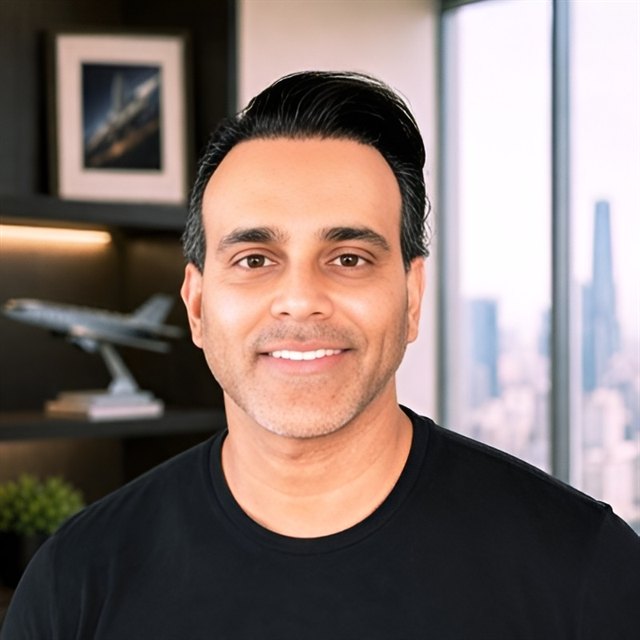
Dr. Irfan Siddiqui is a physician, investor and author based in Orlando, Florida. He trained in internal medicine and cardiology at Michigan State University, where he served as Chief Resident and Chief Cardiology Fellow, and completed his interventional cardiology fellowship at the University of Utah after earning his medical degree from Nova Southeastern University College of Osteopathic Medicine. With more than 25 years in medicine, he leads Regenerative Health & Wellness, a concierge practice focused on whole-patient care, and provides independent medical reviews through Expert Medical Advisors & Consultants. He is the founder and chairman of Impero Capital Holdings, a family office investing in real estate, aerospace and healthcare, and the author of The Dark Side of Medicine. He was also an associate producer on the films Sacramento and The Astronaut.
What is your typical day, and how do you make it productive?
I start early with exercise, then review the day before it begins: my patients at Regenerative Health & Wellness, any expert reviews due for Expert Medical Advisors, and the business decisions waiting for me at Impero. I check each plan against what patients and clients actually tell me and adjust as I go. Keeping detailed notes through the day means nothing is left hanging at night.
How do you bring ideas to life?
Discussion, research and planning first, to make sure an idea is viable, then disciplined execution. I talk an idea through with people I trust, test the numbers, and only then commit. Once committed, I build a small team around it and hold it to clear milestones.
What’s one trend that excites you?
Whole-patient medicine. More physicians and patients are addressing the lifestyle causes of disease instead of only treating symptoms, and concierge and regenerative medicine give doctors the time to do that properly.
What is one habit that helps you be productive?
Daily exercise. It keeps my mind clear and my energy steady, and it is the one appointment I never cancel.
What advice would you give your younger self?
Don’t take yourself or your studies so seriously. Work hard, but make time to enjoy life and the people around you; the work will still be there.
Tell us something you believe almost nobody agrees with you.
Most people do not work hard enough at a healthy lifestyle. Small daily habits (sleep, food, movement) matter more than any prescription, and they compound over decades.
What is the one thing you repeatedly do and recommend everyone else do?
Exercise every day and keep detailed notes. Exercise protects your health; notes protect your decisions, your patients and your business.
When you feel overwhelmed or unfocused, what do you do?
I step away and move, with a workout or a walk, then write down everything on my mind and sort it into what only I can do, what someone else can do, and what can wait. A clear list turns pressure back into a plan.
What is one strategy that has helped you grow your business or advance in your career?
Focusing on people and long-term relationships. In medicine that means taking the time to understand each patient and reviewing every referred case carefully. In business it means owning things for the long term and working with the same trusted partners year after year. Both build the trust that brings the next patient, client or opportunity.
What is one failure in your career, how did you overcome it, and what lessons did you take away from it?
Early in practice my documentation was not thorough enough, and it caused billing problems. I fixed it by building disciplined note-taking into every encounter. The lesson carried into everything I have done since: if it is not written down clearly, it did not happen, in medicine, in expert review and in business.
What is one business idea you’re willing to give away to our readers?
A simple, secure way for emergency physicians to see a patient’s specialist notes in seconds. Too often the ER treats someone without knowing what their cardiologist or other specialist already found. Whoever makes that instant and easy will save time, money and lives.
What is one piece of software that helps you be productive? How do you use it?
A shared calendar and task system that my team and I all work from. Every appointment, deadline and follow-up lives in one place, so nothing depends on memory and anyone on the team can see what is next.
What is the best $100 you recently spent?
A gift card I gave quietly to a single mother who worked in my office. It mattered far more to her than to me, and it reminded me that small, private kindness is some of the best money you can spend.
Do you have a favorite book or podcast from which you’ve received much value?
Good Calories, Bad Calories by Gary Taubes. It changed how I think about food quality, not just calories, and shaped how I counsel patients on nutrition.
What’s a movie or series you recently enjoyed and why?
The Astronaut. I was an associate producer on it, and seeing a story come together from script to screen gave me a new respect for how many people it takes to bring an idea to life, the same lesson as building any business.
Key learnings:
- Daily exercise and detailed notes are simple habits that protect both health and decision-making.
- Whole-patient care, addressing lifestyle causes and not only symptoms, is where medicine is heading.
- Ideas succeed through discussion, research and planning before execution.
- Long-term relationships with patients, clients and partners drive sustainable growth.
- Clear documentation prevents small mistakes from becoming expensive ones.