
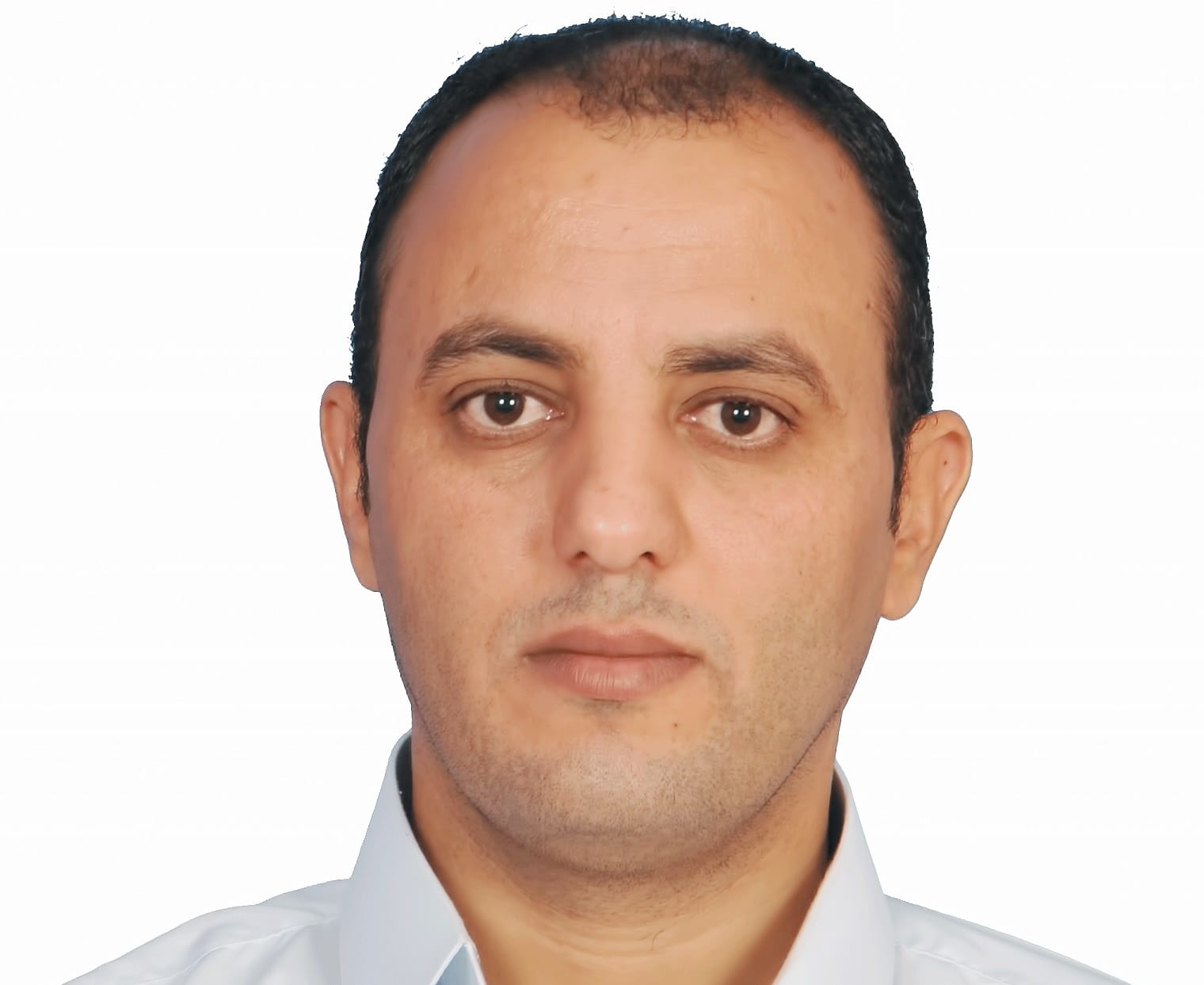
Dr. Abdalla Mansur is a mathematician, researcher, and educator currently based in Kingston Ontario, his academic journey has taken him across continents, from Libya to Canada, the USA, the UAE, and Saudi Arabia. With a Ph.D. in Mathematics from Queen’s University, Canada, Dr. Mansur has dedicated his career to exploring complex mathematical problems, particularly in dynamical systems and differential equations. His teaching portfolio spans institutions such as Laurentian University, University of Toledo, the Royal Military College of Canada, Al Ain University, Higher Colleges of Technology, and Imam Abdulrahman Bin Faisal University. He is deeply passionate about advancing mathematical research and mentoring the next generation of scholars. In this interview, Dr. Mansur shares his insights on productivity, innovation, and personal growth.
What is your typical day, and how do you make it productive?
My day begins early, usually with a strong cup of coffee and a structured plan. I dedicate my mornings to research, focusing on mathematical modeling and problem-solving when my mind is at its sharpest. Midday is often reserved for teaching, mentoring students, or engaging with colleagues on collaborative projects. In the afternoons, I dive into administrative work, reviewing papers, grading assignments, or preparing lectures. Productivity, for me, is all about discipline—eliminating distractions, setting clear goals, and breaking down complex tasks into manageable steps.
How do you bring ideas to life?
I approach ideas with a problem-solving mindset. Whether it’s a mathematical theorem or a research hypothesis, I start by deconstructing it—analyzing its components, identifying patterns, and seeking practical applications. I often discuss ideas with peers, as academic collaboration brings new perspectives and uncovers potential blind spots. Once the groundwork is laid, I test theories, refine them through iteration, and ultimately publish or present findings that contribute to the broader academic community.
What’s one trend that excites you?
The integration of artificial intelligence in mathematical research is fascinating. AI is transforming how we model complex systems, analyze large datasets, and even generate proofs. While mathematics has traditionally been a field of rigorous manual work, AI-powered tools are accelerating discoveries, allowing researchers to explore deeper and more abstract concepts than ever before.
What is one habit that helps you be productive?
Consistency. I set daily, weekly, and long-term goals to ensure I stay on track. Even on days when motivation is low, I rely on structured habits—setting specific research hours, scheduling breaks, and maintaining an academic journal—to push forward. Small, incremental progress leads to major breakthroughs over time.
What advice would you give your younger self?
Pursue knowledge relentlessly, but don’t fear failure. Academia and research are built on trial and error. Every challenge is an opportunity to refine your thinking. Also, network more—building relationships with mentors and peers opens doors that textbooks alone cannot.
Tell us something you believe almost nobody agrees with you on?
I believe that pure mathematics should be valued as much as applied sciences in terms of funding and academic prioritization. Many see mathematics as a theoretical pursuit with little immediate practical use, but history has repeatedly shown that abstract mathematical concepts eventually lead to groundbreaking innovations in physics, engineering, and technology.
What is the one thing you repeatedly do and recommend everyone else do?
Writing. Whether it’s research notes, journal entries, or formal papers, writing clarifies thinking. It forces you to organize ideas, identify gaps in logic, and refine arguments. Even outside of academia, the ability to communicate ideas clearly is invaluable.
When you feel overwhelmed or unfocused, what do you do?
I step away from the problem and take a walk. Sometimes, the best insights come when you’re not actively thinking about the issue. Physical movement clears the mind, and I often return with a fresh perspective. If I’m facing a particularly complex challenge, I break it into smaller, more manageable tasks.
What is one strategy that has helped you grow your business or advance in your career?
Embracing lifelong learning. I never stop acquiring new skills—whether it’s learning a new software tool, attending academic conferences, or exploring interdisciplinary fields. Knowledge compounds, and adaptability is key to staying relevant in an ever-evolving academic landscape.
What is one failure in your career, how did you overcome it, and what lessons did you take away from it?
Early in my teaching career, I struggled to engage students in complex mathematical concepts. I realized that my approach was too rigid and theoretical. Over time, I learned to adapt—incorporating real-world examples, interactive problem-solving, and technology-driven tools into my lectures. The experience taught me that effective teaching isn’t just about expertise; it’s about connection and communication.
What is one business idea you’re willing to give away to our readers?
An AI-powered research assistant for mathematicians. While AI tools exist for writing and data analysis, a specialized platform that suggests relevant theorems, assists with proofs, and automates complex calculations could revolutionize how researchers approach mathematical problem-solving.
What is one piece of software that helps you be productive? How do you use it?
LaTeX. It’s essential for writing academic papers, formatting mathematical equations, and producing high-quality documents. Unlike word processors, it ensures precision and consistency, which is critical for publishing research.
Do you have a favorite book or podcast you’ve gotten a ton of value from and why?
Gödel, Escher, Bach: An Eternal Golden Braid by Douglas Hofstadter. It explores the connections between mathematics, art, and music in a way that challenges conventional thinking. The book’s discussion on recursion, self-reference, and logic resonates deeply with my research interests.
What’s a movie or series you recently enjoyed and why?
I recently rewatched A Beautiful Mind. The film’s portrayal of John Nash’s mathematical genius and struggles with mental health is both inspiring and thought-provoking. It highlights the fine line between brilliance and obsession, something many academics can relate to.
Key learnings
1. Lifelong learning is essential. Staying curious, acquiring new skills, and adapting to change are key to long-term success.
2. Writing clarifies thinking. Whether for research or personal reflection, structured writing is a powerful tool for intellectual development.
3. Embracing failure leads to growth. Every mistake offers a lesson, and persistence is the foundation of progress.