
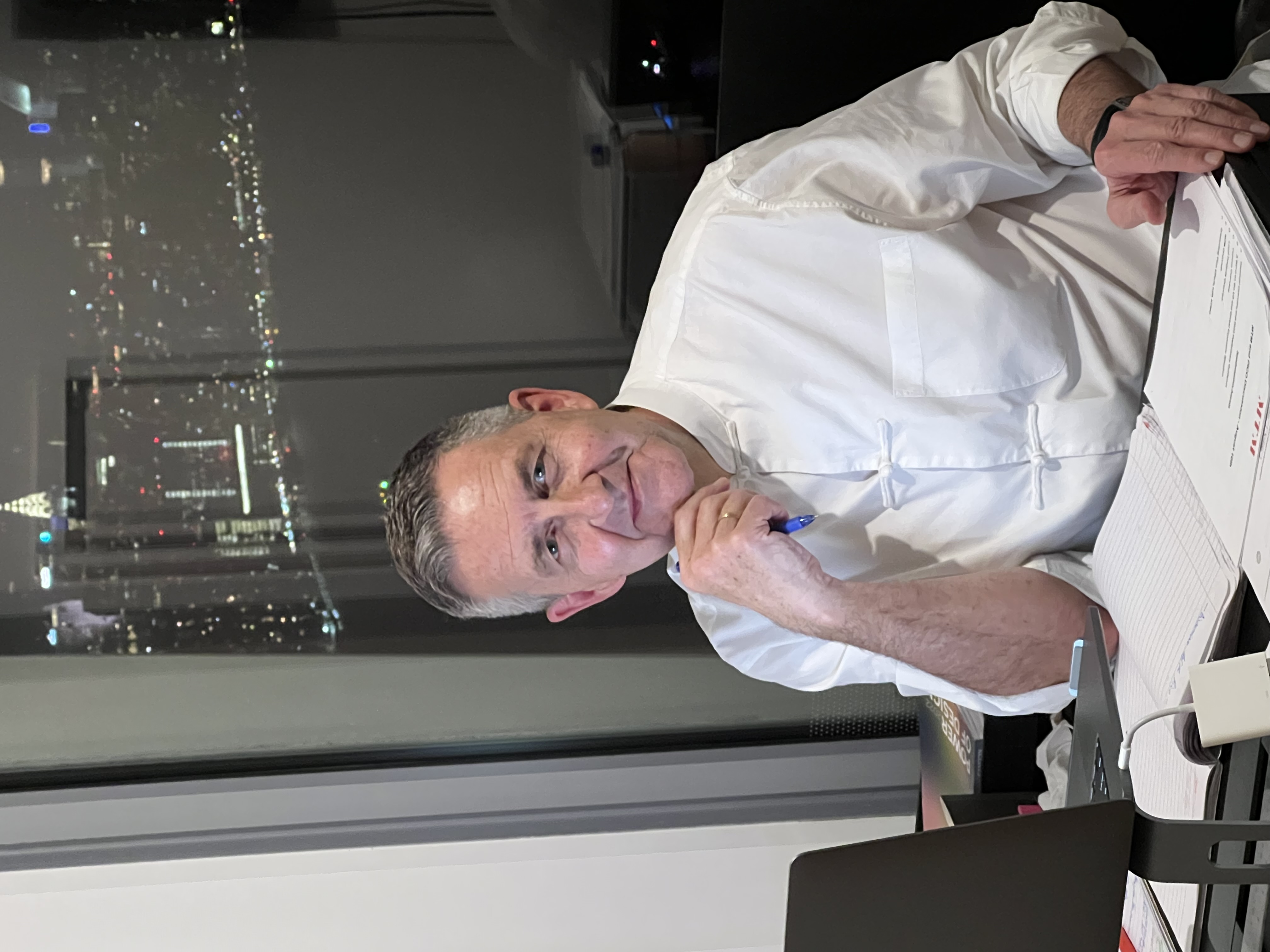
Alexei Orlov has spent nearly 30 years building businesses, shaping global brands, and learning what strong leadership looks like in very different parts of the world.
His career has taken him across the United States, the United Kingdom, Europe, and Asia. Along the way, he has worked as a CMO, CEO, entrepreneur, and strategic adviser. Each chapter has given him a different view of how people, brands, and businesses grow.
Orlov spent eight years with Wunderman/WPP, eventually becoming Vice Chairman and helping lead a major global client portfolio. He later served as Group CMO for Volkswagen across China and ASEAN. There, he oversaw eight consumer brand portfolios during five consecutive years of record sales. He also served as a Divisional CEO within Omnicom, working across business integration and transformation.
Entrepreneurship became another important chapter. Orlov founded MTM Choice and built it into an international creative and advisory group of approximately 200 people. He secured $35 million in growth funding and helped grow the business to roughly $55 million in annual revenue before transitioning it to new leadership. He remains an adviser to the chairman.
Today, Orlov works with founders, boards, investors, and leadership teams facing growth and transformation.
Despite decades of experience, he still describes himself as a student and discoverer. His approach is rooted in curiosity, listening, and the willingness to adapt. One question continues to guide his thinking through complicated decisions: “What matters?”
What is your typical day, and how do you make it productive?
My days vary, which I prefer. I might be speaking with a founder, reviewing a business problem, writing, or working through an idea with a leadership team. I have worked across many time zones throughout my career, so I learned long ago that a perfectly controlled schedule is unrealistic.
I try to protect some quiet time. Before reacting to everything coming toward me, I ask, “What matters?” It helps separate what’s genuinely important from what’s simply making noise.
How do you bring ideas to life?
I like three words: adopt, adapt, apply. An idea rarely arrives completely formed. I listen, challenge it, bring other people into the conversation, and see what survives.
Building MTM Choice reinforced this. Once you have a large team, an idea becomes stronger when other people can improve it. I don’t have a license on brains. If someone else sees something I have missed, I want to hear it.
What’s one trend that excites you?
Artificial intelligence interests me, particularly when it is combined with what I call human acuity. AI can process extraordinary amounts of information and expand what people can do. What interests me is what happens when that capability is paired with judgment, empathy, context, and curiosity.
I do not see humanity as an inconvenience that technology needs to remove. I think it becomes more important.
What is one habit that helps you be productive?
I create room for reflection. Sometimes productivity means not doing something immediately.
I have spent years working in environments where there is always another meeting, message, client request, or decision. I learned that constant activity can create the illusion of progress. A little distance often helps me see what deserves my attention.
What advice would you give your younger self?
Ask for help sooner.
When you are ambitious, you can feel that you are supposed to demonstrate how capable you are. Over time, I learned that asking a good question is often more useful than trying to prove that you already know the answer.
I would also tell myself to remain a student. Experience is valuable, but it becomes dangerous when it turns into certainty.
Tell us something you believe almost nobody agrees with you on?
I think many businesses would improve if they occasionally chose to move more slowly.
Speed has become almost automatically associated with competence. I disagree. Some decisions should be fast. Others deserve consideration, disagreement, and even discomfort.
“Slowing down to gather pace” is how I think about it. Taking another hour to understand a problem can sometimes save months spent fixing the wrong solution.
What is the one thing you repeatedly do and recommend everyone else do?
Talk to people who see the world differently from you and actually listen to the answer.
I have worked across the U.S., U.K., Europe, China, and Southeast Asia. Those experiences taught me how dangerous assumptions can be. Something that seems obvious in one market can look completely different in another.
Curiosity travels better than certainty.
When you feel overwhelmed or unfocused, what do you do?
I remove myself from the noise for a while. Walking helps. Nature helps. Writing helps. Sometimes I simply need a place where nobody is expecting an immediate answer from me.
Then I return to the same question: “What matters?”
Usually, the list becomes much shorter.
What is one strategy that has helped you grow your business or advance in your career?
I have tried to build around people who can do things I cannot.
At MTM Choice, we ultimately grew to approximately 200 people and expanded internationally. A business cannot reach that scale if every meaningful decision travels through one person.
The strategy was not simply delegation. It was finding capable people, giving them meaningful responsibility, and accepting that their way of reaching a good result might be different from mine.
What is one failure in your career, how did you overcome it, and what lessons did you take away from it?
One recurring mistake I made earlier in my career was staying too close to problems that other capable people could solve. It usually came from good intentions. I cared about the result, so my instinct was to become more involved.
I eventually realized that involvement can become interference.
I learned to clarify the result that matters, choose the right person, and then give that person enough room to surprise me. That lesson became particularly important as I moved from managing teams to building organizations.
What is one business idea you’re willing to give away to our readers?
I would build a business around what I would call a “decision audit.”
Companies audit their finances, processes, and risks, but very few examine how important decisions actually get made. Who was consulted? What information mattered? What assumptions turned out to be wrong? Did the loudest person win, or did the best argument win?
A company could review major decisions six months later and build an institutional record of how it thinks. I suspect many organizations would discover patterns they had never noticed.
What is one piece of software that helps you be productive? How do you use it?
I use simple note-taking tools more than complicated productivity systems. I want somewhere to capture a thought before it disappears.
I keep notes from conversations, phrases I want to revisit, questions, and fragments of writing. I am less interested in creating a perfect filing system than having a reliable place where unfinished thinking can live until I return to it.
Do you have a favorite book or podcast you’ve gotten a ton of value from and why?
I have always appreciated The Little Prince by Antoine de Saint-Exupéry. It looks like a simple book, but it contains an enormous amount about relationships, responsibility, curiosity, and the things people stop noticing as they get older and busier.
I have spent much of my career in complex businesses, but complexity does not always produce better answers. Sometimes a simple question exposes more than pages of analysis. I like books that remind me to look at familiar things differently, and The Little Prince does that remarkably well.
What’s a movie or series you recently enjoyed and why?
I enjoyed Perfect Days, the Wim Wenders film. Very little happens in the conventional sense, and that is exactly what I liked about it. It follows someone who finds meaning in routine, music, books, nature, and small moments that most people would probably overlook.
We live in a culture that constantly tells us that bigger and faster are better. I found it refreshing to watch a film interested in attention rather than achievement. It stays with you because it asks what actually makes a life rich without forcing an answer on you.
Key learnings
- Build teams around people who bring different skills and perspectives, then give them enough authority to use them.
- Slow down when a decision is important enough to deserve deeper thought. Constant activity is not the same as progress.
- Remain curious even after gaining experience. Knowledge becomes less useful when it turns into certainty.
- Pair new technology with human judgment, empathy, and context rather than treating those qualities as replaceable.
- Regularly review how important decisions were made, not simply whether the eventual outcome was good or bad.