
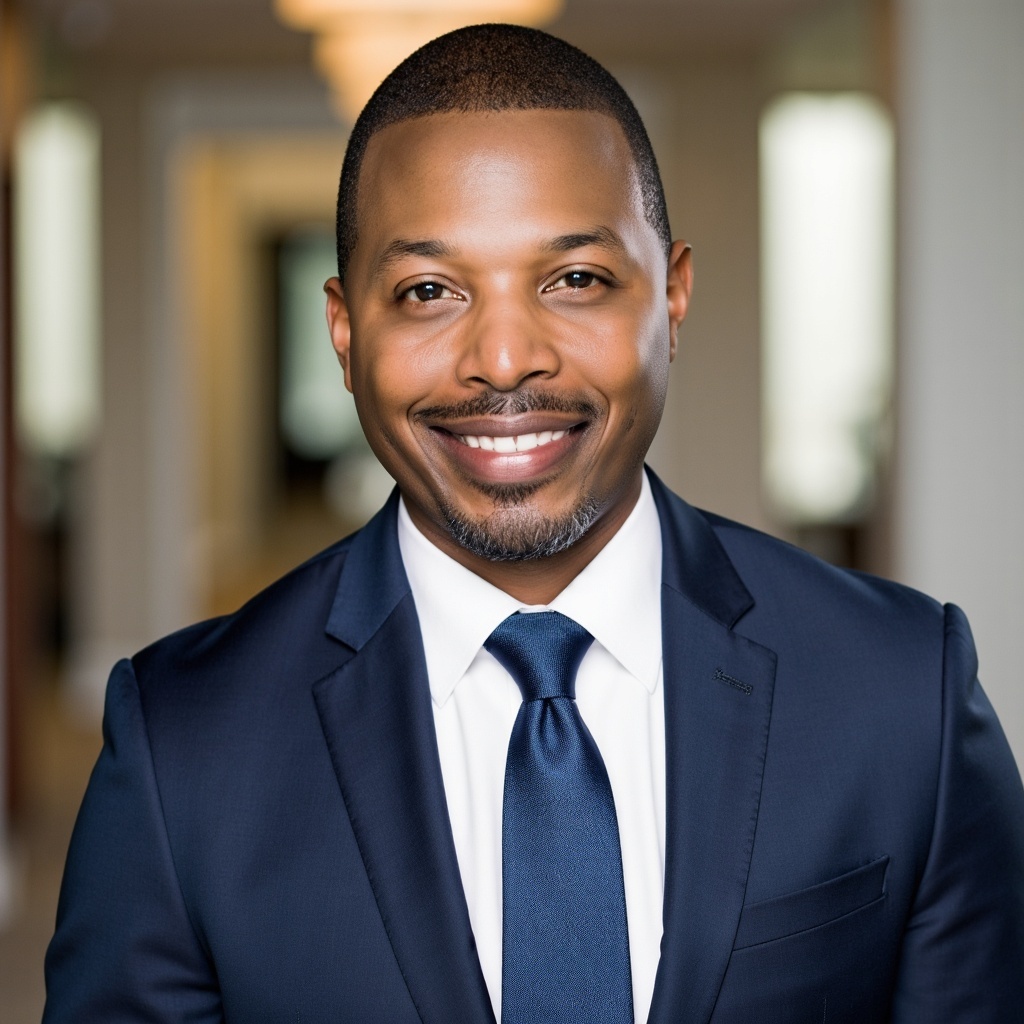
Antaun C.L. Barnett, MBA has built a career around one central idea: systems matter. Growing up in the Bronx, New York, he learned early how much access and opportunity can shape a person’s future. Education became his way forward. He attended Fairfield University, where he studied economics and played college baseball, later continuing his athletic career in the St. Louis Cardinals organization. The discipline he developed through sports still influences how he approaches leadership today.
Barnett began his career in financial services with a strong focus on production and performance. At New York Life, he generated more than $300 million in annual production while gaining firsthand insight into how organizations grow and where they struggle. Over time, his focus expanded from sales into system design, infrastructure, and execution.
Today, he serves as Head of Agency, Operations & Distribution Strategy at Atlanta Life Insurance Company, where he leads enterprise transformation across distribution and performance systems. His work now also extends into HBCU endowment strategy and institutional design, including collaborations with university leaders on long-term capital frameworks and access initiatives.
Whether he is working inside financial services, speaking at industry conferences, or contributing to community-focused programs, Barnett’s approach remains consistent: build systems that create sustainable outcomes and expand opportunity over time.
What is your typical day, and how do you make it productive?
Most of my days start early. I usually wake up around 5:00 a.m. because that is the only time of day that feels completely quiet. I spend the first hour reviewing performance dashboards, market updates, and notes from the previous day. I try to understand where friction exists before the day starts pulling me into meetings.
My calendar is usually split between strategic work and operational work. One hour might involve discussing distribution performance with leadership teams, while the next could be reviewing onboarding systems or speaking with institutional partners connected to HBCU initiatives.
I make the day productive by staying close to outcomes. I do not measure productivity by how busy I am. I measure it by whether decisions move the system forward.
How do you bring ideas to life?
I pressure-test ideas quickly. A lot of people stay in the conceptual phase too long. I prefer to move ideas into structure as early as possible.
When we recently started discussing HBCU endowment frameworks, the conversation immediately became operational for me. What governs the capital? How is it measured? What systems support long-term sustainability?
If the idea cannot survive contact with implementation, it probably is not ready.
What’s one trend that excites you?
The convergence of AI and operational infrastructure excites me the most. Not because it replaces people, but because it removes inefficiency.
Most organizations are overloaded with information but still struggle with execution. The companies that win will be the ones that use technology to improve decision-making speed and consistency.
What is one habit that helps you be productive?
I review performance constantly. Weekly. Sometimes daily.
Most people wait too long to evaluate whether something is working. By the time quarterly results arrive, the problem has already compounded.
I believe in shorter feedback loops.
What advice would you give your younger self?
Stop chasing titles and focus on learning systems earlier.
Early in my career, I focused heavily on performance. That mattered, but understanding how systems produce outcomes mattered more.
Once I understood that, my perspective changed completely.
Tell us something you believe almost nobody agrees with you on?
I think most organizations have too many meetings and not enough operating structure.
People often use communication to compensate for unclear systems. If the process is strong, you need fewer conversations, not more.
What is the one thing you repeatedly do and recommend everyone else do?
Write things down.
Every major idea I have worked on started on paper first. Structure becomes clearer when you can actually see it.
I carry notebooks everywhere because systems are easier to build when thoughts stop floating around in the abstract.
When you feel overwhelmed or unfocused, what do you do?
I simplify the problem.
When people feel overwhelmed, it is usually because too many variables are competing at once. I reduce things back to the core objective and focus on the next executable step.
I also go back to routines. Training from baseball taught me that consistency creates stability.
What is one strategy that has helped you grow your business or advance in your career?
Learning how to move from production into architecture changed everything for me.
A lot of people become strong performers but never learn how to design systems around performance. Once I shifted from simply producing outcomes to understanding how to build environments that consistently create outcomes, my opportunities expanded significantly.
What is one failure in your career, how did you overcome it, and what lessons did you take away from it?
Being passed over for a leadership opportunity early in my career changed me.
At the time, I thought performance alone would carry me into leadership. It did not.
That experience forced me to look deeper at organizational design, communication, and strategic thinking. It pushed me beyond execution and into system ownership.
Looking back, it was probably one of the most important moments of my career.
What is one business idea you’re willing to give away to our readers?
I think there is a massive opportunity in building operational education platforms for underserved institutions.
Not motivational content. Actual infrastructure education—governance, capital systems, operational frameworks, and implementation strategy.
A lot of organizations do not fail because they lack ambition. They fail because nobody taught them how systems work.
What is one piece of software that helps you be productive? How do you use it?
Microsoft OneNote is still one of the most useful tools I use.
People expect a complicated answer, but I use it heavily for mapping systems, documenting frameworks, and organizing operational thinking. I like tools that reduce friction.
Do you have a favorite book or podcast you’ve gotten a ton of value from and why?
One book I revisit often is Outliers by Malcolm Gladwell. What I appreciate most is how it breaks down the idea that success is rarely just about raw talent or hard work alone. Gladwell shows how timing, opportunity, access, repetition, and experience all play a major role in becoming exceptional at something. The concept of the “10,000-hour rule” especially resonated with me because expertise comes from consistent work over time and from getting real-world reps early and often. In my career, I’ve seen firsthand how preparation, experience, and being in the right environment can make a huge difference in long-term success.
What’s a movie or series you recently enjoyed and why?
I recently rewatched Moneyball.
Most people think it is a baseball movie. It is really a systems movie. It shows what happens when someone questions legacy thinking and rebuilds the model around data and efficiency.
That resonates with me a lot.
Key learnings
- Sustainable growth comes from systems, not short-term activity.
- Strong execution requires ownership from design through implementation and performance.
- Access and opportunity expand when institutions build structures that can sustain outcomes over time.
- Short feedback loops and operational clarity improve decision-making.
- Leadership is not just about performance. It is about building systems that continue working under pressure.