
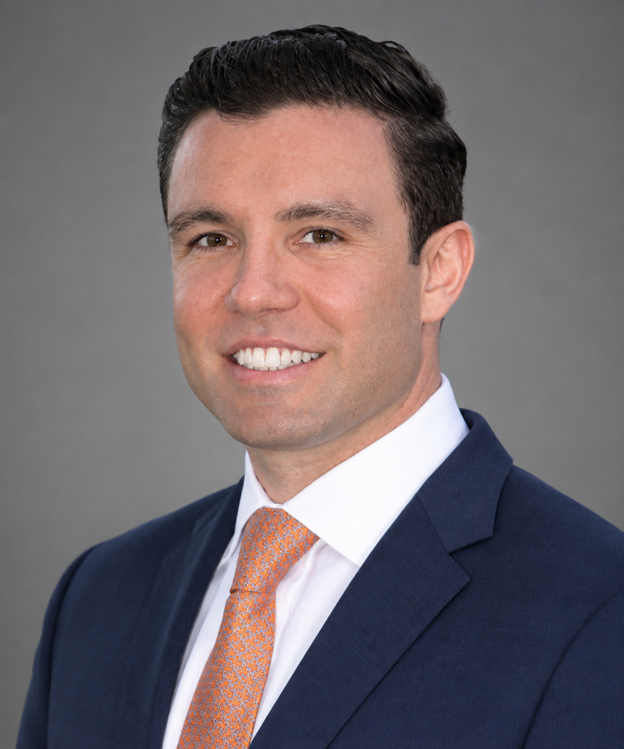
Brian Cannella is Senior Managing Director and Head of Transactions and Capital Markets for the real estate group of a national alternative investment firm, where he also sits on the Investment Committee. Based in Boca Raton, Florida, he directs the execution of developments, acquisitions, and dispositions for the group’s equity funds and oversees debt sourcing, structuring, and lender relationships across the platform.
Since joining the firm in 2013, Brian has closed more than $30 billion in transactions spanning the student housing, multifamily, seniors housing, medical office, light industrial and self-storage sectors.
Earlier in his career, Brian worked in New York City in the construction and real estate industries, where he advised, managed and analyzed the financial, operational, and business risks associated with the development, acquisition, and disposition of commercial space.
Brian holds a Bachelor of Science in Civil Engineering from Union College and a Master of Business Administration from the University of Notre Dame.
What is your typical day, and how do you make it productive?
Workout, coffee and the WSJ first, before anything else gets my attention. Working out clears my head and it’s the hour no one can take from me. Then it’s a mix of calls with lenders, partners, investors and my team, moving whatever deals happen to be live that week. I don’t let my inbox run the day. I pick the two or three things that actually matter and go after those first; everything else can wait its turn. The biggest thing for me is being in it with the team. I’d rather be working through the problem with my team than hearing about it later. And when things get tense, I’ve been known to turn on the boombox and take a lap around the office. Deals are serious, but we don’t need to take ourselves too seriously.
How do you bring ideas to life?
I test ideas against real numbers and real people, fast. In this business, a good idea doesn’t mean much until you run it through underwriting, get a lender comfortable with it, and it holds up in front of the investment committee. I don’t like sitting on things. If an idea has legs, I want to know within a couple of days/weeks, not weeks/months, whether it’s worth pursuing further. Most of the good ideas don’t start with me anyway. They come from someone on the team, a conversation with a partner, or something I read that morning. My job is to ask the obvious questions early, cut through the noise, and get everyone rowing in the same direction. If it doesn’t work, we try to find a creative way to make it work. If it feels wrong & forced, we kill it quickly and move on. If it does work, we go win it.
What’s one trend that excites you?
Although it sounds cliché, AI, without question. It’s one of the mega-trends I think about most, on both the excitement side and the side that keeps me up at night. In real estate specifically, the ability to underwrite faster and spot patterns across markets is a real edge for firms willing to use it well. I don’t think it replaces judgment, but it changes how quickly you can synthesize data, get to the point faster where judgment actually matters. Ultimately, AI takes the grunt work off my team’s plate so they can spend more time on the calls, the relationships, and the hard decisions that matter.
What is one habit that helps you be productive?
Keeping things simple. I try not to let perfect be the enemy of good, especially on a deadline, and the deals and decisions that go smoothest are usually the ones where I resisted the urge to overcomplicate them. That habit came from years of closing transactions where speed and clarity mattered more than a risk-free or flawless model. In practice, that means getting to the point fast. What’s the real issue, what’s the associated risk, what’s the answer based on the information at hand, and how do we achieve it. If a conversation is going in circles, I’ll cut in and ask that. It saves everyone time, keeps the drama out of it, and keeps the team focused on what actually matters/moves the deal.
What advice would you give your younger self?
Don’t take life too seriously, and don’t sweat the small stuff, but stay focused on what actually matters. I’d tell my younger self that the work will always be there, and it’s worth being more patient with the process and the people around you along the way.
Tell us something you believe almost nobody agrees with you on?
That the way things were historically done isn’t necessarily the way they should continue to be done. I think a lot of people, especially in an industry with as much institutional memory as real estate, default to doing things a certain way because that’s how it’s always been done. I’d rather challenge that and ask whether it still makes sense today. Sometimes it does, and we keep it. But if nobody can tell me why we do it that way, that’s usually a sign we shouldn’t.
What is the one thing you repeatedly do and recommend everyone else do?
Do things the right way, even when nobody’s watching, and someone is always working harder. That’s something I was raised on, and it’s carried through my whole career, from the construction and brokerage side early on to leading transactions and capital markets today. It sounds simple, but it’s the one thing I’d tell anyone starting out to hold onto no matter what.
When you feel overwhelmed or unfocused, what do you do?
I get outside and get moving, whether that’s tennis or playing sports with my sons. Stepping away from a problem for an hour usually gets me back to it with more clarity than pushing straight through would have. Nothing puts a bad day at the office in perspective faster than my kids. And if I’m stuck at the office, the boombox comes out. A few songs and a lap around the floor resets me and usually the rest of the team too.
What is one strategy that has helped you grow your business or advance in your career?
Building relationships with our partners early and staying in those relationships through the ups and downs of the market. When I think of partners, I think of all parties involved in a real estate transaction, ranging from JV partners, lenders, counterparties and our various advisors. It’s easy to be a good partner when deals are flowing. What people remember and representative of true character is who picked up the phone when things got hard. I’ve always tried to be someone our partners actually want to work with: straight answers, no drama, even-keeled, and doing what I said I’d do. That approach has carried me through every step of my career. It helped me as an analyst, then in starting our capital markets group, and now as head of transactions, where I oversee every deal from inception to close, through asset management and ultimately disposition. It’s also part of how our team grew from about 20 people to more than 130, and how the platform grew from roughly $1 billion to more than $20 billion in AUM. I’d never take credit for that growth alone. It took a great team, but those relationships are a big reason people keep coming back to the table with us.
What is one failure in your career, how did you overcome it, and what lessons did you take away from it?
Early in my career, I underestimated how much a deal can change between signing and closing. I fell in love with the deal and because I hate to lose, we ultimately closed on the deal, despite the facts & circumstances changing, making the deal a less desirable investment. That one stung, but I owned it. I went back and looked hard at why we let desire to close & ego overtake sound judgment. What came out of it was more discipline around diligence, and an open mind to always reevaluate your decision given a change in facts and circumstances. The lesson stuck with me: do it the right way, don’t be too proud, even if it means not closing on the deal.
What is one business idea you’re willing to give away to our readers?
There’s real opportunity in leveraging automation, AI, and technology to build better and more efficient systems for underwriting, diligence and closing. Real estate transactions are very slow moving in nature, because of redundancies and reluctance to embrace change and technology. Anyone who solves that well would save real estate professionals a lot of hours and dollars.
What is one piece of software that helps you be productive? How do you use it?
I’ve been trying to leverage AI to help summarize documents, create initial drafts, and aggregate data to enable me to make faster decisions based upon synthesized data. It’s effectively an extension of me, where I can ask it questions, challenge assumptions and bounce ideas off of it.
What is the best $100 you recently spent? What and why?
Hard to pin down one purchase, but anything that gets me more time with my sons, whether it’s tickets to a game or sports gear for whatever they’re playing that season, tends to be the best money I spend. The last $100 was probably on a bucket of baseballs that I use to throw batting practice to my oldest son.
Do you have a favorite book or podcast you’ve gotten a ton of value from and why?
I’m a daily WSJ reader and Bloomberg Surveillance listener. Tom Keene and crew get me going every morning! I enjoy podcasts and articles more than a single book because it keeps me abreast of market movers, trends, and what the most important things to be thinking about that day.
What’s a movie or series you recently enjoyed and why?
I’ll cheat a little here, because the one I keep going back to isn’t new: Rudy. As a Notre Dame grad, I’m probably a little biased, but it’s the movie I go back to every time. It’s about a guy nobody expected anything from who outworked everyone in the room and earned his shot. He never had the most talent, and he never acted like he was owed anything. He just kept showing up and putting in the work. I still get fired up, and a little teary-eyed, every time I watch it.
Key learnings
- Relationships are the real long-term asset. Success in real estate is built on consistent relationships in every market cycle, not one-off deals.
- Keep it simple and move fast. Simplicity and discipline in decision-making often outperform overcomplicated processes, especially under deadline pressure. Test ideas quickly, and kill the ones that don’t work.
- Do it the right way, and work harder than everyone else, even when nobody’s watching. Integrity and reputation compound over a career, and doing the work right up front is almost always faster than fixing problems late. “The standard is the standard” and “smooth is fast.”
- Challenge “the way it’s always been done.” Stay curious, question old playbooks, and embrace tools like AI that free up time for the judgment calls that matter.
- Lead from the trenches, and don’t take yourself too seriously. Stay humble, credit the team, and bring levity when things get tense. Family time and getting outside are an important part of staying sharp, not a trade-off against the work.