
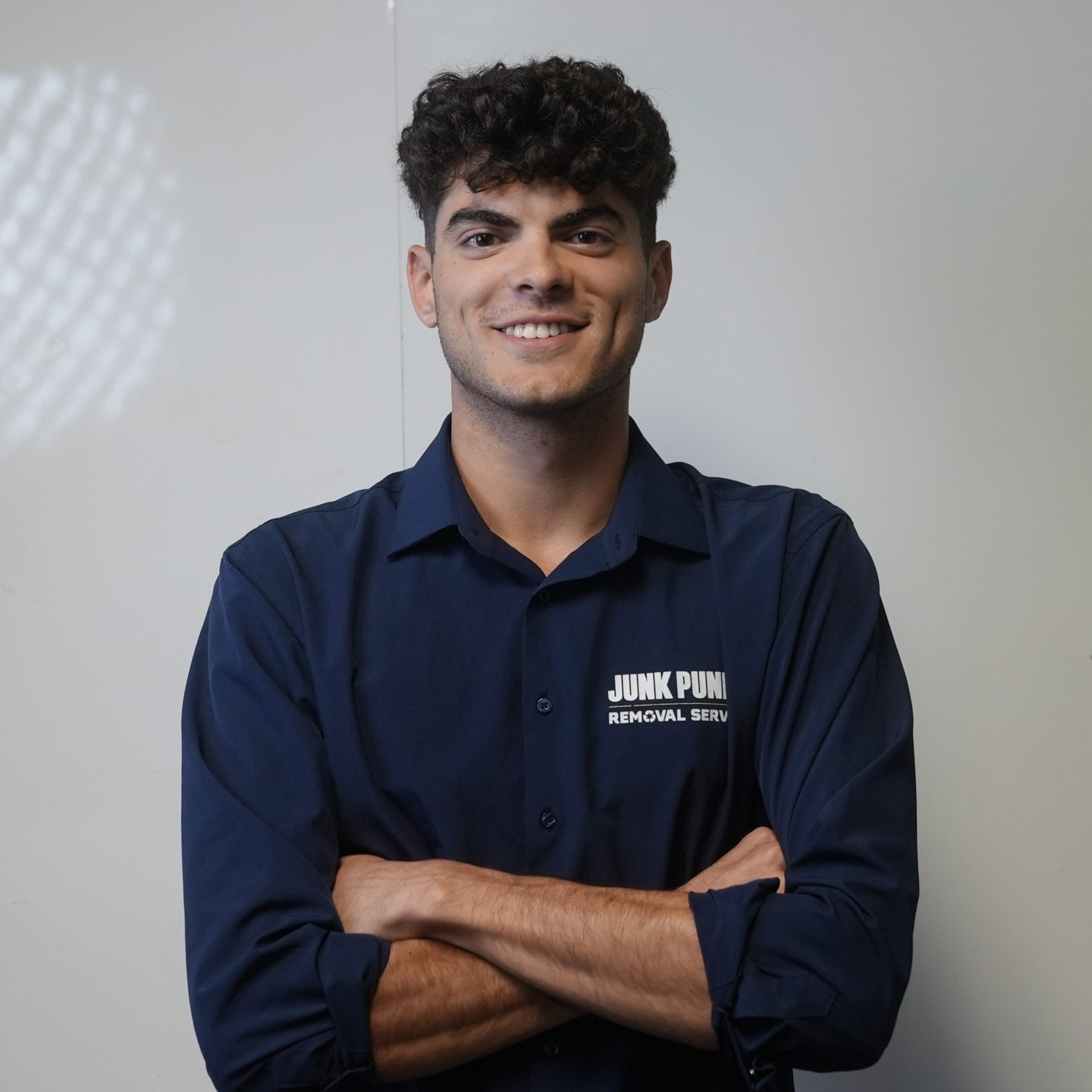
Logan Sullivan is the co-founder of Junk Punks, a Tampa Bay-based junk removal company built to raise the standard of professionalism in the industry. Originally from Wisconsin, Logan started the business with co-founder Ryder Radke using a high-mileage Chevy Tahoe, a $2,500 trailer, and a belief that a blue-collar service company could deliver better communication, stronger systems, and a genuinely exceptional customer experience. Today, he focuses on building the operating system behind Junk Punks—including training, recruiting, technology, marketing, and leadership development—as the company grows into new markets through franchising. Logan is passionate about turning overlooked service businesses into modern, scalable brands and creating opportunities for hardworking operators to build something of their own.
What is your typical day, and how do you make it productive?
My day usually starts with the numbers: leads, booked jobs, average ticket, close rate, labor, and what is happening in each market. From there I spend time with our leadership team solving the highest-impact bottleneck, whether that is recruiting, marketing, operations, or franchise support. I try to protect a few uninterrupted blocks for building systems instead of living entirely in messages and meetings. The day is productive when I finish it knowing the company is less dependent on me than it was that morning.
How do you bring ideas to life?
I start by testing the idea in the real world as quickly and cheaply as possible. We will run it on one truck, in one market, or with one small group before trying to roll it out everywhere. Then we document what happened, listen to the people closest to the work, improve the process, and repeat it until it is simple enough to train. Ideas become valuable when they survive contact with customers and can be executed consistently by the team.
What’s one trend that excites you?
I am excited by the professionalization of overlooked home-service industries. Customers now expect the same speed, transparency, communication, and convenience from a junk removal company that they expect from a modern technology brand. That creates a huge opportunity for operators who combine blue-collar execution with great systems, software, branding, and customer experience.
What is one habit that helps you be productive?
I write down the single most important outcome for the day before the noise starts. There will always be calls, messages, and small fires, but that one priority keeps me from confusing activity with progress. If I move the most important thing forward, the day usually feels productive.
What advice would you give your younger self?
Start sooner, stay scrappy, and do not wait to feel qualified. You learn business by serving customers, making mistakes, tracking the numbers, and taking responsibility for the outcome. I would also tell myself to document what works much earlier, because hard work can start a company, but systems are what allow it to grow.
Tell us something you believe almost nobody agrees with you.
I believe a so-called boring service business can be a better entrepreneurial opportunity than most trendy startups. You do not need to invent a new category; you can enter an overlooked industry, obsess over answering the phone, showing up, communicating clearly, and keeping promises, and build an exceptional company. Boring problems are often the ones customers are happiest to pay someone reliable to solve.
What is the one thing you repeatedly do and recommend everyone else do?
Talk to customers and frontline team members every week. Reports show you what happened, but those conversations explain why. They expose broken handoffs, confusing pricing, missed expectations, and good ideas that never make it into a leadership meeting. Staying close to the work is one of the fastest ways to make better decisions.
When you feel overwhelmed or unfocused, what do you do?
I get everything out of my head and onto paper, then separate what is truly urgent from what is merely loud. I choose the next concrete action, shut off distractions, and finish that before moving on. If I am still stuck, I go back to the numbers or spend time with the team in the field; both usually make the real priority obvious.
What is one strategy that has helped you grow your business or advance in your career?
We turned great customer communication into an operating strategy, not just a courtesy. Fast lead response, clear arrival windows, upfront expectations, professional crews, follow-up, and review requests all reinforce one another. That consistency improves conversion, referrals, reviews, and repeat business at the same time. In a fragmented industry, simply doing what you said you would do—every time—became a real competitive advantage.
What is one failure in your career, how did you overcome it, and what lessons did you take away from it?
One of my biggest early failures was letting too much of the business live in my head. I assumed that because Ryder and I knew how to price jobs, talk to customers, and solve problems, other people would pick it up the same way. Growth exposed every undocumented decision. We overcame it by slowing down enough to build playbooks, training, scorecards, and accountable leaders. The lesson was that if a process cannot be taught and measured, it is not really a system yet.
What is one business idea you’re willing to give away to our readers?
Build a property-turnover concierge service for small landlords and property managers. One company would coordinate junk removal, donation drop-offs, light cleaning, basic repairs, lock changes, and photo documentation between tenants. Most owners currently manage several vendors and repeated phone calls for every turnover. A trusted local operator with simple package pricing, dependable scheduling, and before-and-after reporting could remove a major recurring headache.
What is one piece of software that helps you be productive? How do you use it?
Workiz is central to how we run the service side of the business. We use it to manage leads, scheduling, customer communication, job details, estimates, routing, payments, and performance reporting. Having the operation in one system gives the team a shared source of truth and lets us see where a lead or job is getting stuck instead of relying on memory or scattered messages.
What is the best $100 you recently spent?
The best recent $100 I spent was on a simple wireless headset for focused calls. It is not exciting, but clearer conversations and the ability to take notes or review a dashboard while talking save me time every day. Small tools that remove friction from something you do repeatedly usually have an outsized return.
Do you have a favorite book or podcast from which you’ve received much value?
Traction by Gino Wickman has been especially valuable because it turns the vague idea of getting organized into practical operating disciplines: clear accountability, measurable goals, regular meeting rhythms, and solving issues at the root. For a founder moving from doing everything personally to building a leadership team, that framework is useful because it forces clarity.
What’s a movie or series you recently enjoyed and why?
I recently rewatched The Last Dance. I enjoy it because it shows the standard, preparation, competitiveness, and accountability behind sustained excellence. Talent matters, but the series is really about the daily intensity required to build a team that expects to win. That mindset translates directly to entrepreneurship and leadership.
Key learnings:
- Start by solving a real customer problem, then test ideas quickly in the real world.
- In an overlooked industry, communication, reliability, and professionalism can become powerful competitive advantages.
- Hard work starts a business, but documented systems, scorecards, and leaders allow it to scale.
- Stay close to customers, frontline employees, and the numbers so you can identify the real bottleneck.
- Focus on the most important outcome each day instead of confusing constant activity with progress.