
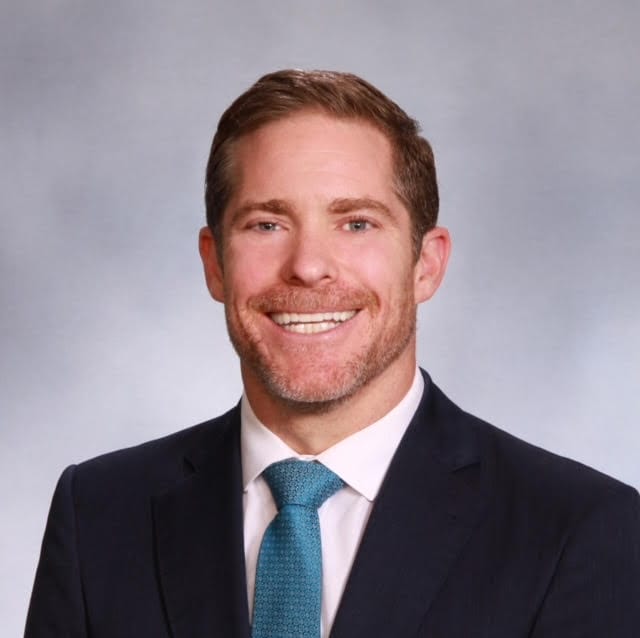
Richard Birkett is a highly skilled and team-oriented Colon and Rectal Surgeon with additional General and Trauma Surgery expertise in Greater Boston. He specializes in minimally invasive robotic and laparoscopic surgery. He focuses these advanced techniques on the treatment of colon and rectal cancer, diverticulitis, GI immunologic diseases, benign diseases of the GI tract, and anorectal disease. In addition, he has a background in academia, authoring multiple peer-reviewed manuscripts and book chapters. He is also committed to surgical education and is the site director for surgical residents.
Dr. Birkett holds an MD and an MBA, enhancing his expertise in medical device marketing, product development, business development, and evaluation. He has experience in developing and executing Sustainability/ESG programs in healthcare and the device industries. His proficiency in team leadership, peer-to-peer communication within multi-disciplinary teams, complex problem-solving, and patient advocacy is well recognized.
In addition to his professional achievements, Dr. Birkett is an avid athlete, having completed multiple Ironman races in 2012, 2021, and 2022 and half Ironmans in 2013 and 2024. He also runs marathons, often for charitable causes, including the Boston Marathon in 2017 for Plan International and the 2024 NYC Marathon for Camp Shriver. His dedication to his profession and charitable athletic pursuits exemplifies his commitment to excellence and community service.
What is your typical day, and how do you make it productive?
My typical day begins early. I try to see all of my patients in the hospital in the morning, before moving on to operating, colonoscopies, clinic, or patient consults. Each day varies with what I have scheduled, but it is usually some combination of the above. In addition, each week will have some time carved out for my own continued medical education as well as work with medical device companies. Exercise is non-negotiable; whether it’s a run or swim, it keeps me energized and improves my mental clarity. My productivity stems from effective planning and delegation, and working through my to-do list in order of highest to lowest priority.
How do you bring ideas to life?
Bringing ideas to life starts with identifying a genuine need or problem. I leverage my dual background in medicine and business to approach challenges holistically, blending clinical insights with strategic thinking. Collaboration is key—I work closely with interdisciplinary teams to brainstorm, prototype, and refine solutions. Mentorship also plays a role; I gain fresh perspectives that enhance innovation by sharing ideas and learning different techniques from peers, colleagues, and my own mentors. Ultimately, perseverance and adaptability turn ideas into impactful outcomes.
What’s one trend that excites you?
One trend that excites me is the growing integration of artificial intelligence in healthcare. AI has the potential to revolutionize diagnostics, personalize treatment plans, and optimize surgical outcomes. For instance, advanced imaging technologies powered by AI can enhance precision in minimally invasive surgeries, leading to better patient outcomes and faster recovery times. Additionally, AI-driven data analysis can uncover patient care patterns, helping predict complications before they arise. As a surgeon and innovator, I’m thrilled by the possibilities of combining human expertise with machine learning to transform healthcare delivery and improve lives globally.
What is one habit that helps you be productive?
One trend that excites me is the growing integration of artificial intelligence in healthcare. AI has the potential to revolutionize diagnostics, personalize treatment plans, and optimize surgical outcomes. For instance, advanced imaging technologies powered by AI can enhance precision in minimally invasive surgeries, leading to better patient outcomes and faster recovery times. Additionally, AI-driven data analysis can uncover patient care patterns, helping predict complications before they arise. As a surgeon and innovator, I’m thrilled by the possibilities of combining human expertise with machine learning to transform healthcare delivery and improve lives globally.
What advice would you give your younger self?
I would tell my younger self to embrace patience and the process of growth. When you start out in medicine, it’s easy to feel like you need to achieve everything quickly (skills, knowledge, publications, etc), but I’ve learned that meaningful progress takes time and persistence. Building expertise, developing interpersonal and leadership skills, and creating a balanced life require steady effort and resilience. I’d also emphasize the importance of seeking mentorship and being open to feedback, as these relationships are invaluable for personal and professional development. Finally, I’d remind myself to view setbacks as opportunities for growth, and celebrate even the smallest of victories.
Tell us something you believe that almost nobody agrees with you on?
I believe that surgical precision is as much an art as a science. While many may view surgery through a clinical lens, I see it as a creative process that requires intuition, adaptability, and a keen understanding of human anatomy. Each procedure presents a unique challenge, and the ability to innovate within the evidence-based medicine framework sets exceptional surgeons apart. This perspective may spark debate, but art and science are inseparable in achieving surgical excellence.
What is the one thing you repeatedly do and recommend everyone else do?
I highly recommend regular reflection to others. Reviewing the day’s events, evaluating decisions, and identifying improvement areas fosters personal and professional growth. Reflection helps clarify goals, reinforces learning, and ensures a proactive approach to challenges. Whether one chooses to do this through journaling or just by quiet contemplation, this habit cultivates mindfulness and equips individuals to approach each new day with clarity and purpose.
When you feel overwhelmed or unfocused, what do you do?
When I feel overwhelmed or unfocused, I take a step back and give myself a moment to reset. As a surgeon and an athlete, I’ve learned the importance of balance. Sometimes, a quick break—a short walk, a deep breath, or more often a workout—helps me clear my mind and regain my focus.
In surgery, staying calm under pressure is essential, so I rely on that experience to guide me during stressful times. I also remind myself of my long-term goals, whether related to patient care, education, or personal challenges. I’ll also lean on my surgical partners for support if needed. Collaboration and mentorship are key; talking things through with others can often help me gain perspective and clarity.
What is one strategy that has helped you grow your business or advance in your career?
One strategy that has been instrumental in advancing my career and growing my practice is integrating continuous learning and mentorship. As a surgeon, staying on top of the latest advancements in robotic and laparoscopic surgery is crucial for providing the best care. But it’s not just about keeping up with the technical side of medicine. I also focus on mentorship—both as a mentor and a mentee.
Being the site director for surgical residents has allowed me to continue to teach and learn. It helps me refine my leadership skills and keeps me grounded in the importance of collaboration. Mentoring and being a mentee of others, continues to strengthen my practice, fosters innovation, and deepens my commitment to excellence. This strategy has helped me grow professionally and be a more dynamic, capable team member. Additionally, my MBA has enabled me to think strategically about business development and patient care, further advancing my career.
What is one failure in your career, how did you overcome it, and what lessons did you take away from it?
One of the challenges I faced early in my career was balancing the demanding nature of surgery with the rest of my life- family, friends, and my own health. This is unfortunately a common problem in medicine, and especially in the surgical fields. I found myself taking on too much at work outside of my primary responsibilities, believing I could juggle all of that while continuing to be a healthy and present partner, friend, and family member. This led to burnout and affected my performance in both clinical and non-clinical areas.
To overcome this, I had to take a big step back and reassess my priorities. I also sought advice from mentors, who reminded me that focusing on my own health first was most important, as without that I wouldn’t be able to help others. This experience taught me the importance of setting clear boundaries, being realistic about my limits, and recognizing when I need to ask for help.
The key lesson from this failure was the significance of balance and self-care. By focusing on what truly matters and permitting myself to step back when needed, I’ve enhanced my work-life harmony and continued to pursue my clinical and business interests more effectively.
What is one business idea you’re willing to give away to our readers?
One business idea I’d be willing to share is developing a healthcare-focused platform that connects patients with specialists for remote consultations and follow-up care, particularly for chronic conditions like diverticulitis, GI immunologic diseases, or post-surgical recovery. As telemedicine continues to grow, a significant opportunity exists to create a platform that offers personalized, continuous care from specialists in a virtual environment.
The platform could provide patients access to expert advice, follow-up appointments, and even post-surgery rehabilitation while focusing on patient education and outcomes. It could also integrate real-time tools to monitor patient progress, improving patient engagement and treatment success rates.
This idea comes from my experience working in the medical field, where many patients struggle to access specialized care on time, especially when managing chronic conditions or recovering from complex surgeries. The key to success would be integrating advanced technology, a user-friendly interface, and a robust network of healthcare providers to create a seamless and supportive patient experience.
What is one piece of software that helps you be productive? How do you use it?
One piece of software that significantly helps me stay productive is Dragon Dictation. This allows me to dictate all of my clinic, inpatient, and operative notes, without having to type them all out by hand. Not only does it save a lot of time for someone who is not fast at typing, it also allows me to create more succinct and thoughtful notes for other providers to read, since I can be going through patient records and information while dictating the note.
Do you have a favorite book or podcast you’ve gotten a ton of value from and why?
One of my favorite books that has provided immense value is “The Emperor of All Maladies: A Biography of Cancer” by Siddhartha Mukherjee. As a surgeon with a focus on colon and rectal cancer, this book gave me a deeper understanding of the history of cancer treatment and the complex challenges surrounding it. Mukherjee’s thorough exploration of the science, the human stories, and the evolving approaches to treatment resonated with me personally and professionally. It reinforced my commitment to providing the best care for my cancer patients and deepened my perspective on the broader fight against cancer.
In terms of podcasts, I’ve gained a lot from “The Drive” by Dr. Peter Attia. His podcast focuses on health, longevity, and wellness, often exploring cutting-edge medical research, which ties into my interest in not just treating diseases but understanding the science behind prevention and optimal health. It’s an excellent resource for staying updated on advancements in healthcare while aligning with my interests in medical innovation and improving patient outcomes.
What’s a movie or series you recently enjoyed and why?
A series I’m currently enjoying is Shrinking, on Apple TV. It has a great cast, and turns a very relatable sad storyline about personal crises into a feel-good blend of comedy and drama. It’s an easy watch, and I’d bet that most people can find something that happens to the characters in the show to be parallel to an action in their own lives.
Key learnings
- Productivity through Focused Planning: My typical day is structured around focus and intentionality. To stay energized and effective, I prioritize my own health to help others’ health. Planning and delegation are key to balancing clinical and non-clinical responsibilities.
- Innovation through Collaboration: Bringing ideas to life involves combining clinical insights with strategic thinking, collaborating with interdisciplinary teams, and rigorously testing solutions. Mentorship and peer perspectives enhance innovation, allowing me to refine ideas and drive impactful outcomes.
- The Exciting Future of AI in Healthcare: AI’s integration into healthcare excites me, particularly in enhancing surgery precision and personalizing treatment plans. By merging AI with human expertise, we can significantly improve patient outcomes and transform healthcare delivery.
- Learning from Failure: I experienced burnout from overcommitting early in my career. I overcame this by reassessing my priorities, setting boundaries, and seeking mentorship. This experience taught me the importance of balance, self-care, and focusing on what truly matters.
- The Importance of Reflection: Regular reflection is essential for personal and professional growth. It helps me evaluate decisions, reinforce learning, and approach challenges proactively, ensuring I remain mindful and goal-oriented.