
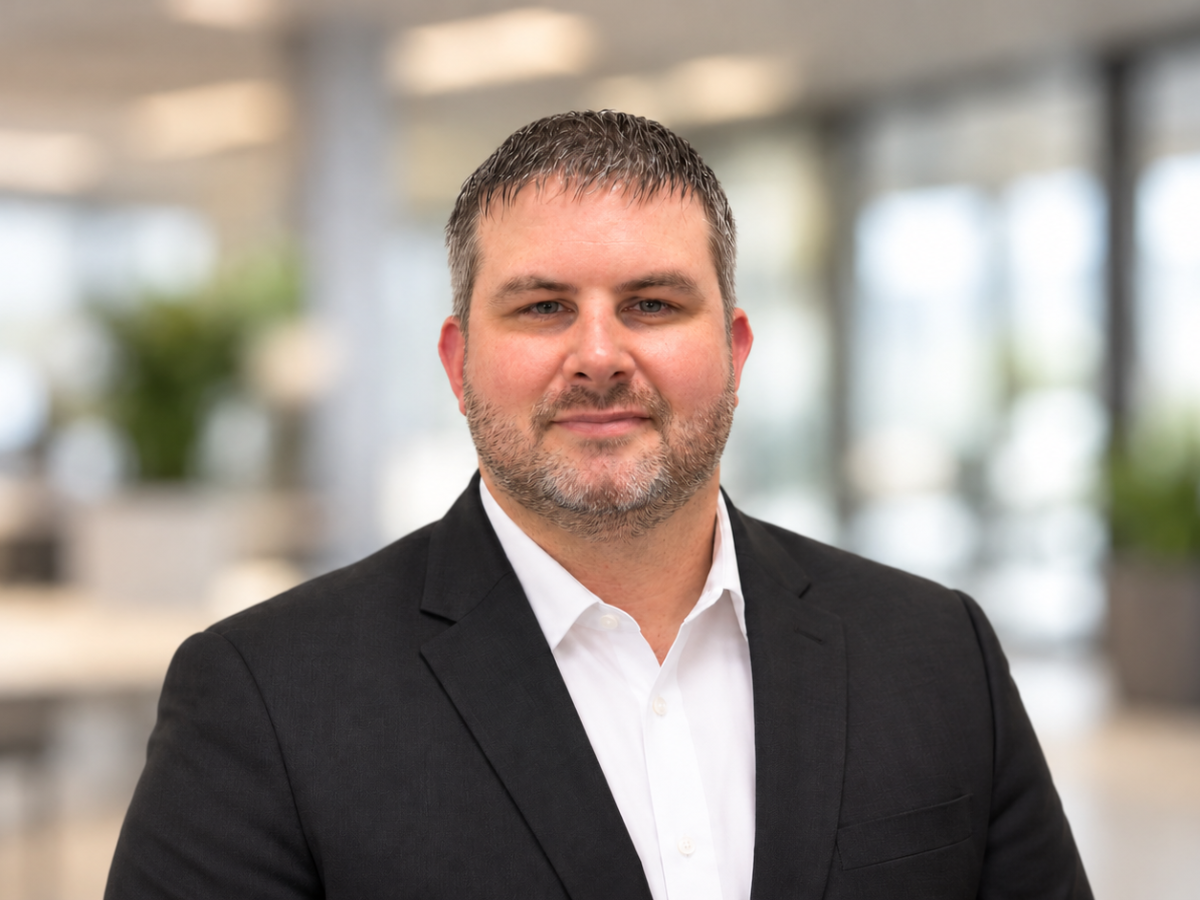
Christopher Backus grew up in Olympia, Washington, where sports became one of his earliest teachers. Baseball and football gave him a feel for repetition, preparation, teamwork, and the difference between wanting to improve and actually putting in the work to do it. He still plays softball today, partly because he enjoys the competition and partly because he has never lost the habit of staying active.
After graduating from Capital High School, Backus attended South Puget Sound Community College, where he made the Honor Roll and earned his associate degree. He then continued to Saint Martin’s University, completing a bachelor’s degree in Criminal Justice with a minor in Psychology while receiving partial academic scholarships.
His career did not follow one simple path. Backus worked for the Washington Department of Corrections, served as a reserve police officer in Shelton, worked inside the Mason County Jail, and later served as a police officer with departments including Tukwila, Tenino, and Grand Coulee.
That variety gave him a view of law enforcement from several angles. It also reinforced his belief that training should never become a box to check. He sees it as a career-long habit that keeps people sharper, more adaptable, and more willing to question their own assumptions.
Backus is equally interested in community engagement, especially with juveniles. He believes the most useful contact between police and young people often happens before there is a problem to solve.
Outside work, he enjoys lifting, softball, hiking, camping, fly fishing in Montana, and time with family. He tries to keep one rule consistent across everything he does: give full effort, but do not forget what deserves your time.
What is your typical day, and how do you make it productive?
A typical day depends a lot on whether I am working, training, or off, but I try to keep a few things consistent. I like to work out because it gives me a clear starting point and helps me get focused before the rest of the day gets busy. From there, I try to deal with what actually needs my attention instead of building a huge list and feeling like everything is equally urgent.
Police work teaches you pretty quickly that plans change. You can have an idea of how your day is going to go, and then one call changes everything, so I have learned not to measure productivity by whether everything went according to plan. For me, it is more about staying adaptable, handling what is in front of me well, and not letting one unexpected thing throw off the rest of the day.
How do you bring ideas to life?
I usually start by asking whether an idea solves a real problem or whether it just sounds good on paper. If it is related to training, I think about how it would work in a real setting, especially when someone is tired, distracted, or dealing with incomplete information.
I also like getting input from people with different backgrounds because they often notice things I would not. Someone with corrections experience may look at something differently than someone who has spent most of their career on patrol, and that kind of feedback can make an idea better. Once I think it has value, I would rather test it on a small scale, see what works, and make changes than spend too much time trying to make it perfect before anyone uses it.
What’s one trend that excites you?
I like seeing more attention placed on realistic and ongoing training instead of treating training as something that only happens when it is required. Classroom instruction has value, but people also need opportunities to practise communication, decision-making, and adapting when a situation does not unfold exactly the way they expected.
I am also interested in departments putting more effort into community engagement with younger people. I think there is real value in officers having normal conversations with teenagers and kids before there is ever a problem to solve. Those everyday interactions can make people more comfortable asking questions and can help officers understand the communities they are working in.
What is one habit that helps you be productive?
Working out is probably the most consistent habit I have because it gives me structure even when the rest of the day is unpredictable. I do not always feel motivated to train, but I have learned not to depend on motivation because it comes and goes.
That same idea applies to professional training too. If I make learning, reviewing, or practising something part of my routine, I am much more likely to stay consistent with it. I think routine carries you a lot further than waiting until you feel inspired to do something.
What advice would you give your younger self?
I would tell myself not to be in such a hurry to have everything figured out and to pay closer attention to the people around me. Some of the most useful things I have learned came from people who had been doing the job for years and had enough experience to notice details that are easy to overlook when you are new.
I would also tell myself that moving through different roles is not wasted time. Corrections, jail work, reserve policing, and patrol all gave me something different, and I probably appreciate that more now than I did while I was going through it. A career does not have to look perfectly linear to be useful.
Tell us something you believe almost nobody agrees with you on?
I think some of the best training can be pretty boring, and I do not mean that as a criticism. People often want training to be exciting, fast-paced, or constantly different, but there is a lot of value in doing the same thing correctly over and over until it becomes natural.
Sports taught me that early. Nobody gets excited about every basic drill, but repetition is usually what shows up when pressure hits and you do not have time to overthink what comes next. I think people sometimes chase novelty when they would get more value from improving the basics.
What is the one thing you repeatedly do and recommend everyone else do?
I keep coming back to the basics whenever something starts feeling more complicated than it needs to be. I ask myself what the actual problem is, what information I really have, what I am assuming, and what I can control right now.
That works in training, work, fitness, and personal life. It is easy to create extra stress by trying to solve everything at once, and usually there is one thing that actually needs your attention first. Once that is handled, the rest often becomes easier to sort out.
When you feel overwhelmed or unfocused, what do you do?
I usually do something physical because moving helps me clear my head better than sitting around thinking about the same problem. That might mean working out, taking a walk, hiking, or just getting outside for a while.
I also like writing down what is actually on my mind. When everything stays in your head, it can all feel equally important, but once it is written down, you can usually see what needs attention now and what can wait. That makes it easier for me to reset and focus on one thing at a time.
What is one strategy that has helped you grow your business or advance in your career?
One thing that has helped me is not getting too comfortable in one environment or assuming one way of doing things is the only way. Working in corrections, a jail, reserve policing, and different police departments exposed me to different people, expectations, and approaches.
That variety forced me to adapt and pay attention to what actually worked in each setting. I learned useful things from every role, including lessons about what I would do differently. I think being willing to learn from different environments has helped me more than trying to follow one perfectly planned career path.
What is one failure in your career, how did you overcome it, and what lessons did you take away from it?
Earlier in my career, I sometimes thought being confident meant having an answer right away. Over time, I realised there were situations where I would have been better off slowing down, asking another question, or listening longer before deciding what I thought.
I started noticing that some of the people I respected most were comfortable saying they needed more information. That changed the way I think about good judgment because I stopped seeing a pause as hesitation and started seeing it as part of making a better decision. It also made me more willing to ask for another perspective when I think I might be missing something.
What is one business idea you’re willing to give away to our readers?
I think there is room for more community programs where police officers and teenagers do something together that has nothing to do with enforcement. It could be softball, hiking, fishing, fitness, or some kind of practical outdoor activity that gives people something to focus on besides having a formal conversation.
The point would not be to give a speech about policing. It would be to create normal interaction, because people tend to talk more naturally when they are doing something together. Building familiarity before there is a problem can make future conversations a lot easier.
What is one piece of software that helps you be productive? How do you use it?
I am pretty basic when it comes to software, so the notes and calendar apps on my phone probably help me the most. I use them for training dates, family plans, appointments, reminders, and things I want to look up later.
I also keep short notes when an idea comes to me because I know I will forget it if I tell myself I will remember later. I prefer simple tools that I will actually use every day over complicated systems that take more time to maintain than they save.
Do you have a favorite book or podcast you’ve gotten a ton of value from and why?
I do not really have one book or podcast that I treat like a blueprint. I tend to get more value from long-form interviews, training discussions, and conversations where experienced people break down something specific that happened.
What interests me most is hearing what someone missed, what they would change, and what they learned afterward. General advice can be useful, but I usually remember detailed examples more because they give you something practical to think about. I like hearing how people reached a decision, not just being told what the right answer was.
What’s a movie or series you recently enjoyed and why?
I tend to like documentaries or series built around sports, competition, or outdoor challenges because I am interested in how people respond when things stop going according to plan. You can learn a lot about someone when they are tired, frustrated, under pressure, or forced to adjust quickly.
I also like seeing the preparation behind performance. The final competition might be the exciting part, but I usually find the training, repetition, and teamwork behind it just as interesting. That probably comes from spending so much of my life around sports and training.
Key learnings
- Repetition and consistent training can be more useful than constantly chasing new techniques.
- Experience across different roles can reveal perspectives that are easy to miss when someone stays in one environment.
- Community engagement can be more effective when it is built around normal shared activities rather than formal conversations.
- Good judgment sometimes means slowing down, asking another question, and being willing to gather more information.
- Exercise, time outdoors, and simple routines can help create stability when work itself is unpredictable.