
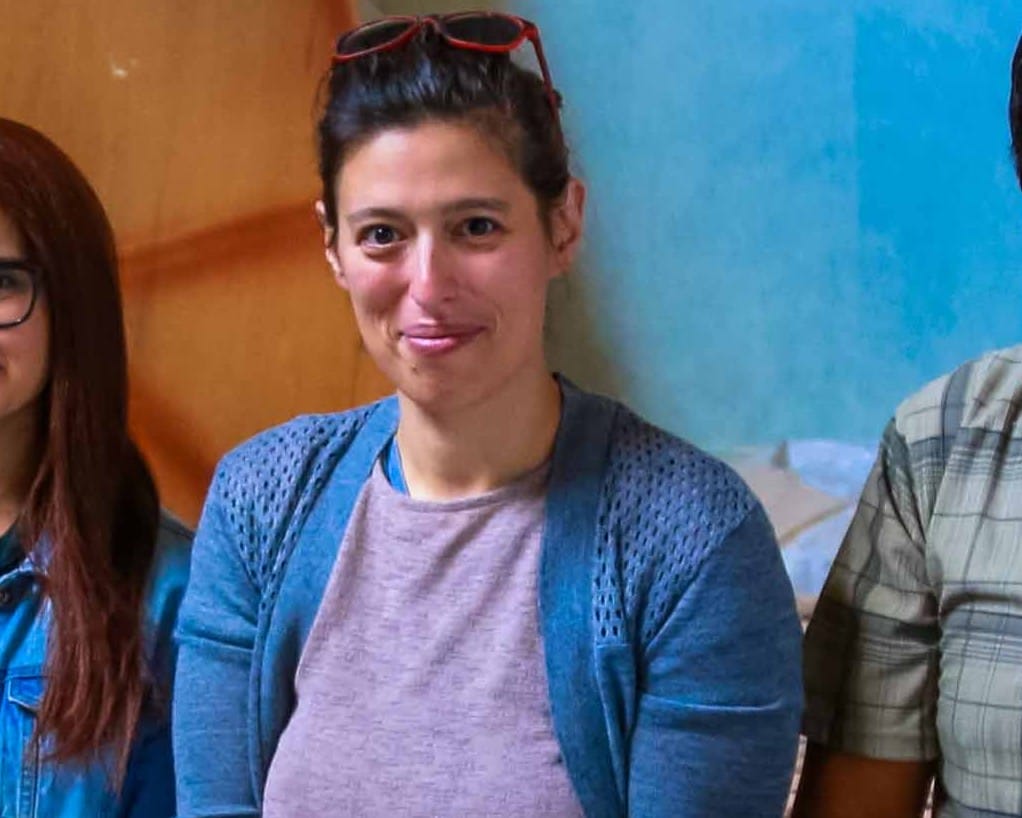
While a member of the University of California at Santa Barbara (UCSB) faculty, Danielle Kurin, PhD, taught Department of Anthropology courses at graduate and undergraduate levels. Professor Kurin directed the Phillip Walker Bioarcheology and Forensic Bone Lab and was responsible for lectures, seminars, and lab sections in bioarchaeology, osteology, human evolution, and forensics. With a field research focus on Peru and other regions of the Andes, Danielle Kurin, PhD, is fluent in Spanish and speaks Quechua and undertakes analysis of ancient human remains, including bones.
One of her completed research projects focused on understanding the history and health of prehistoric human populations at the genomic level. From 2007 to 2016, Dr. Danielle Kurin was the principal investigator and director of the Andahuaylas Bioarchaeology Project, which spans various Apurimac, Peru, sites. Dr. Kurin also served as a consulting osteoarchaeologist and subject matter expert for the Smithsonian National Museum of the American Indian’s Inka Road Exhibition, curated by Dr. Ramiro Matos Mendieta.
Danielle Kurin, PhD, remains closely engaged with her professional community and has organized World Anthropology Day and other events. Dr. Kurin chaired UCSB’s Anthropology Development Committee in 2016 and served as committee chair and director of Global Collaborative Research at the Universidad Nacional Jose Maria Arguedas in Peru.
What is your typical day, and how do you make it productive?
Time management is key:
A typical day for me is dynamic and multifaceted, requiring careful time management to balance various responsibilities. In the mornings, I might oversee archaeological digs or conduct experiments in my lab, ensuring that research projects stay on track. Later, I often meet with dignitaries, collaborators, or students to discuss ongoing work, grant opportunities, or fieldwork logistics. To stay productive, I prioritize tasks, delegate when possible, and set aside focused blocks of time for writing, analysis, and mentoring my interns. Every day is different, but staying organized helps me maximize efficiency across teaching, research, and administrative duties.
How do you bring ideas to life?
Bringing ideas to life starts with taking a big, exciting concept and breaking it down into smaller, manageable pieces. I like to sketch out the key steps—whether it’s designing an experiment, planning a dig, or writing a research paper—and then tackle them one at a time. Sometimes, that means collaborating with students or colleagues to refine the idea; other times, it’s just putting in the hours to test things out in the lab or field. The best part is seeing those early sketches and notes eventually turn into real discoveries or projects that make an impact.
What’s one trend that excites you?
I’m really excited by how fields like archaeology and materials science are embracing biomimicry—learning from nature’s designs to solve modern problems. With advances in AI and immersive tech like VR, we can now analyze ancient structures or biological systems in incredible detail and apply those insights in innovative ways. For example, studying how ancient civilizations built resilient structures could inspire sustainable architecture today. It feels like we’re on the verge of breakthroughs where the past and cutting-edge technology come together in unexpected, meaningful ways.
What is one habit that helps you be productive?
There’s something oddly satisfying about putting pen to paper and physically crossing tasks off my old-school spiral notebook. That running to-do list keeps me grounded—whether it’s lab tasks, grant deadlines, or student meetings—because seeing everything in one place stops me from dropping the ball. Plus, breaking bigger projects into smaller, check-off-able steps makes even the most overwhelming work feel manageable. And yes, I’ll admit I sometimes add things I’ve already done just for the joy of crossing them out!
What advice would you give your younger self?
I’d tell my younger self to stop obsessing over the “perfect” career blueprint—life doesn’t follow a straight line, and that’s where the interesting stuff happens. Some of my best opportunities came from unexpected detours: a chance dig site invitation, a side project that reshaped my research, even setbacks that forced me to get creative. Embrace the messiness, trust your curiosity, and remember that fulfillment isn’t about checking predetermined boxes—it’s about building a journey that feels authentically yours. (And maybe also: buy that extra tube of sunscreen for fieldwork. Wrinkles and sunburns are not academic badges of honor.)
Tell us something you believe almost nobody agrees with you on?
I’ll probably get pushback for this, but I truly believe that in a thousand years, nobody will care about today’s political or ideological debates—but they’ll still be studying well-documented archaeological data. We get so caught up in opinion wars, yet time has a way of washing away dogma while preserving tangible evidence. That’s why I trust a potsherd or a stratigraphy layer more than any trending manifesto. Of course, that doesn’t mean data can’t be misinterpreted—but at least it leaves something solid for future generations to reevaluate, unlike the noise of passing beliefs. (And no, I don’t say this at dinner parties.)
What is the one thing you repeatedly do and recommend everyone else do?
I swear by breaking overwhelming tasks into tiny, actionable steps—whether it’s analyzing excavation data or writing a grant proposal. Start with the easiest piece first (like organizing files or drafting bullet points) to build momentum. That little win tricks your brain into thinking, “Okay, I can do this”—and suddenly the mountain becomes a series of climbable hills. My interns laugh when I say even pyramids were built one stone at a time… but it’s true.
When you feel overwhelmed or unfocused, what do you do?
I’ve learned that when my brain feels like a browser with too many tabs open, the best fix is grabbing my dog’s leash and taking a brisk walk along the beach or campus trails. There’s something about the rhythm of walking, the way she tugs at smells with such single-minded joy, that forces me out of my own head. The physical movement—no phone, no emails—lets me untangle mental knots, and by the time we loop back home, I’ve usually either solved the problem or at least remembered it’s not the end of the world. (She also disapproves of wallowing—those impatient paw taps at the door are a great accountability system.)
What is one strategy that has helped you grow your business or advance in your career?
Staying mission-oriented has been my compass—it pushes me to think outside the box when hitting roadblocks, because I’m focused on why the work matters rather than just checking tasks off a list. In archaeology, that might mean finding unconventional funding sources to preserve a site or redesigning field methods when weather ruins our original plans. This approach also helped me set meaningful benchmarks; instead of just counting publications, I ask, “Is this research expanding access to the field? Will it protect cultural heritage?” That bigger-picture focus has opened doors I never expected, from collaborations with local communities to invitations to advise on policy. Turns out, when you’re driven by purpose rather than just productivity, people notice—and opportunities follow.
What is one failure in your career, how did you overcome it, and what lessons did you take away from it?
Early in my career, I led a dig that uncovered far less than we’d projected; months of work yielded almost no significant findings. At first, it felt like a professional disaster. But reframing it as data rather than failure changed everything. We published a paper on why the site was barren (turns out, ancient flooding patterns explained it), which actually advanced regional research. The lesson? There’s no such thing as true failure if you’re willing to learn from what went “wrong.” Now when plans derail—a rejected grant, a flawed experiment—I ask, “What is this teaching me?” That shift turns setbacks into steppingstones. (Though I still groan when it rains on excavation days.)
What is one business idea you’re willing to give away to our readers?
Here’s one I’ve always toyed with: a service that helps researchers and field scientists properly document and archive their raw data, notes, and samples for long-term preservation and future use. Too often, invaluable data gets lost because someone didn’t label a box correctly or skipped metadata protocols—I’ve seen entire dissertations delayed by this. The twist? It wouldn’t just organize chaos; it would train students and teams in why proper documentation matters, using case studies of how “lost” data from decades ago could’ve answered today’s questions. Think of it as part organizational service, part education—because understanding “how the wheel works” (in this case, rigorous documentation) lets you build a better one. Bonus: It’d save future archaeologists from cursing our names when they find our poorly labeled artifact bags!
What is one piece of software that helps you be productive? How do you use it?
I rely heavily on Agisoft Metashape for photogrammetry—it transforms hundreds of field photos into precise 3D models of archaeological sites and artifacts. Instead of hauling fragile relics back to the lab, I can scan a dig in progress and rotate every stone and shard digitally on my laptop. It’s revolutionized how I document findings (no more squinting at hand-drawn trench maps!) and share discoveries with colleagues; suddenly, someone across the world can “hold” a ceramic fragment in VR. The best part? It catches details even my eyes miss—like tool marks on bones or erosion patterns—making our records both more efficient and more accurate. (Though my students groan when I make them re-scan a site because “the lighting wasn’t perfect.”)
Do you have a favorite book or podcast you’ve gotten a ton of value from and why?
Kim Cantin’s Where Yellow Flowers Bloom wrecked me in the best way. Her account of surviving the Montecito mudslides—and losing her family—isn’t just a memoir about trauma; it’s a masterclass in how humans metabolize catastrophe. As someone who studies how cultures rebuild after disaster, I underlined entire chapters on community resilience. But what stuck with me was her raw honesty about the messy middle—the years between destruction and healing, where grief isn’t poetic, just exhausting. It reshaped how I approach archaeological sites with traumatic histories (like mass graves or quake-destroyed villages), reminding me to look beyond artifacts to the quieter stories of how people kept living. Plus, her description of Montecito’s landscape pre-disaster? A chilling lesson in how easily we mistake familiar terrain for safe terrain.
What’s a movie or series you recently enjoyed and why?
I recently rewatched Werner Herzog’s Cave of Forgotten Dreams—his documentary on France’s Chauvet Cave paintings. Only Herzog could turn 30,000-year-old artwork into a gripping existential detective story. The way he lingers on flickering torchlight against those ancient horse drawings, while pondering what “humanness” meant to Ice Age artists…it’s archaeology as poetry. His unscripted moments kill me too—like when a scientist admits the cave smells of “mammoth poop” or Herzog suddenly asks if the painters dreamed differently than we do. It’s the perfect antidote to dry academic films and a reminder that my job isn’t just carbon-dating artifacts, but listening for the whispers of people long gone. (Though I’ll never match his narration—that Bavarian growl could make a grocery list sound profound.)
Key learnings
- Determination, resilience, and flexibility are necessary for success.
- Big tasks can only be completed in small chunks.
- Innovation requires creativity and cogency.
- Establish habits that allow you to find fulfillment in work and in life.