
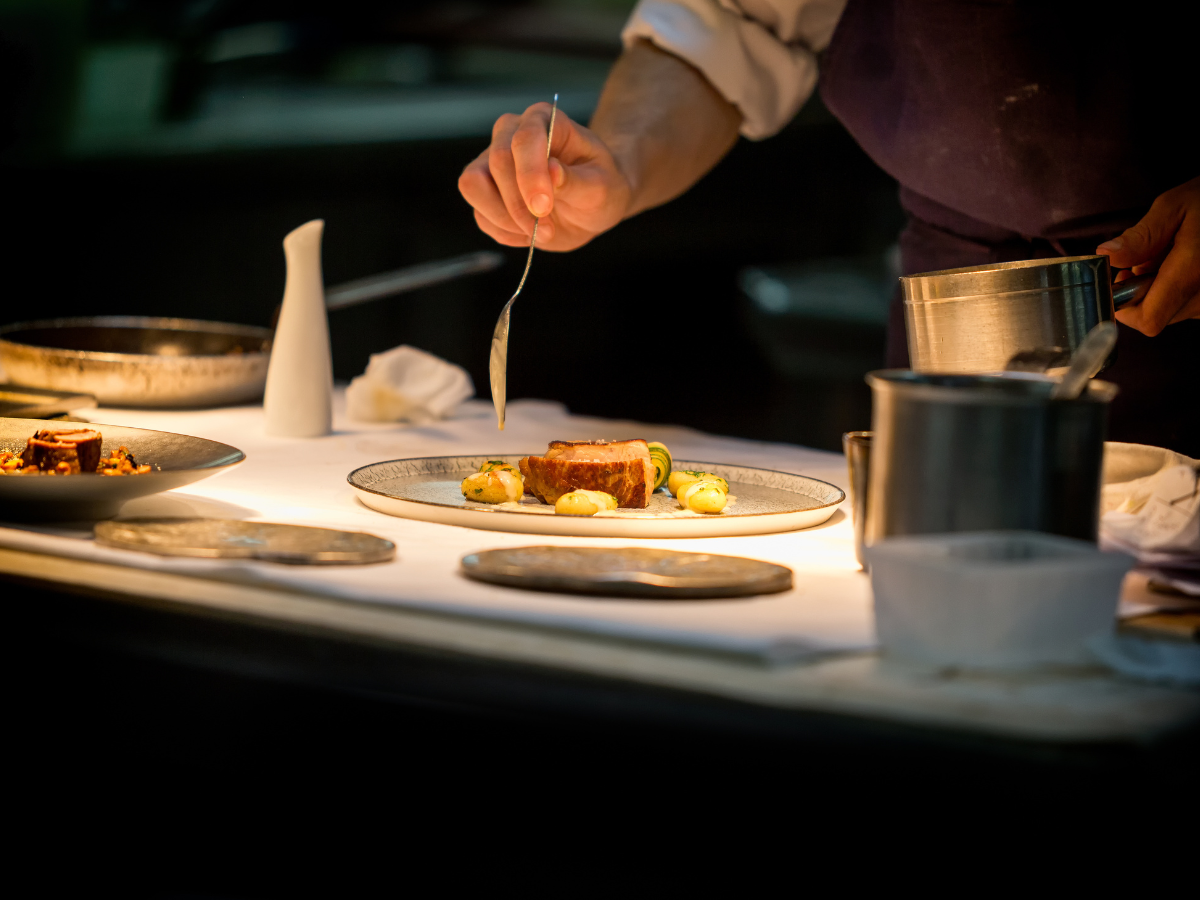
Dillon Robert Haines is an Executive Chef based in West Hartford, Connecticut. His career has been shaped by a simple belief: good food should bring people together.
Growing up in Connecticut, Dillon spent a lot of time around family kitchens and shared meals. He became interested in how basic ingredients could turn into something memorable with patience and care. As a teenager, he started experimenting with recipes and paying closer attention to the techniques behind the food he enjoyed.
After graduating from high school in 1996, Dillon studied culinary arts. His training gave him a foundation in professional cooking, food safety, menu development, kitchen operations, and hospitality. But much of his education came later, during long shifts in working kitchens.
Dillon began his career as a line cook in 1998. Those early years taught him speed, preparation, consistency, and respect for every role in a kitchen. In 2003, he moved into a Sous Chef position. He began supervising employees, training younger cooks, developing specials, and learning how to lead without disrupting the rhythm of service.
Since 2012, Dillon has worked as an Executive Chef. He focuses on seasonal menus, thoughtful preparation, staff development, and ingredients that make sense for the time and place.
Dillon keeps himself close to Connecticut’s agricultural community. Farmers markets and seasonal produce remain important sources of inspiration.
Away from work, Dillon enjoys traveling, exploring restaurants, spending time outdoors, and cooking for family and friends. Even after decades in kitchens, he still sees cooking as a craft that can never be completely mastered.
What is your typical day, and how do you make it productive?
I start early, usually with coffee and about 15 quiet minutes before I look at anything work-related. Once I’m in the kitchen, I walk every station before doing paperwork. I check deliveries, produce, prep lists, and anything left from the previous service.
I keep a small notebook with three priorities for the day. I learned years ago that a list of 20 things usually means nothing gets proper attention. Before service, I check in with the team. During service, my job is to stay aware without getting in everyone’s way. At the end of the night, I make notes about what worked and what needs attention tomorrow.
How do you bring ideas to life?
I start small. If I have an idea for a dish, I usually begin with one ingredient rather than trying to design the entire plate at once. I might find great carrots at a farmers market, for example, and spend a few days testing roasting temperatures, sauces, and textures.
Then I let other people taste it. A dish gets better when you’re willing to hear that your favorite part isn’t working.
What’s one trend that excites you?
I’m excited by chefs paying more attention to overlooked local ingredients. I like seeing menus built around what farms actually have rather than forcing ingredients into a predetermined concept. It creates limitations, but limitations can make cooks more creative.
What is one habit that helps you be productive?
Writing tomorrow’s first task before I leave work. Walking into the kitchen already knowing where to begin saves a surprising amount of mental energy.
What advice would you give your younger self?
Learn the reason behind a technique instead of simply memorizing the technique. Early in my career, I wanted to know how to do everything quickly. Understanding why something works is what eventually allows you to improvise.
Tell us something you believe almost nobody agrees with you on?
I think some dishes are improved by making them less impressive. Chefs can add ingredients because we want to demonstrate skill. Sometimes the better decision is removing two things from the plate and letting the main ingredient speak for itself.
What is the one thing you repeatedly do and recommend everyone else do?
Keep notes. I have old notebooks filled with recipes, mistakes, supplier names, menu ideas, and observations from meals I’ve eaten. Your memory edits things over time. Written notes don’t.
When you feel overwhelmed or unfocused, what do you do?
I clean and reorganize my workspace. Kitchens taught me that physical disorder creates mental noise. Ten minutes spent putting everything where it belongs usually makes the actual problem seem much easier to handle.
What is one strategy that has helped you grow your business or advance in your career?
Treating junior employees like future leaders has helped me enormously. As a Sous Chef, I started explaining why decisions were made instead of simply giving instructions. People became more confident and made better decisions independently. That also taught me how to delegate, which became essential when I moved into executive leadership.
What is one failure in your career, how did you overcome it, and what lessons did you take away from it?
Years ago, I created an overly ambitious seasonal dinner menu. Too many dishes required last-minute preparation, and the first busy Saturday exposed every weakness. Tickets slowed down, communication suffered, and the team became frustrated.
The next morning, I simplified several dishes and removed one entirely. It taught me that a menu isn’t successful because it looks creative on paper. The kitchen has to be able to execute it consistently.
What is one business idea you’re willing to give away to our readers?
A mobile Connecticut harvest dinner series. Instead of bringing farm ingredients into a restaurant, take a small dinner operation to different farms throughout the season. Build each menu around what that farm is harvesting that week and invite the farmer to explain the ingredients between courses.
What is one piece of software that helps you be productive? How do you use it?
Google Sheets. It’s not exciting, but I use spreadsheets for ingredient costs, menu planning, prep projections, and organizing ideas. A simple shared sheet can prevent a lot of unnecessary conversations and mistakes.
Do you have a favorite book or podcast you’ve gotten a ton of value from and why?
Kitchen Confidential by Anthony Bourdain has stayed with me because it captured the personalities, pressure, humor, and strange sense of family that can develop inside restaurant kitchens. The industry has changed in many ways, but parts of that culture are instantly recognizable to anyone who has spent years behind the line.
What’s a movie or series you recently enjoyed and why?
I enjoyed The Bear. Some moments are exaggerated for television, but the pressure, overlapping conversations, attention to tiny details, and complicated relationships inside a kitchen felt familiar. What interested me most was how much of the story was really about communication and leadership rather than food.
Key learnings
- Start with a few meaningful priorities instead of allowing a long task list to control the day.
- Keep detailed notes because ideas, mistakes, and observations can become valuable resources later.
- Give junior team members context, not just instructions, so they can learn to make stronger decisions independently.
- Simplicity can require more judgment than complexity, whether developing a menu or solving a business problem.
- Treat failure as useful information. Identify what broke down, simplify the process, and apply the lesson to the next attempt.