
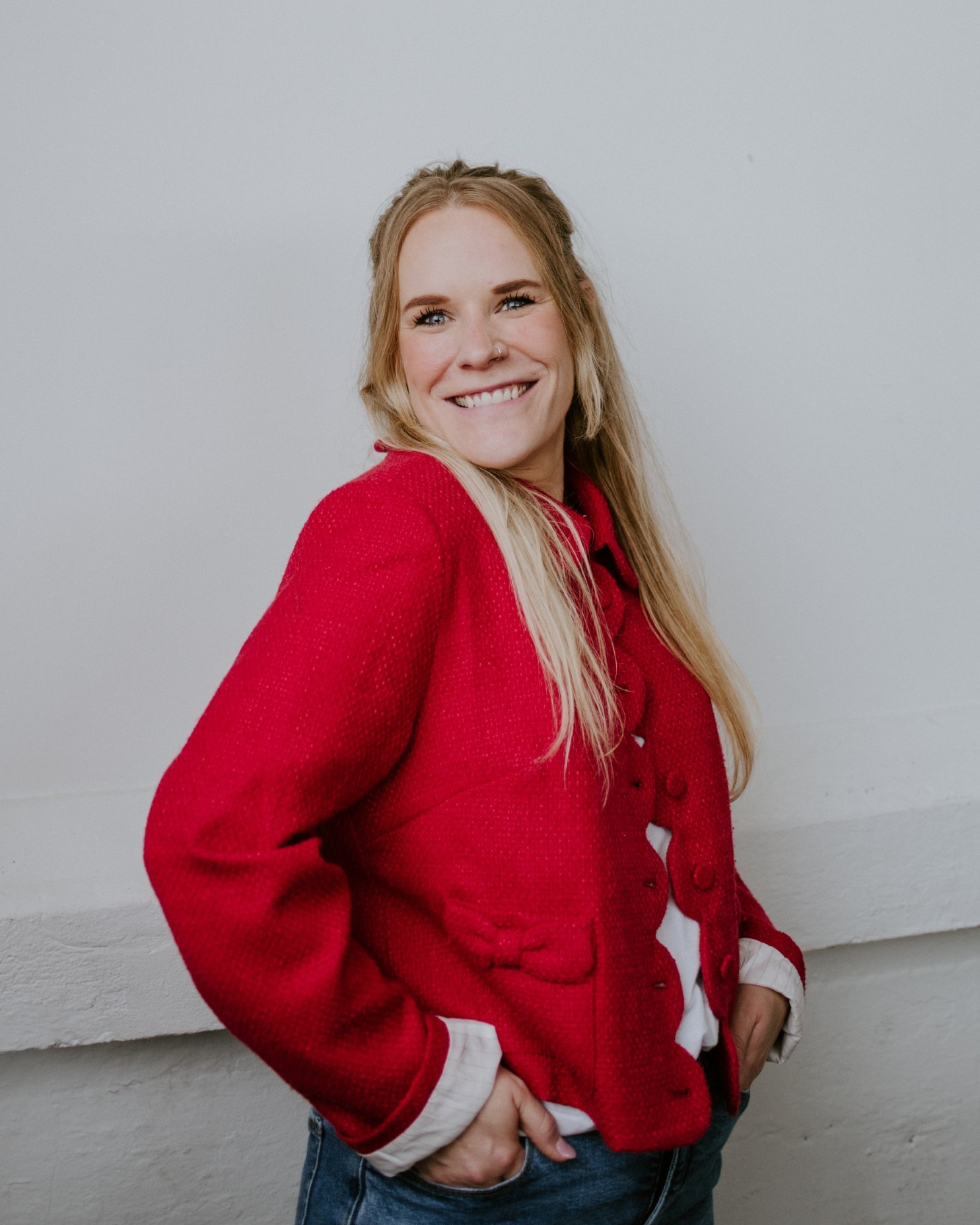
Elizabeth Heinhuis is a mental health professional whose work integrates clinical expertise, teaching, and community engagement to support meaningful change in individuals and systems. Through her private practice and academic contributions, Elizabeth Heinhuis has contributed to mental wellness within and outside Indianapolis.
Elizabeth Heinhuis began her clinical career through her internship and residency at the counseling center at Christian Theological Seminary, where she worked with clients from diverse backgrounds and clinical presentations. During this time, she developed her skills in building therapeutic alliances, engaging in reflective supervision, and facilitating group therapy, including leading a NAMI group for two years.
Since 2019, Ms. Heinhuis has operated her own private practice, where she provides ongoing mental health counseling to individuals across a broad spectrum of ages, backgrounds, and clinical concerns. Her work is grounded in a relational and depth-oriented approach, integrating psychoanalytic, Gestalt, and mindfulness-based frameworks. She supports clients in navigating anxiety, depression, trauma, and life transitions, while fostering self-awareness, emotional insight, and long-term personal growth.
What is your typical day, and how do you make it productive?
I don’t really have a typical day—each weekday looks a little different depending on my client schedule and when my workday begins and ends. No matter what, I try to prioritize a few things that help me feel balanced and fulfilled. I usually take my dog on a four- to five-mile walk, see five to seven clients, and make time for something that nourishes me personally, whether that’s reading, journaling, working on a creative project, or simply slowing down and relaxing mindfully.
One of the ways I set myself up for a productive day is by starting each morning with a few simple routines that help me feel grounded. I make my bed, take care of a few small chores, and create a list of everything I need—or would like—to accomplish that day. Having a plan helps me stay focused while still allowing flexibility for the unexpected.
How do you bring ideas to life?
I bring ideas to life by staying curious, creative, and willing to play. I’ve found that play is often where the best ideas begin—and where they gain the momentum to become something real. Years ago, I took an improv class that taught me a valuable lesson: we often know and understand far more than we realize. Sometimes the challenge isn’t coming up with an idea, but trusting ourselves enough to step into the moment, take action, and build on what is already there.
One of the concepts that has stayed with me from improv is the idea of “yes, and”—the practice of accepting what exists and adding to it. Creativity rarely happens in isolation. It grows through collaboration, curiosity, and a willingness to expand on the ideas and perspectives that others bring.
The trusted people in my life also play an important role in helping me bring ideas to life. Meaningful conversations, quality time, honest feedback, and encouragement help me refine my thinking and build confidence in what I’m creating. Their support often provides the final spark I need to take the leap from imagining something to actually doing it.
What’s one trend that excites you?
A trend that excites me is the growing recognition that purpose and identity can exist beyond our careers. While I find my own work deeply meaningful and fulfilling, I love seeing more people invest in community service, social justice efforts, creative pursuits, and other passions that enrich their lives outside of work.
There is so much the world has to offer, and it is inspiring to watch people explore different interests, develop new skills, and discover new aspects of themselves throughout their lives. I think we are at our best when we resist defining ourselves by a single role or identity and instead remain open to growth, curiosity, and self-expression. Whether through volunteering, creating art, building relationships, or advocating for causes they care about, people are finding meaningful ways to engage with the world and contribute to something larger than themselves.
I find that incredibly hopeful. It reminds me that a fulfilling life is often built not around one thing, but around a collection of experiences, relationships, and passions that continue to evolve over time.
What is one habit that helps you be productive?
One habit that helps me stay productive is prioritizing self-care. I’ve learned that productivity isn’t just about doing more—it’s about having the energy and capacity to do what matters most. Taking time to truly relax, go for a walk, enjoy meaningful conversations with loved ones, or simply slow down and recharge helps me maintain—or regain—the energy I need to tackle more challenging tasks.
For me, self-care isn’t a reward that comes after productivity; it’s what makes productivity possible. When I take care of myself physically, emotionally, and socially, I show up with more focus, creativity, and motivation. Those moments of rest and connection provide the foundation that allows me to do the harder things, even when I don’t always feel like doing them.
What advice would you give your younger self?
If I could give my younger self one piece of advice, it would be to worry less about what other people think. It may sound cliché, but fear of judgment shaped many of my decisions when I was younger. I spent a lot of time trying to stay small, blend in, and avoid drawing attention to myself because I was worried about how others might perceive me.
Looking back, I realize that fear kept me from taking risks, stepping outside my comfort zone, and embracing opportunities that could have led to growth, adventure, and new experiences. I missed out on some things simply because I was afraid to be different or to fail in front of others.
Overall, I’m grateful for where my life has led me, and I don’t spend much time dwelling on regrets. But if there’s one thing I wish I had learned sooner, it’s that most people are far less focused on us than we imagine, and the rewards of living authentically far outweigh the risks of being judged. I would have encouraged my younger self to be bolder, take more chances, and trust that growth often happens just beyond the edge of fear.
Tell us something you believe that almost nobody agrees with you on.
I believe one of the most loving things we can do—for ourselves and for others—is tell the truth, especially when that truth is uncomfortable. In a culture that often equates love with acceptance, reassurance, or avoiding hurt feelings, I think we sometimes overlook the value of honest reflection and compassionate accountability.
For me, self-love is not pretending that every part of myself is admirable. It is having the courage to acknowledge the parts of myself that I would rather ignore—the moments when I am selfish, defensive, judgmental, or afraid. Real growth begins when we stop hiding from those truths and become curious about them instead. There is something deeply loving about being honest enough with ourselves to say, “This is who I am right now, and I want to do better.”
I also believe that honest feedback, when given with care and respect, can be one of the greatest gifts we offer another person. It is easy to tell people what they want to hear. It is harder to gently name a pattern, challenge a blind spot, or share an observation that may be difficult to receive. Yet some of the most meaningful growth in my life has come from people who cared enough about me to tell me the truth, even when it was uncomfortable.
The key, of course, is intention and delivery. Truth used as a weapon is cruelty. Truth offered with humility, compassion, and a genuine desire to help is love. When someone is willing to see us clearly, speak honestly, and remain connected to us in the process, they are communicating something powerful: “You matter enough to me that I won’t settle for a superficial relationship.” To me, that is one of the deepest forms of love there is.
What is the one thing you repeatedly do and recommend everyone else do?
One piece of advice I would give to almost anyone is to make time for self-reflection. I believe growth begins with a willingness to look honestly at ourselves—our strengths, our limitations, our patterns, and the ways we impact the people around us.
Self-reflection has become a regular part of my life. I am constantly asking myself how I am showing up for myself and for others, what is serving me, what is no longer serving me, and where I still have room to grow. I don’t see personal growth as something we ever complete or master. There is no finish line where we suddenly become the best version of ourselves. Instead, it is an ongoing process of learning, adjusting, and becoming more aligned with who we want to be.
I also think self-reflection helps us become more intentional about the lives we create. It allows us to examine what we are inviting into our lives, what values are guiding our decisions, and whether our actions reflect the person we hope to become. Without that kind of honest reflection, it is easy to move through life on autopilot.
For me, self-reflection isn’t about self-criticism; it’s about curiosity. It is the practice of paying attention so that growth remains possible. When individuals are willing to engage in that process, I believe it strengthens not only their own lives, but also their relationships, communities, and the world around them.
When you feel overwhelmed or unfocused, what do you do?
When I feel overwhelmed or unfocused, my first instinct is usually to pause and create some space to reconnect with myself. Rather than immediately pushing through, I try to pay attention to what is happening internally. I’ve learned that anxiety, distraction, or a scattered mind are often signals rather than problems to be solved. Sometimes they indicate that something in my life is out of alignment with my values, needs, or priorities. Other times, they point to a deeper issue that is asking for my attention.
When possible, I step away, reflect, and get curious about what I am experiencing. I ask myself what emotions are present, what needs might be unmet, and what my mind or body may be trying to communicate. I’ve found that there is often valuable information beneath the discomfort.
Of course, life doesn’t always allow for that level of reflection in the moment. When I can’t immediately step away, I try to work with my energy rather than against it. If I find myself repeatedly returning to the same thought, I become curious about why it feels important. If I feel restless, I might go for a walk or move my body. Instead of judging these impulses, I try to understand them.
Over time, I’ve learned that overwhelm is often less about a lack of productivity and more about a need for attention. By listening to myself rather than fighting against my experience, I am usually able to regain focus, clarity, and a stronger sense of direction.
What is one strategy that has helped you grow your business or advance in your career?
One strategy that has played a significant role in growing my business is a commitment to continuing education. Throughout my career, I have invested in six years of intensive postgraduate training—four years in Gestalt therapy and two years in psychodynamic psychotherapy.
While these programs have deepened my clinical skills and helped me better understand how to support my clients, they have also connected me with an incredible community of colleagues. Those relationships have provided opportunities for collaboration, consultation, and professional growth, while also leading to meaningful referrals over the years.
For me, continuing education has never been just about earning credentials. It is about remaining curious, challenging myself to keep learning, and ensuring that I am providing the best care possible. The knowledge I’ve gained has strengthened my work, and the connections I’ve built have been invaluable in helping my practice grow.
What is one failure in your career, how did you overcome it, and what lessons did you take away from it?
One of the biggest mistakes I made early in my career was believing that I had to do everything on my own. Like many therapists, I was comfortable helping others, but much less comfortable asking for help myself. When I started my private practice, I tried to figure out every challenge independently, whether it involved business decisions, difficult clinical situations, or navigating the inevitable ups and downs of being self-employed.
Over time, I realized that operating from that mindset was limiting my growth and creating unnecessary stress. The turning point came when I began seeking more consultation, supervision, training, and support from colleagues. Instead of viewing questions or uncertainty as weaknesses, I started seeing them as opportunities to learn and connect with others.
That shift not only made me a better therapist, but it also helped my practice grow. I developed stronger professional relationships, gained valuable perspectives, and felt less isolated in my work.
The lesson I took away is that growth rarely happens in isolation. No matter how experienced we become, there is always something we can learn from the people around us. Some of the most meaningful progress in my career has come from being willing to admit what I don’t know and remaining open to support, feedback, and continued learning.
What is one business idea you’re willing to give away to our readers?
One business idea I’m happy to share is a grief-focused organizing and legacy service. After someone loses a loved one, they are often left with an entire home full of belongings and an overwhelming number of decisions to make. Many people either rush to get rid of things they later wish they had kept, or they avoid the process altogether and leave everything untouched for years.
This service would combine practical support with compassionate guidance. A trained professional would help individuals sort through their loved one’s belongings; decide what to keep, donate, or discard; and identify meaningful ways to preserve memories and honor the person’s legacy. Along the way, there would be opportunities to share stories, reflect on memories, and create keepsakes that capture what mattered most about the person who was lost.
Grief is often discussed as an emotional experience, but it also comes with countless practical challenges. I think there is a real need for services that help people navigate both at the same time with care, patience, and respect.
What is one piece of software that helps you be productive? How do you use it?
One piece of software that helps me stay productive is the client portal I use for my private practice. I’ll be the first to admit that technology is not my strongest skill, so I appreciate tools that are intuitive and easy to navigate. The platform I use manages everything from scheduling and documentation to billing and client communication, which allows me to spend less time troubleshooting technology and more time focusing on the work that matters most. For me, the best technology is technology that fades into the background. When a tool works well, I don’t have to think about it—I can focus my attention on my clients, my business, and the other priorities in my life. This software has consistently done that, making it an important part of how I stay productive and organized.
What is the best $100 you recently spent? What and why?
The best $100 I’ve spent recently was taking my mom and sister to a pottery-making class. None of us had ever done pottery before, and it ended up being so much fun. We got to spend quality time together, laugh at our less-than-perfect creations, and try something completely outside of our comfort zones.
What made it even more special was that, after the class, we exchanged pieces with one another. We each kept one piece we made and took home one made by someone else. Now we all have these little handmade reminders of a really fun day together.
The best $100 I’ve spent recently was taking my mom and sister to a pottery-making class. None of us had ever done pottery before, and it ended up being so much fun. We got to spend quality time together, laugh at our less-than-perfect creations, and try something completely outside of our comfort zones.
What made it even more special was that, after the class, we exchanged pieces with one another. We each kept one piece we made and took home one made by someone else. Now we all have these little handmade reminders of a really fun day together.
I love spending money on experiences, especially ones that create memories. The pottery itself is cute, but what I really treasure is the time we spent together and the fact that we were willing to try something new. It was one of those simple experiences that ended up meaning much more than I expected.
Do you have a favorite book or podcast you’ve gotten a ton of value from and why?
This is a tough question because I love reading and have enjoyed so many different types of books over the years. If I had to choose just one favorite, though, it would probably be “The Gift of Therapy” by Irvin D. Yalom.
Yalom is both an inspiring psychotherapist and an exceptional writer, and this is one of the few books I find myself recommending to almost everyone. While it is written from the perspective of a therapist, it offers insights that extend far beyond the therapy room. At its core, it is a book about the human experience—how we relate to ourselves, to others, and to the challenges that inevitably come with being alive.
What I appreciate most is the way Yalom encourages readers to approach life with greater openness and curiosity. He writes about therapy not as a process of fixing people, but as an opportunity to deepen self-awareness, expand our capacity for connection, and engage more fully with our lives. The book invites us to stop defending against every uncomfortable feeling and instead learn how to make space for both joy and pain as meaningful parts of the human experience.
I’ve read many books that have influenced me, but this one continues to stand out because of its wisdom, compassion, and enduring relevance. Every time I revisit it, I discover something new.
What’s a movie or series you recently enjoyed and why?
Lately, I’ve really been enjoying “Widow’s Bay.” It’s got an interesting story, great acting, and just the right mix of mystery, spooky moments, and humor. I love anything that keeps me guessing a little, and this show does a great job of creating that sense of intrigue without taking itself too seriously.
What I probably enjoy most is that it can be creepy one minute and make me laugh out loud the next. That’s a combination that always works for me. I don’t typically enjoy anything too dark or intense, so the humor helps balance everything out.
At the end of a busy week, it’s become one of my favorite ways to unplug and relax.
Key learnings
- Personal growth is an ongoing process that requires honest self-reflection and a willingness to evolve over time.
- Meaningful relationships are strengthened through compassionate honesty, authentic connection, and quality time spent together.
- A fulfilling life is often built through multiple sources of purpose, including work, creativity, community involvement, and personal interests.
- Self-care and rest are not distractions from productivity; they provide the energy and clarity needed to engage fully with life.
- Some of life’s most meaningful experiences come from stepping outside of comfort zones, trying new things, and sharing those experiences with others.