
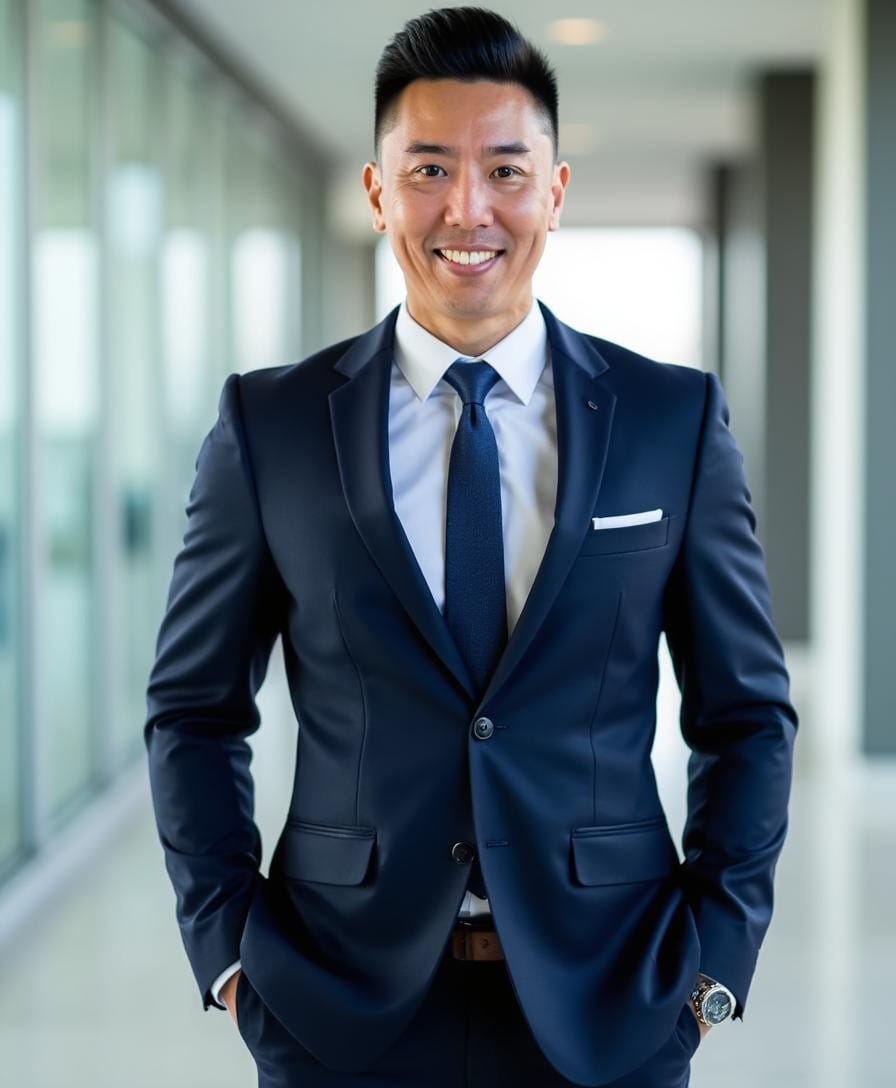
Evan Chi is a 3x founder with over 20 years of experience who has had the privilege of working with exceptional brands such as Oracle, Sony, Sanrio, Hello Kitty, REI, Bank of America, Capital One, BART, Mr. Brown Coffee and more.
He is a Bay Area native currently based in Silicon Valley, California, Dubai, UAE and Taipei, Taiwan.
He found that two of the greatest challenges brands face are achieving awareness and generating revenue, so he created a system to build authority and automate outreach and lead generation.
What is your typical day, and how do you make it productive?
It’s the getting-it-done mindset.
No matter what happens during the day, there are a handful of things that simply have to get done. Everything else is secondary.
As Pinky and the Brain said, “We do the same thing we do every day—plan to take over the world.” I’ve always loved that line because building companies is surprisingly repetitive. It isn’t one big breakthrough. It’s hundreds of ordinary days stacked together. Solve problems. Have conversations. Make decisions. Keep moving.
Every morning I ask myself the same question: What actually moves the needle today? Once I know that, I build a roadmap to get there. If I’m the right person to solve it, I do it. If someone else is better suited, I delegate it—but only after we’re aligned on what success looks like and they have everything they need.
I think people spend too much time trying to optimize their calendars and not enough time thinking about leverage. One great decision is worth more than checking twenty boxes.
Over the years, whether I was building retail businesses, media companies, or founder communities, I’ve found the same thing to be true: motivation comes and goes, but systems stick around. If you can consistently execute on the important things, eventually the results catch up.
How do you bring ideas to life?
You will them into being.
That probably sounds overly simple, but I genuinely believe it.
Every business, every community, every event, every movement started because someone decided they were going to make it happen and refused to let the idea die.
Ironically, almost none of my best ideas happen while I’m working. They happen when I’m hiking, traveling, exercising, or just spending time outside. There’s something about movement and sunshine that gets the juices flowing. Some of the biggest ideas that have shaped my life came during those moments, not sitting behind a laptop.
Once I have an idea, I don’t obsess over making it perfect. I just ask, What’s the next step? Then I take it. Momentum is one of the most underrated forces in business.
People love talking about ideas. Founders build by executing them.
What’s one trend that excites you?
There are many!
Consciousness. Quantum mechanics. The observer effect. Ancient civilizations. UAPs.
Are we living in a simulation? Are we alone? What’s beyond the veil? Fun stuff.
I think curiosity is one of the most underrated competitive advantages. The best founders I’ve met aren’t just curious about business, they’re curious about everything. They read widely, ask better questions, connect ideas from completely different fields, and that’s often where innovation comes from.
AI, without question, is super exciting.
We’re watching one of the biggest technological shifts of our lifetime. AI is going to accelerate almost every aspect of our lives and give individuals leverage that used to require entire companies. That’s incredibly exciting.
But, honestly, I spend just as much time thinking about things AI can’t answer.
What is one habit that helps you be productive?
Exercise. Hands down.
People usually think about exercise because of the physical benefits, but for me it’s always been about mental clarity. Almost every area of my life gets better when I’m consistently working out. Better decisions. Better energy. Better focus. Better mood.
Some of the biggest business decisions I’ve made didn’t happen sitting in front of a spreadsheet. They happened after a workout or halfway through a hike when my mind finally slowed down enough to think clearly.
The best part is everyone can do it.
It’s one of the simplest habits with the biggest return on investment I’ve ever found.
What advice would you give your younger self?
Get out of your head.
Looking back, I probably spent too much time overthinking things and not enough time simply starting. Fear has a funny way of disguising itself as preparation. You convince yourself you’re waiting for the right timing, the right amount of money, the right experience, when really you’re just avoiding discomfort.
If I could go back, I’d tell myself to stop waiting for permission. Nobody is going to hand you confidence. Confidence comes from taking action, failing a few times, realizing the world didn’t end, and doing it again.
I’d also remind myself that your life doesn’t just happen to you. You design it. The people you spend time with, what you learn, how you treat your body, where you live, what you build—those decisions compound over years. Most people underestimate how much control they actually have over the direction of their lives.
Tell us something you believe almost nobody agrees with you.
I think we’re entering a world where founders themselves will become just as valuable as the companies they build.
For a long time, businesses focused almost entirely on building products while treating marketing as something you figured out later. I think that model is changing. AI is making it dramatically easier to build software, websites and businesses. What AI can’t manufacture overnight is trust.
That’s why I think personal branding has become one of the biggest competitive advantages a founder can have. Not because everyone needs to become an influencer, but because people increasingly want to know who’s behind the company. They want to understand how you think before they buy from you, invest in you or work for you.
I’ve seen opportunities come from people quietly following my work for months or even years before reaching out. They weren’t buying a product—they were buying confidence. I think we’ll see much more of that over the next decade.
What is the one thing you repeatedly do and recommend everyone else do?
Preparation meets opportunity. Stay ready.
I’ve found that the biggest opportunities in my career rarely arrived when I expected them. A conversation turns into a partnership. An introduction leads to a business. One piece of content reaches someone you never imagined would see it.
The people who benefit from those moments usually aren’t the smartest people in the room. They’re the ones who prepared before the opportunity showed up.
That’s why I try to keep learning, keep building relationships and keep putting ideas into the world, even when there isn’t an immediate return. Preparation compounds quietly. Then one day everyone else calls it luck.
When you feel overwhelmed or unfocused, what do you do?
Exercise. Travel. Live. Go. Push.
I’ve learned that I don’t solve problems very well by sitting at the same desk for another three hours. If I’m stuck, I change my environment. I’ll go for a workout, take a hike, go somewhere new or even just spend some time outside.
It’s funny because some of the biggest ideas I’ve ever had came when I wasn’t trying to have them. They happened halfway through a hike, walking through another city or after a workout when my mind finally had room to think.
Movement creates clarity. Distance creates perspective. Sometimes the fastest way to solve a problem is to stop staring at it for a little while.
What is one strategy that has helped you grow your business or advance in your career?
The biggest shift in my career was realizing that distribution is an asset.
Early on, like most founders, I thought everything revolved around the product. Build something great and people will find it. The reality is that’s rarely how it works.
If people don’t know you exist, they can’t buy from you.
That’s why I’ve spent so much time building communities, media platforms and audiences. Over time I realized that distribution compounds. When people trust your work, launching new products becomes easier. Partnerships happen more naturally. Hiring gets easier. Investors pay attention. Opportunities start finding you instead of the other way around.
One idea I’ve written about a lot is that recognition compounds long before anyone notices it. People see the successful company or the viral post, but they don’t see the hundreds of posts, conversations and years of consistency that came before it. The work that changes your life is usually invisible until suddenly it isn’t.
What is one failure in your career, how did you overcome it, and what lessons did you take away from it?
One of the biggest lessons came from a business that, on paper, looked successful.
Earlier in my career I helped grow a frozen yogurt business from a single location into a retail franchise across multiple counties.
It was an incredible experience, especially because I had never done anything like it before. We learned, adapted and figured things out as we went.
But despite years of work, there wasn’t a big exit. No acquisition. No life-changing payday.
At the time, that was difficult to accept. Looking back, I’m grateful for it because it forced me to understand that building a business and building an exit are two very different skills.
The experience also taught me something I still joke about today: CYA and CPA. Cover your ass, and have a great CPA. Good legal advice and good financial advice aren’t exciting, but they’ve probably saved me more money and stress than almost anything else
I’ve learned in business.
What is one business idea you’re willing to give away to our readers?
I don’t think there’s one “best” business idea because the best opportunity depends on who’s building it.
Instead, I’d encourage people to look for competitive advantage before they look for an industry.
Never start on an even playing field if you can avoid it. Ask yourself what advantages you already have. Maybe it’s your experience, your relationships, your audience, your expertise or simply your willingness to work harder than everyone else.
Then spend years building moats around those advantages.
I also think founders underestimate the value of building their own reputation alongside the business. Companies change. Industries change. Technology changes. Your reputation follows you. If you consistently create value and earn people’s trust, that becomes an asset you can carry into every company you build for the rest of your career.
What is one piece of software that helps you be productive? How do you use it?
For me, it’s LinkedIn.
Most people see it as another social network. I’ve always seen it as one of the best relationship-building platforms ever created.
Some of the best opportunities I’ve had: customers, partnerships, podcast guests, speaking opportunities and friendships all started because of a post or a conversation on LinkedIn.
The biggest lesson it’s taught me is that content isn’t really about content. It’s about trust. Every post is another chance to share an idea, teach something you’ve learned or start a conversation with someone you’d never otherwise meet.
People spend a lot of time chasing virality. I’d rather build recognition because recognition compounds over time.
What is the best $100 you recently spent?
Buying lunch for someone I respect.
Some of the highest-return investments I’ve ever made didn’t involve software or equipment. They involved conversations.
I’ve had lunches that completely changed how I thought about a business, introduced me to lifelong friends or opened doors I didn’t even know existed. One honest conversation with someone who’s been there before can save you months of mistakes.
I’ve found that successful people are often far more willing to share what they’ve learned than most people realize. You just have to ask thoughtful questions and genuinely listen.
Do you have a favorite book or podcast from which you’ve received much value?
These days I probably read more biographies than business books.
I enjoy seeing how different founders, inventors and leaders approached problems because, despite living in completely different times, the same themes keep showing up. Curiosity. Persistence. Resilience. Long-term thinking.
Technology changes incredibly fast, but people don’t change nearly as much.
I think that’s why biographies have stayed so valuable to me. They’re less about tactics and more about patterns. Once you start recognizing those patterns, you begin making better decisions in your own life.
What’s a movie or series you recently enjoyed and why?
One that really stuck with me was The Last Dance.
On the surface it’s about basketball, but I don’t think that’s why so many entrepreneurs connect with it. It’s really about standards, accountability and the pursuit of excellence.
What stood out to me wasn’t Michael Jordan’s talent. It was his willingness to hold himself and everyone around him to an incredibly high standard, even when it wasn’t popular. That’s something I think applies to building companies too.
The most successful founders I’ve met aren’t necessarily the smartest people in the room. They’re the ones willing to do the ordinary things consistently over an incredibly long period of time. That isn’t always glamorous, but it’s usually what separates good businesses from great ones.
Key learnings:
- Sustainable success is built through consistent execution. The work that changes a career usually happens long before anyone else notices the results.
- Founders who invest in trust, reputation and owned distribution create long-term competitive advantages that become even more valuable in the age of AI.
- Great opportunities rarely happen by accident. Staying curious, continuously learning and preparing before opportunity arrives is what most people mistake for luck.
- Building a business starts with building yourself. Exercise, intentional habits and changing your environment can dramatically improve clarity, creativity and decision-making.
- The strongest businesses are built on unfair advantages. Identify what makes you different, build moats around it, and let that advantage compound over time.