
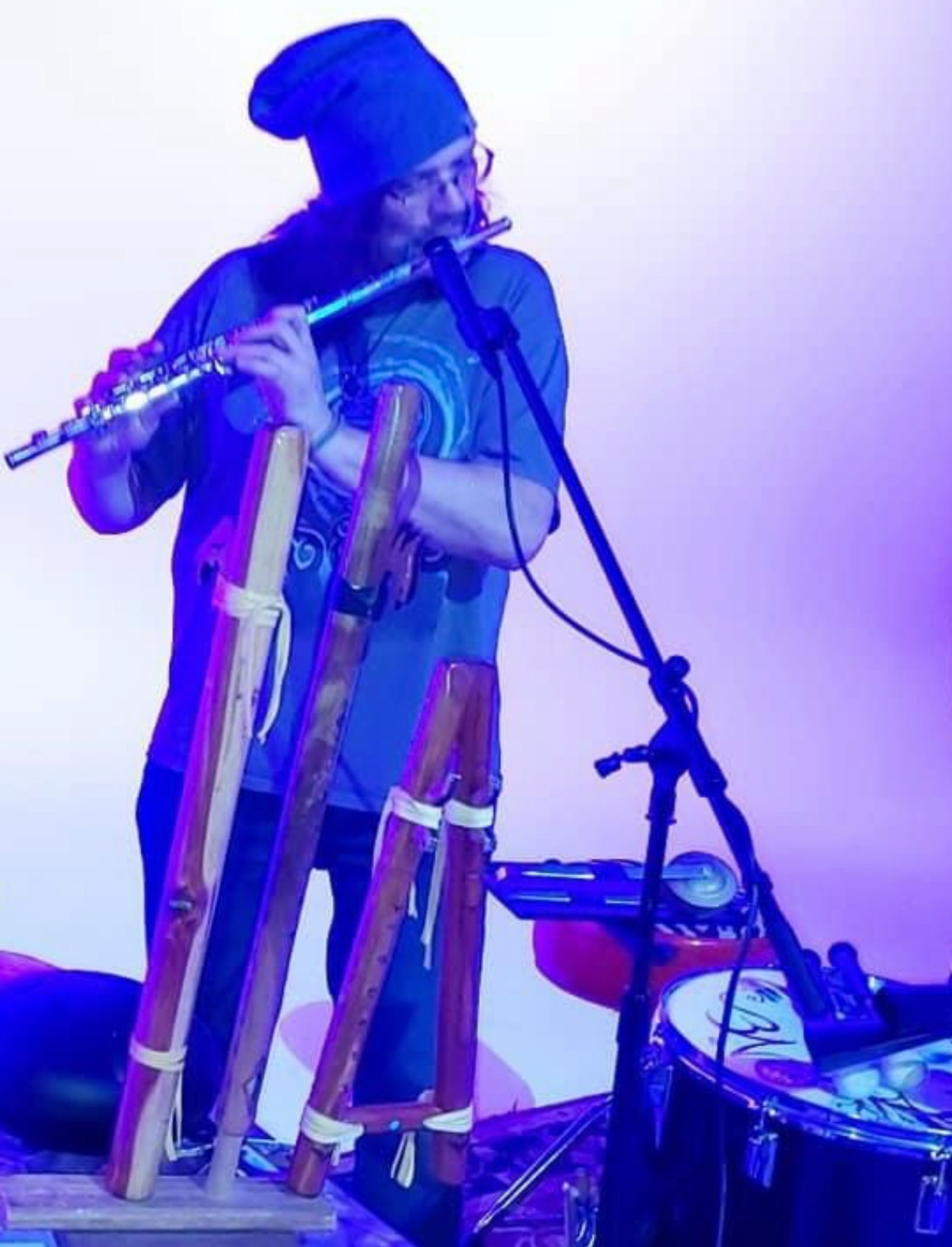
Evans Chigounis grew up in Clifton, New Jersey on a one-acre property filled with fruit trees, grapevines, vegetables, herbs, and flowers. That land was more than a home. It was a teacher. From an early age, he learned how patience, care, and attention shape everything that grows. Those early lessons stayed with him.
His first job at a local garden centre in high school turned curiosity into direction. Over the years, Evans worked in nurseries, landscaping, and gardening, building a hands-on career in horticulture. He even spent time in the horticulture department at the Kansas City Zoo, where plant care played a direct role in supporting animal habitats and public spaces.
Along the way, Evans explored other creative paths. He studied illustration at community college and spent 13 years working in graphic arts as a Mac retoucher. He also worked in carpentry, finding satisfaction in building and restoring with his hands.
Music has always run alongside his professional life. A lifelong percussionist and Native American flute player, Evans now leads drum circles, teaches percussion, and volunteers as the facilitator of the Asbury Drum & Dance community in Asbury Park, New Jersey.
His life has been shaped by service, from coaching Special Olympics to environmental clean-ups and charity performances. Across every chapter, one thing remains constant: a steady belief in growth, creativity, and the power of simple, shared experiences.
What is your typical day, and how do you make it productive?
Most days start early. I like quiet mornings. I’ll spend time outside first, even if it’s just checking plants or listening to birds. That grounds me. Workdays usually involve horticulture tasks, planning, or teaching music. I stay productive by keeping my day physical. If I sit too long, my focus drops.
How do you bring ideas to life?
I test them quickly. Whether it’s a garden layout or a drum workshop, I try a small version first. Plants teach you not to overthink. You learn by doing.
What’s one trend that excites you?
People returning to hands-on skills. Gardening, drumming, making things. After years of screens, people want something real again.
What is one habit that helps you be productive?
Starting the day outdoors. Nature resets my thinking better than coffee ever could.
What advice would you give your younger self?
Don’t rush outcomes. Growth takes time. That applies to careers, plants, and people.
Tell us something you believe almost nobody agrees with you on?
I think boredom is healthy. When people are bored, they create. Constant stimulation kills creativity.
What is the one thing you repeatedly do and recommend everyone else do?
Work with your hands. Even briefly. Soil, wood, instruments. It changes how you think.
When you feel overwhelmed or unfocused, what do you do?
I simplify. I’ll clean tools, water plants, or play a steady rhythm on a drum. Repetition calms the mind.
What is one strategy that has helped you grow your business or advance in your career?
Saying yes to unexpected work. Zoo horticulture, carpentry jobs, teaching music. Those experiences built skills I still use.
What is one failure in your career, how did you overcome it, and what lessons did you take away from it?
My organic basil business in the early ’80s failed because the market wasn’t ready. It taught me timing matters as much as quality.
What is one business idea you’re willing to give away to our readers?
Neighbourhood micro-workshops. Small, local classes for gardening or drumming. No big overhead. Just shared learning.
What is one piece of software that helps you be productive? How do you use it?
Simple note apps. I keep short lists and ideas. Nothing complex.
Do you have a favorite book or podcast you’ve gotten a ton of value from and why?
Books on permaculture. They teach systems thinking, not shortcuts.
What’s a movie or series you recently enjoyed and why?
Documentaries about craftsmanship. I like seeing people master one thing deeply.
Key learnings
- Long-term growth comes from patience, not speed.
- Hands-on work sharpens focus and creativity.
- Simple habits often outperform complex systems.
- Community is built through shared experiences, not technology.
- Timing is as important as talent when launching ideas.