
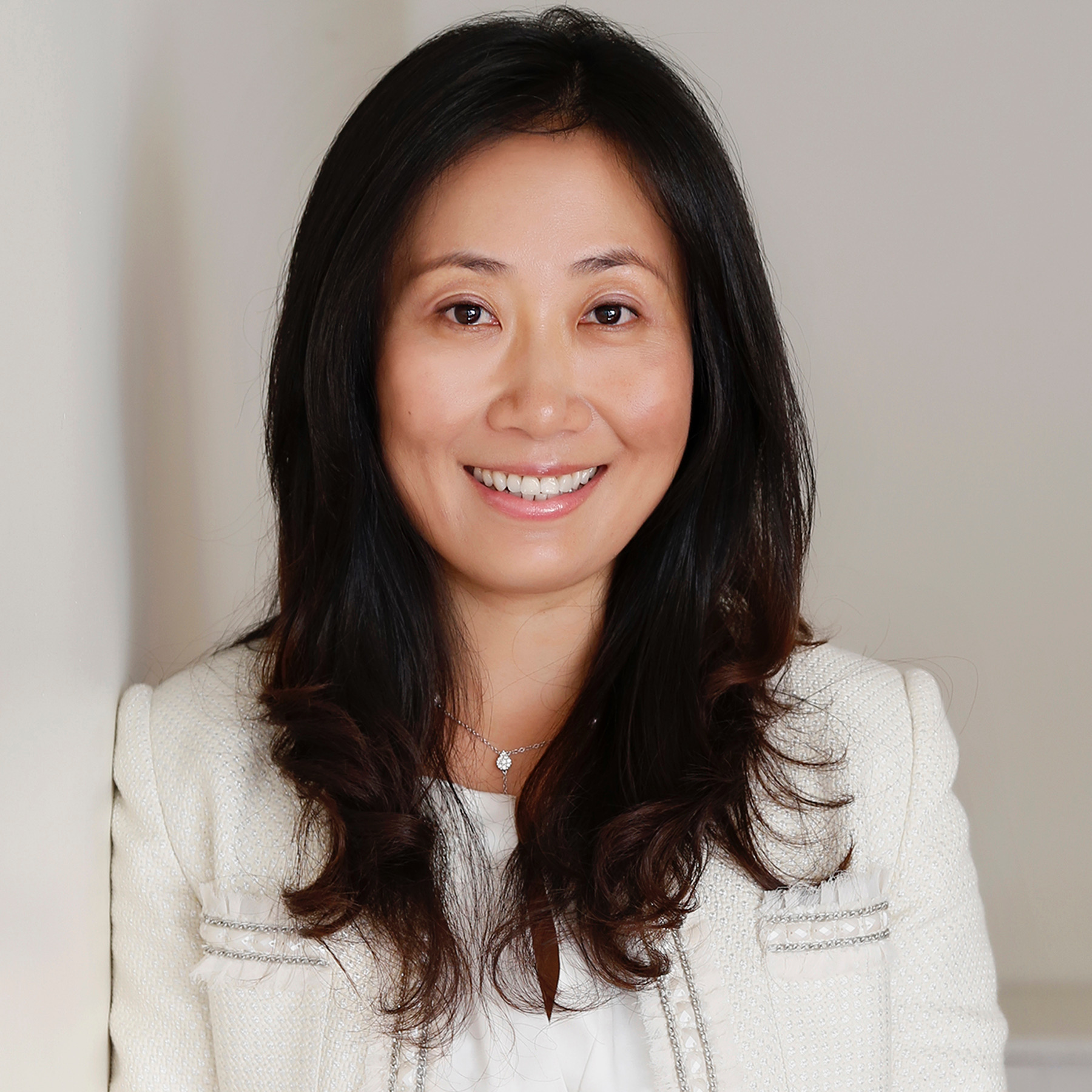
Flora Dong has spent more than 25 years in wealth management, but her career has never been only about investments. Much of her work has focused on understanding the lives behind financial decisions, especially when families, businesses, and assets span borders.
Over the years, Flora worked with high-net-worth and ultra-high-net-worth families. Her experience gave her a close view of the challenges that can arise when one family has connections to several countries. Different generations may live in different places. A business may operate in one market while family members build lives somewhere else. Legal, tax, investment, and family questions can quickly overlap.
In July 2025, Flora began a new chapter by founding Ardenwood Advisors, LLC, doing business as Arden Global Family Offices, in Palo Alto, California. The independent firm focuses on families with complex and often international circumstances, including entrepreneurs and families with connections between the United States and Asia.
Flora has also remained curious about how her profession is changing. She recently attended Stanford’s three-day AI Executive Education Program. Rather than leaving convinced that technology should replace more human work, she became increasingly interested in the line between automation and augmentation.
That curiosity reflects a theme that has followed Flora throughout her career. Experience matters, but experience should not make someone stop asking questions. Whether she is thinking about a family’s changing circumstances, building a firm, or studying artificial intelligence, Flora keeps returning to the same basic idea: understand the problem before deciding on the solution.
Disclosure: For informational purposes only. This content should not be construed as investment, legal, tax, or accounting advice, or as a recommendation regarding any investment strategy or security. Advisory services are offered through Ardenwood Advisors, an SEC-registered investment adviser. Registration does not imply a certain level of skill or training. No advice may be rendered by Arden Global Family Offices unless a client service agreement is in place.
What is your typical day, and how do you make it productive?
My days vary because the work itself varies. I might review information related to a family, speak with colleagues or outside professionals, think through an investment question, or work on the business side of Ardenwood Advisors. With internationally connected families, several jurisdictions and time zones can also be involved.
Private placement-related work is also part of my day. I may spend time discussing startup investment opportunities with clients and answering their questions. I also make a point of continuing to expand my knowledge of the financial markets and staying current on trends and developments across the investment industry.
I try not to confuse a full calendar with a productive day. I usually identify the few things that genuinely require my attention and make sure those receive enough time. After more than 25 years in wealth management, I have learned that some decisions benefit from not being rushed.
How do you bring ideas to life?
I start by defining the problem. That sounds simple, but I have thought about it even more since attending Stanford’s AI Executive Education Program. It is easy to become excited about a solution before fully understanding what you are trying to solve.
That same curiosity shapes my interest in Silicon Valley companies and startups that are bringing innovative ideas to life. I spend time sourcing investment opportunities, building relationships with venture capital firms, and staying informed about developments at private companies. This gives me a broader view of emerging technologies and market trends while letting me learn how entrepreneurs turn new ideas into real businesses.
When I look at an opportunity, I still come back to the same basic questions. What problem is the company trying to solve? Why does that problem matter? What is different about its approach? I prefer to understand those fundamentals before becoming excited about the technology or solution itself.
What’s one trend that excites you?
Artificial intelligence interests me, particularly as it moves from research and experimentation into real-world applications. We are seeing startups use AI to address practical problems across healthcare, finance, manufacturing, and many other industries.
I am especially interested in understanding these companies while they are still private and learning how they are applying AI to specific problems. It is fascinating to see new technologies develop before companies enter the public markets and to consider how some of these businesses may contribute to the next generation of the economy.
At the same time, I remain interested in the distinction between automation and augmentation. I am less focused on how much work AI can replace and more interested in where it can support human work while people continue to provide judgment, context, and oversight.
What is one habit that helps you be productive?
I have a few habits that help me stay productive when many things compete for my attention. The first is simple: I genuinely love my career and the work I am doing. That makes it easier to stay curious and engaged, even on busy days.
I also prioritize carefully. Before deciding what to do first, I have to understand what is actually most important. From there, I focus my attention where it is most needed and delegate work to other professionals when their expertise is more appropriate. I am comfortable multitasking when necessary, but I try not to treat every task as equally urgent.
Finally, I keep learning. Financial markets, private companies, technology, and the investment industry keep changing, so staying informed is an ongoing part of my work. I do not think experience means you reach a point where there is nothing left to learn.
What advice would you give your younger self?
I would tell myself that you do not need to have every answer immediately.
Early in a career, there can be pressure to demonstrate how much you know. Experience taught me that asking another question can sometimes be more valuable than giving a quick answer. I would tell my younger self to become comfortable saying, “I need to understand that better.”
Tell us something you believe almost nobody agrees with you on?
One path I took was not traditional or clearly defined. Few people expected me to help build an RIA serving offshore clients, and no established career path existed for me to follow.
Working with international families has required me to develop a strong understanding of financial markets, offshore investment products, and the practices global families follow. That includes learning about wealth management, cross-border asset-holding structures, and international tax and reporting considerations. I do not provide tax advice, but I need to understand these issues well enough to recognize when they may be relevant and to coordinate effectively with clients’ legal and tax professionals.
At the time, few people imagined that I could help pioneer such a specialized area of wealth management. That experience taught me that a career does not always need to follow the path other people expect. Sometimes the most interesting opportunities are in areas that have not yet been clearly defined.
What is the one thing you repeatedly do and recommend everyone else do?
Ask one more question.
When something appears obvious, I try to ask what I might be missing. This is particularly important when working across cultures and generations. Two families can look similar on paper while having completely different priorities, histories, and expectations.
When you feel overwhelmed or unfocused, what do you do?
I reduce the problem.
Instead of looking at everything that needs attention, I ask myself what actually needs a decision today. Then I separate that from what needs research, what needs another person’s input, and what can wait.
I have found that feeling overwhelmed often comes from trying to solve five different problems as though they are one problem.
What is one strategy that has helped you grow your business or advance in your career?
Learning to understand context has probably mattered most.
My career exposed me to families whose lives do not fit neatly inside one country or one financial category. A family might have relatives in the United States and Asia, a business in another jurisdiction, and several generations with different priorities.
That taught me not to begin with assumptions. I try to understand the people, structure, and circumstances first. That approach eventually influenced my decision to establish Ardenwood Advisors and focus much of my work on globally connected families.
What is one failure in your career, how did you overcome it, and what lessons did you take away from it?
Earlier in my career, I sometimes believed being well prepared meant arriving with an answer. In some situations, I spent considerable time thinking through an issue only to discover I had focused on the wrong question.
I stopped viewing that as wasted preparation. Instead, it taught me to spend more time defining the problem before trying to solve it. Today, I am much more willing to revise my thinking when new information changes the picture.
What is one business idea you’re willing to give away to our readers?
I would be interested in a secure coordination platform designed specifically for globally connected families and their professional advisors.
Not another investment dashboard. I mean a system that helps organize who needs to be involved in different decisions, which jurisdiction is relevant, what information is outstanding, and which questions belong with investment, legal, tax, or other professionals. The value is organizing complexity without pretending one platform can provide every answer.
What is one piece of software that helps you be productive? How do you use it?
I rely heavily on my calendar. It is not exciting software, but it gives structure to days that can otherwise become very fragmented.
I use it not only for meetings but also to protect blocks of time for work that requires concentration. If every open space becomes another meeting, it becomes difficult to think.
Do you have a favorite book or podcast you’ve gotten a ton of value from and why?
One book I have gotten a lot of value from is Thinking, Fast and Slow by Daniel Kahneman. I first appreciated it because of its exploration of how people make decisions and how easily our judgment can be influenced by assumptions, patterns, and biases we may not recognize.
I find those ideas even more relevant today as I learn more about artificial intelligence. We now have tools that can process enormous amounts of information very quickly, but having more information does not necessarily mean we make better decisions. Someone still has to decide what matters, what deserves further questioning, and what context may be missing.
I think about that in my own work, too. When a situation is complicated, my instinct is to slow down and ask another question rather than reach a conclusion immediately. The book reinforced that good judgment isn’t simply about how much information you have. It is also about recognizing how you are interpreting it.
What’s a movie or series you recently enjoyed and why?
I recently watched Past Lives, and it stayed with me longer than I expected. It is a quiet movie about two people who grew up together in South Korea and reconnect years later after their lives have taken them in very different directions.
I appreciated how much of the story is about the choices we make and the lives we might have lived if we had chosen differently. As someone who has built a life and career across cultures, I could relate to the idea that moving forward does not necessarily mean leaving every part of your earlier life behind.
I also liked that the movie does not try to answer every question for the viewer. There are no easy villains or obvious right decisions. Sometimes two things can both matter, even when they cannot exist together in the way you might have imagined. I thought that was handled beautifully.
Key learnings
- Define the problem before becoming attached to a solution. New technology is useful only when there is a clear reason for using it.
- Efficiency creates capacity, but people and organizations still have to decide how to use that additional time.
- Ask another question when a situation appears obvious. Context can change the meaning of the information in front of you.
- Break complicated problems into smaller decisions. Separate what needs action now from what requires more information or another professional’s input.
- Technology can augment human work, but judgment, context, oversight, and responsibility remain important considerations.