
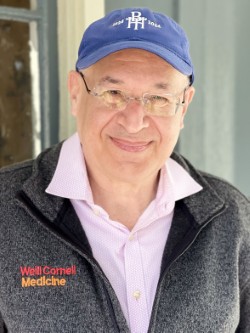
Based in New York City, Francis Barany, PhD, is a professor of microbiology and immunology at Weill Cornell Medicine, where his laboratory works at the intersection of cancer biology, molecular diagnostics, and drug discovery. He often jokes that his middle name is “controls,” a shorthand for his insistence that experiments should challenge an idea rather than merely confirm it.
Barany’s team is developing blood-based assays for colorectal cancer by examining DNA methylation and other molecular signals. The goal is to make cancer detection more accurate, accessible, and affordable. These methods remain investigational and require further clinical validation before they could be used for routine screening.
Earlier in his career, Barany developed ligase chain reaction and ligase detection reaction, methods that use DNA ligase to distinguish small genetic differences. More recently, he has helped develop CURE-PROs, a preclinical platform in which smaller components reversibly assemble inside cells and direct selected proteins toward degradation.
Barany also teaches and mentors medical students, graduate students, and postdoctoral researchers. Elected a Fellow of the National Academy of Inventors in 2016, he earned his PhD in microbiology from The Rockefeller University. His PubMed publications and official USPTO patent records provide primary source access to his research and patent activity.
What is your typical day, and how do you make it productive?
Most days I try to be up by 6 a.m., have breakfast, work on my computer, exercise, shower—and think deeply about an experiment or larger problem I am trying to solve. Creativity cannot be forced, and ideas may spring up in the shower or when I am daydreaming, or during my afternoon nap. I work hard with my team. There is no substitute for hard work—to use the baseball analogy “grinding out at bats.”
How do you bring ideas to life?
Ideas are like horse manure. You need to spread it around to get something extraordinary to grow. I love brainstorming with my academic, clinical, and industrial collaborators, who are stronger than I am in the missing disciplines—and design new experiments to solve “impossible” problems. It is amazing what you can accomplish when you share credit. Often, it takes many rounds of experiments and evolving the original ideas to make them work. Our goal is to bring affordable diagnostic and therapeutic solutions to cancer patients across the globe. No one should suffer from cancer, independent of whether they are rich or poor.
What’s one trend that excites you?
The convergence of liquid-biopsy cell-free DNA analysis—including changes in DNA sequences known as mutations and changes in methylation patterns associated with epigenetics—with accessible qPCR, digital PCR, and nanopore DNA-sequencing instruments and machine learning excites me. Together with other complementary low-cost approaches, these tools may make cancer detection more accurate, affordable, and actionable. The larger opportunity is to connect that molecular readout to modular medicines we are developing: Read the disease blueprint, then program the treatment.
What is one habit that helps you be productive?
Some days ideas flow, and some days you just have a “writer’s block.” The harder you try, the less creative you get. I may put in long hours, but I also try to give myself little breaks, solve an online chess puzzle, or read an article online in The New York Times. If still nothing flows, I take a nap. Sometimes the idea comes in the early hours when I am asleep, yet actively dreaming. My father taught me: “The secret to success is sleep.”
What advice would you give your younger self?
Find extraordinary mentors and collaborators early. Do not fear failure. Most experiments fail, most grant applications fail, most paper submissions get rejected. Failure is the one constant of life. Learn quickly and keep your enthusiasm going even when nothing is working. Give competitors respect and never let ego outrank the data. I worked for a brilliant scientist, Dr. Hamilton O. Smith, who won the Nobel Prize for discovering restriction endonucleases. He was also the humblest man I ever met. Steve Jobs said, “Stay hungry. Stay foolish” to which the late Dr. Hamilton O. Smith would have added, “Stay humble.” I wish I had known this earlier in life.
Tell us something you believe almost nobody agrees with you on?
More data does not automatically produce a better diagnostic. We live in an era where the big-box sequencing companies push high-cost diagnostics with a “sequencing uber alles” big data approach. My team and I believe a focused, analytically rigorous, affordable test can be more useful than an enormous black-box test if it answers the clinical question with fewer false alarms, which lead to unnecessary tissue biopsies and patient anxiety. A complex, high-cost diagnostics does not benefit the patient that can’t afford it. Furthermore, pressuring the FDA to approve “early detection” tests that find less than 20% of early cancer, and with no evidence of clinical benefit to the patient, is a waste of taxpayers’ money. We believe in low-cost cancer diagnostics that will benefit the 80% of patients in the US who are left behind, and the 99% of patients in the rest of the world—all of whom deserve better. We believe if you develop affordable tests that truly put patient benefit first, then business will grow around the world.
What is the one thing you repeatedly do and recommend everyone else do?
I tell my co-workers in the lab that my middle name is “controls.” I do not mean controlling the lab, but doing the right experimental controls. I have been known for running an experiment with 20 variations, in which 18 of them were controls. We have made a few key discoveries, one of which was completely missed by much bigger labs in the field because we took the time to do the right controls.
When you feel overwhelmed or unfocused, what do you do?
First, I remind myself of the message in the Shirelles’ 1961 hit single “Mama Said”: I will have good days and bad days and then give myself a break when it is an unproductive day. Tomorrow will be better. Second, I try to reduce the problem to one or two questions rather than trying to solve everything at once. Third, and most importantly, if I am still stuck, I talk about the problem with one or more colleagues or collaborators. Often, bouncing ideas around leads to new thoughts and new experiments—you never know when the next one will work beyond expectations.
What is one strategy that has helped you grow your business or advance in your career?
Collaborating across multiple disciplines and organizations—cancer biology, medicinal chemistry, clinical medicine, equipment manufacturers, patent law, diagnostics companies, and therapeutic companies—has been the most important strategy. During the pandemic, I embraced Zoom and remote work, and now I collaborate and interact with outstanding colleagues around the world. This has allowed me to participate in team science at a level I never imagined before the pandemic.
What is one failure in your career, how did you overcome it, and what lessons did you take away from it?
One failure? I’ve had hundreds of failures. Virtually every grant I’ve applied for has been rejected—some two or three times. I keep in mind a quote attributed to Winston Churchill: “Success consists of going from failure to failure without loss of enthusiasm”. Science is hard; most experiments fail, and you need both patience and persistence to overcome these hardships. And sometimes, after repeated attempts, you still fail. Sometimes, you need to know to let it go and move to some other approach.
What is one business idea you’re willing to give away to our readers?
It would greatly help the liquid-biopsy community if a group created a platform-neutral liquid-biopsy quality network for clinics and laboratories. It would standardize blood collection and processing, provide reference materials and blinded proficiency testing, and certify sample quality before expensive assays are performed. By standardizing inputs across different labs, it would help make downstream cancer tests more reliable and create a valuable longitudinal quality dataset. Appropriately de-identified aggregate data should be made publicly available so that groups can collaborate and improve the quality network for scientists and, more importantly, provide reliable solutions for improving outcomes for cancer patients across the continuum of care.
What is one piece of software that helps you be productive? How do you use it?
The Zoom app has changed the way I conduct science, and now I collaborate with scientists across the world. The ability to easily share any document on my computer or the other participants’ computers is so useful that I even use Zoom now for lab meetings, sO we can all interact far more efficiently when we have all the files at our fingertips.
What is the best $100 you recently spent? What and why?/
I met my current partner through dance, and she recently had a birthday. We celebrated by inviting her friends to a party that featured both dance and art. In addition to the event, I purchased about $100 in art supplies, which were shared not only with our guests, but also with everyone at the dance. The joy it brought her and others made the purchase worth its weight in gold.
Do you have a favorite book or podcast you’ve gotten a ton of value from and why?
I recently read Everything Is Tuberculosis by John Green because I teach medical students, and TB is one of the case presentations. I saw parallels between the high cost of diagnosing and treating TB patients and the high cost of diagnosing and treating cancer patients. I came to realize that solutions will require the dedicated advocacy of many patients, healthcare providers, and government health institutions.
What’s a movie or series you recently enjoyed and why?
I recently saw the Brazilian film I’m Still Here, which follows a woman searching for her husband, a dissident politician, after his forced disappearance. This harrowing and emotionally moving biographical drama reminds us that democracy cannot be taken for granted.
Key learnings
- Turn big ideas into testable experiments and let data—not ego—decide.
- Build multidisciplinary teams around big problems, and always share credit.
- Design diagnostics and therapeutics as modular systems that keep improving over time.
- Failure is a fact of life. Embrace it and persist without losing enthusiasm.
- Ideas alone are not enough. Partner with others to build low-cost solutions that help democratize cancer care.