
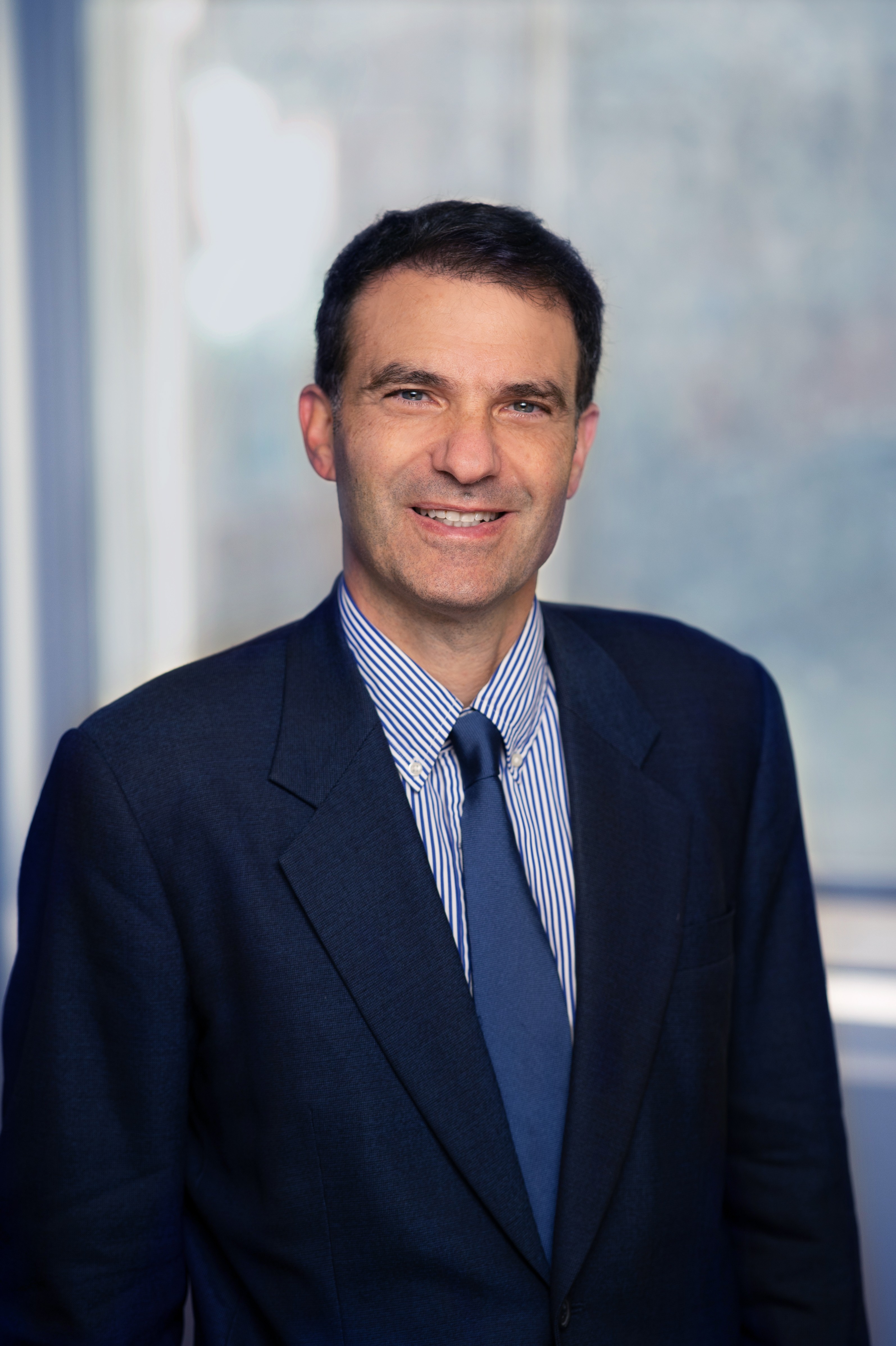
An exceptional innovator, Jeff Geschwind, MD, is an interventional oncologist with extensive experience in the management of patients with liver cancer. He is considered a world expert on liver cancer. Currently, he serves as the Medical Director of Oncology, Image-Guided Therapy, and Imaging Core Lab at NAMSA, one of the premier contract research organizations in the US. Moreover, he is a Medical Advisor (Medical Affairs) for HistoSonics, which is developing a non-invasive, ultrasound-based therapy for liver cancer and other cancers. Dr. Jeff Geschwind also consults for Philips Healthcare and Cage Pharma, the latter of which he founded in 2009 to develop cancer drugs targeting tumor metabolism.
Dr. Jeff Geschwind has been the lead or co-investigator on no less than 50 clinical trials, including some that were care changing. He holds several patents for his research on a promising cancer therapy and formed a company based on these research discoveries.
Previously, Dr. Geschwind was a professor at the Johns Hopkins University School of Medicine and the Yale University School of Medicine, where he served as Chairman of the Department of Radiology and Biomedical Imaging. After he left Yale, he became the Director of Oncology at USA Clinics Group, the largest outpatient practice in the US.
Widely regarded as a pioneer in interventional oncology, Dr. Geschwind received the Wilhelm Conrad Rontgen Honorary Award from the European Society of Radiology and the Ernest Ring Academic Development Program Grant from the Society of Interventional Radiology, among many other awards and accomplishments. He earned his MD from Boston University School of Medicine.
What is your typical day, and how do you make it productive?
Ever since I stopped my clinical practice, I really don’t have a typical day. At the current time, I work remotely from home. Every day is truly different, as my work schedule depends on the various activities on my agenda, as I have three different jobs: one as medical director of NAMSA (the large CRO), another as a medical advisor for HistoSonics (the cancer company), and, finally, the last one as a member of the scientific advisory board of another cancer company called New Phase that is developing nanoparticles that can be heated to kills tumors through selective hyperthermia. Generally, I start around 8 am and split my time between conference calls to go over clinical trials, discuss potential new projects, troubleshoot, answer specific questions about clinical or imaging protocols, and writing imaging manuals to define the endpoints of a clinical trial or writing manuscripts for HistoSonics and clinical protocols for New Phase. My day typically ends around 6 pm, but since the implementation of remote work, it is not uncommon to work during the evening.
Working from home allows me to be more productive, as I don’t have any distractions. Since my wife, who is an attorney, also works from home. As a result, I am able to concentrate more easily.
How do you bring ideas to life?
Being innovative and bringing new concepts to life have been some of my strong points throughout my professional career. As a scientist and physician, I have always been fascinated by biology, biochemistry, and biophysics. I was able to use my knowledge anchored in these basic sciences to test new ideas in clinical medicine, such as drug delivery in cancer or targeting the way cancer cells generate energy for growth to kill them and developing imaging methods to visualize and target tumors under X-ray guidance. My tenacity, passion, and drive allowed me to bring many of these new ideas to fruition.
What’s one trend that excites you?
Targeted therapy for cancer. This is a very exciting time to be involved in cancer research and care. Between image-guided precision therapies and drugs capable of inhibiting a single target (such as an upregulated pathway within cancer cells or a receptor on the surface of cancer cells), new options are finally making their way for patients suffering from cancer. The ability to also understand the molecular profile of tumors has also contributed to the revolution we have been witnessing in cancer care.
What is one habit that helps you be productive?
My drive, energy, and diligence. The fact I vigorously exercise every morning also helps my concentration and productivity.
What advice would you give your younger self?
Appreciate what I have. I really wish I had learned this at a younger age.
What is the one thing you repeatedly do and recommend everyone else do?
Fight for my patients with all my energy and vigor. As a physician dealing with cancer patients for almost 30 years, it is the most important recommendation I can make to any aspiring doctor.
When you feel overwhelmed or unfocused, what do you do?
Exercise diligently (I play soccer every single week, as well).
What is one strategy that has helped you grow your business or advance in your career?
Hard work, dedication, drive, diligence, the mentality to never give up (tenacity).
What is one failure in your career, how did you overcome it, and what lessons did you take away from it?
After the first grant I submitted to the NIH was not funded, I was very disappointed, especially given the amount of time I spent on it. But I took some time to reflect and for introspection, which allowed me to regroup and resubmit six months later. Instead of being defensive, I took the criticisms to heart and resubmitted a significantly improved grant; and this time it received a very high score that allowed me to get my grant funded and truly launch my career.
What is one piece of software that helps you be productive? How do you use it?
None comes to mind, other than an imaging software (Mint Medical) that allows the assessment of tumor response after cancer therapy.
What is the best $100 you recently spent? What and why?
Given that $100 doesn’t get us much anymore, I had to increase the amount to the best $1,000 I recently spent. That is an easy one, as I spent $1,000 for a beautiful Maine Coon cat that my wife and I picked up in Maine. We have three Maine Coon cats.
Do you have a favorite book or podcast you’ve gotten a ton of value from and why?
I recently read the book “Into Thin Air,” which was fascinating and captivating about the expedition to Everest. In terms of value, “Man’s Search for Meaning” by Viktor Frankl was the most helpful to me. This book truly helps identify what is most valuable in life. I even used a passage in the book about love at my oldest son’s wedding that is an allegory to the meaning of love and compassion. This book is incredibly powerful and moving.
What’s a movie or series you recently enjoyed and why?
I recently watched the series “Tehran,” which I thoroughly enjoyed. It tells the story of the Israeli spy agency in Iran—which is quite timely at the moment, as it deals with Iran’s goal of acquiring a nuclear weapon. The series dives deeply into the crux of the nuclear issue, surprisingly presenting both sides almost equally. Even though it is an Israeli production, you would never know it because it is overall incredibly balanced and its depiction of characters in Iran is quite sympathetic.
Key learnings
- Resilience, reflection, and amenability to feedback are the keys to professional improvement and overcoming setbacks.
- Dedication to patient care and well-being should be the top priority of every physician.
- Combining scientific curiosity with tenacity, passion, and drive facilitates innovation and helps bring ideas to life.
- Appreciate what you have.