
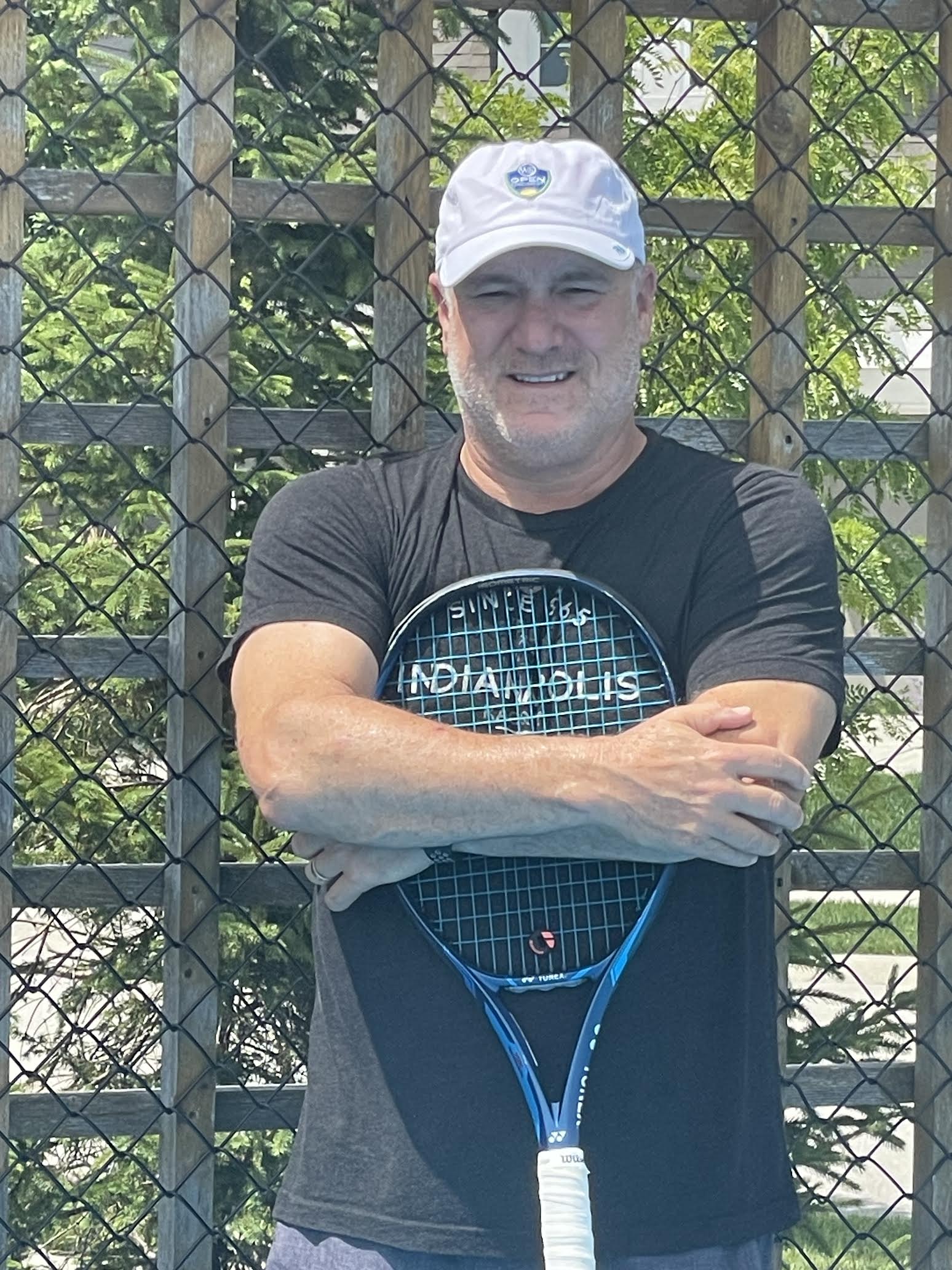
Jeff Rothbard, affectionately known as “Coach Jeff,” is a passionate tennis professional who brings decades of leadership, strategy, and dedication to his work on the court. Based at the South Barrington Club in Illinois, Jeff specializes in coaching players of all levels from energetic beginners to advanced juniors and competitive adults. With a strong focus on mental resilience and technical fundamentals, his coaching is built around one core belief: great attitude and great effort lead to great results.
His teaching style blends purposeful movement, focused footwork, and a growth mindset. Players learn to trust the process, using methods like the “bounce-swing” rhythm and “Next Time” reflection to grow from mistakes and build confidence. Whether he’s running a high-energy clinic or guiding one-on-one lessons, Jeff cultivates an environment where athletes can thrive both on and off the court.
Before returning to his lifelong love for tennis, Jeff had a successful career in business spanning over 30 years. As founder and president of SilverCreek Properties, he developed and managed commercial real estate across 18 states. Under his leadership, the firm grew to include 60 properties before being sold in 2006.
Today, Jeff’s mission is clear: to help each player grow not only as a competitor but as a confident, disciplined individual. With every serve, swing, and strategy session, Coach Jeff is shaping athletes and their futures.
What is your typical day, and how do you make it productive?
My typical day begins early, usually with time for reflection and light exercise before I head to the South Barrington Club. Most of the day is spent on court coaching players of all ages: from kids gripping a racket for the first time to adults rediscovering the game. Productivity, for me, is less about checking tasks off a list and more about impact. Did I help someone grow today? Did a player leave with more confidence than they came with? That’s how I measure my productivity by the positive energy and growth I leave on the court.
How do you bring ideas to life?
I bring ideas to life by testing them in real time. On court, I experiment with techniques like “bounce-swing” rhythms or “Positive Footwork.” If I see players responding and moving with more confidence, hitting cleaner shots, or staying calmer under pressure, I know it’s working. In business and coaching alike, I believe ideas shouldn’t just live in notebooks; they need to be lived, tested, and refined through experience. I also listen closely to feedback from players, parents, and colleagues. That combination of experimentation and collaboration is how I take an idea from thought to transformation.
What’s one trend that excites you?
One trend that excites me is the growing emphasis on mindset and mental resilience in sports and business. For too long, success was measured only by physical ability or technical skill. Now we’re realizing that attitude and mental toughness often outweigh raw talent. I see kids and adults alike gaining confidence from mindset training, not just skill drills. It excites me because this shift is bigger than tennis because it equips people for life. Whether they face an exam, a boardroom, or a tough match, they’re learning resilience, patience, and the ability to thrive under pressure.
What is one habit that helps you be productive?
Consistency. It’s simple but incredibly powerful. I show up every day with the same intention: I give my best effort, bring positive energy, and be fully present for whoever I’m coaching. This habit of consistency creates trust, progress, and momentum over time. It’s the same in business, tennis, or personal growth that anyone can give a great effort once. The real results come from showing up over and over with discipline and focus. That steady rhythm makes me more productive and sets an example for players who see that consistency always outperforms short bursts of intensity.
What advice would you give your younger self?
I’d tell my younger self to slow down and value purpose over pace. Early in my career, I chased growth with bigger deals, more properties, and faster expansion. And while that built financial success, I often overlooked the deeper question: “Am I fulfilled?” I would tell young Jeff that success isn’t just about building things, it’s about building people. Don’t be afraid to pivot when your heart pulls you in a different direction. The earlier you align your work with your purpose, the sooner you’ll find peace, meaning, and the kind of impact that outlasts profits or accolades.
Tell us something you believe that almost nobody agrees with you on?
I believe mistakes are not setbacks. They’re accelerators of growth. Most people see mistakes as negative, something to avoid at all costs. But I see them as essential. On court, if a player isn’t making mistakes, they’re not pushing themselves enough to grow. In life, failures often reveal our greatest strengths and redirect us toward our true path. Few agree with me fully because our culture rewards perfection and punishes failure. But I’m convinced: when you welcome mistakes with humility and curiosity, you learn faster, grow stronger, and achieve more meaningful results than you ever could by playing safe.
What is the one thing you repeatedly do and recommend everyone else do?
I start every day with gratitude. It sounds simple, but it’s powerful. Before I dive into coaching or meetings, I pause to appreciate the opportunities I have: the players I’ll work with, the health to stay active, and the chance to make a difference. Gratitude shifts your mindset immediately. It changes challenges into opportunities and mistakes into lessons. I recommend that everyone take just a few minutes daily to reflect on what they’re grateful for. It builds resilience, steadies your emotions, and helps you stay grounded no matter what the day brings. Gratitude multiplies energy and focus.
When you feel overwhelmed or unfocused, what do you do?
When I feel overwhelmed, I return to movement. Sometimes it’s as simple as stepping on the court without an agenda, just hitting balls and letting the rhythm of tennis clear my head. Other times, I’ll take a walk or breathe deeply to recenter myself. Movement helps me reconnect my body and mind, releasing stress and sharpening focus. I also remind myself of my “Positive Footwork” philosophy: don’t freeze in place when life feels heavy, just take a small step forward. Even one intentional action can shift overwhelm into momentum, which quickly restores focus and perspective.
What is one strategy that has helped you grow your business or advance in your career?
The strategy that’s helped me most is treating every player, client, or colleague like a valued team member. Whether I was managing a commercial real estate firm or coaching on court. I’ve always believed in recognizing unique strengths, listening to people, and helping them grow. That creates loyalty, trust, and long-term success. In real estate, it built strong partnerships. In tennis, it creates motivated players and supportive parents. People want to feel seen and valued. Making that my core strategy has consistently fueled growth, because when people thrive, businesses and communities thrive with them.
What is one failure in your career, how did you overcome it, and what lessons did you take away from it?
One failure was overextending too quickly in my real estate business. At one point, I expanded too aggressively, taking on properties that stretched resources thin. When the market shifted, it created major challenges. I overcame it by refocusing, shedding what wasn’t working and doubling down on fundamentals like relationships and cash flow discipline. The lesson I took away is that growth without balance isn’t sustainable. In tennis, I share the same lesson: don’t just chase harder shots or flashier wins; master consistency first. Sustainable growth, whether in business or sports, comes from discipline and patience, not unchecked expansion.
What is one business idea you’re willing to give away to our readers?
Here’s one: create a platform that combines sports training with life coaching. Parents often search separately for athletic development and personal development programs for kids. Why not blend the two? A digital platform or academy where sports coaches partner with mentors to build confidence, resilience, and leadership while teaching the game could be incredibly impactful. Kids would develop not just stronger skills, but stronger selves. I already do this on the court every day, but scaling it digitally could help millions of families. It’s more than a business, it’s an opportunity to shape future leaders.
What is one piece of software that helps you be productive? How do you use it?
I use Google Workspace daily, and it’s a game-changer for productivity. Between scheduling lessons, communicating with parents, and tracking progress notes, everything stays organized in one place. The calendar keeps me on track, Gmail keeps communication flowing, and Google Docs lets me jot down player feedback that I can share easily. It also allows me to collaborate remotely with families, which keeps everything transparent. In both business and coaching, organization creates space for creativity and focus. The simpler the system, the more energy I have to pour into the people I serve.
Do you have a favorite book or podcast you’ve gotten a ton of value from and why?
Two books that’s had a lasting impact on me is Winning Ugly by Brad Gilbert and The Best Tennis of Your Life by Jeff Greenwald. Both books go beyond technique and dives into the mental side of performance, which aligns perfectly with my philosophy as a coach. These books reinforces that our biggest opponent is often our self-doubt or inner critic. Learning to quiet that voice and trust yourself is transformative; not just in tennis, but in business and life. I recommend them to players, parents, and professionals alike because it teaches skills that extend well beyond the court.
What’s a movie or series you recently enjoyed and why?
I recently enjoyed rewatching Remember the Titans. Beyond being a great sports movie, it’s a story about leadership, resilience, and unity. I love how the team learns to overcome differences, build trust, and focus on shared goals. As a coach, those themes resonate deeply with me. It reminds me that sports are never just about winning; they’re about shaping character, teaching life lessons, and bringing people together. That’s exactly what I try to create on my court every day. Watching that story reminds me of the power of mentorship and belief in others.
Key learnings
- Mistakes aren’t failures—they are accelerators of growth.
- Consistency beats intensity in business and sports.
- Gratitude builds resilience and focus.
- Treating people like valued team members creates lasting success.
- True fulfillment comes from building people, not just businesses.