
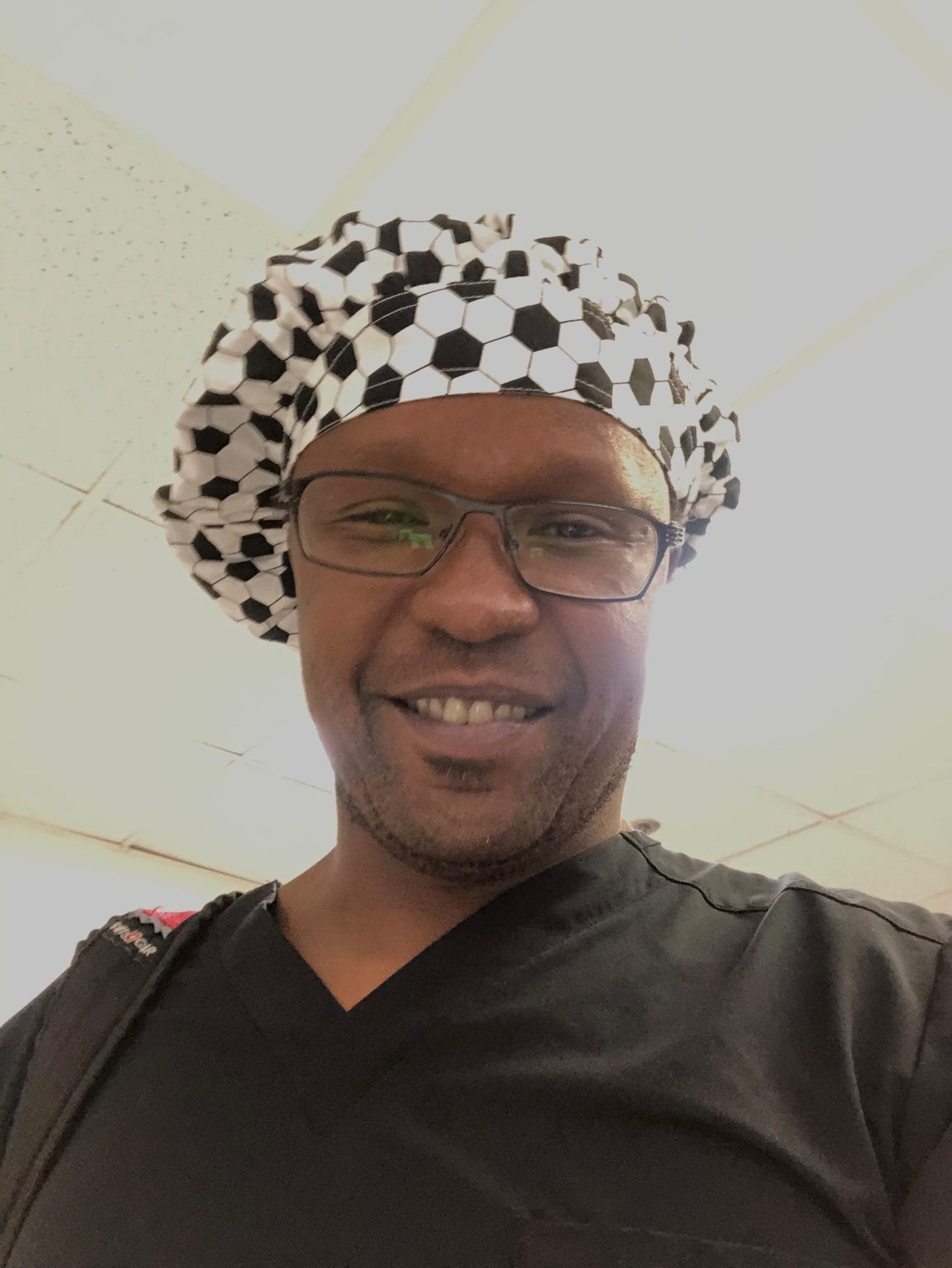
Ken Mwatha is a board-certified emergency medicine physician with over a decade of experience in high-acuity emergency care. He serves as an attending physician at St. Agnes Hospital’s Department of Emergency Medicine, where he provides life-saving care to patients in one of Baltimore’s busiest urban hospitals. Over the years, Dr. Mwatha has built a career centered on delivering excellent care to patients during their most critical moments.
Before joining St. Agnes Hospital in 2013, Ken Mwatha worked as an attending physician at Harbor Hospital in Baltimore, where he treated emergent and non-emergent conditions. His responsibilities extended beyond bedside care, encompassing patient flow management, rapid diagnosis, and procedural intervention for trauma and critical care cases.
Dr. Mwatha has also contributed meaningfully to medical research and education. He has co-authored materials for the Johns Hopkins Emergency Medicine Intern Guidebook. He has worked on studies comparing diagnostic tools such as Magnetic Resonance Urography and CT imaging in nephrolithiasis. His research contributions also include projects focused on the genetics of inflammatory bowel disease (IBD) in African Americans and the role of HIV as a Trojan exosome.
What is your typical day, and how do you make it productive?
My typical workday consists of me waking up an hour before the start of my shift. I usually get ready and drive in to work. I try to get there before the start of the shift, so I can be ready to see patients when the shift starts. I always work the night shift and get in around 8 pm. I usually work through the shift, which is nine hours, and I typically don’t break for lunch. The shift typically ends at 5 am, after which I drive home. When I get home, I try to do a short workout. The workout is either a one-mile run or 100 push-ups and 50 sit-ups. I alternate these workouts with a day of rest, scheduled every 3rd day. I grab something to eat and unwind. I usually unwind by watching soccer or rugby highlights before going to bed.
How do you bring ideas to life?
I run all my ideas through my wife, who is the most sensible and thoughtful person that I know. She is skilled at seeing my blind spots and pointing them out, while being encouraging and supportive. After that, I try to identify concrete, actionable next steps and set a deadline to get them done.
What’s one trend that excites you?
I am amazed about the use of artificial intelligence. I think it is a remarkable tool that will enhance our lives much like the internet did. However, like the internet, I am concerned about how it may erode our ability to connect with each other in a genuine way.
What is one habit that helps you be productive?
Exercising regularly on my days off works wonders for my mood and boosts my productivity. A little bit of caffeine is also necessary to get my day started.
What advice would you give your younger self?
Put more time into preserving friendships and relationships. Take more trips with your wife.
Tell us something you believe almost nobody agrees with you on?
Nobody should ever have an emotional attachment to a professional sports team. They are a business organization, like any other. It’s okay to be happy when they win and play well. It’s okay to just enjoy watching a good game. It’s not okay to be upset about the result of a game.
What is the one thing you repeatedly do and recommend everyone else do?
Pay attention to your own mental health and maintain connections. Reach out to someone you haven’t spoken to in a long time. Make the effort to reconnect. Life is busy, and when you’re juggling employment, kids, family and other obligations, it’s sometimes easy to forget your own mental health.
When you feel overwhelmed or unfocused, what do you do?
I trust in my spirituality and put things into the hands of God. He has brought me through a lot of difficulties in my life.
What is one strategy that has helped you grow your business or advance in your career?
I try to be honest and kind in all my dealings with others. Trust requires time to build. It has really helped me build strong relationships at work.
What is one failure in your career, how did you overcome it, and what lessons did you take away from it?
I used to focus on disease-oriented outcomes instead of patient-oriented outcomes. I made the diagnosis and treated the disease. I often did not address the expectations, hopes, and anxieties of the underlying human being. I started to focus more on what was going on in the patient’s mind and realized that it made my patients more satisfied. The lesson that I took away is that medicine is still an art and not just a science.
What is one business idea you’re willing to give away to our readers?
A business that gets doctors to sign a pledge that they will not over-test, over-prescribe, or be swayed by corporate interests in their practice. I would then charge a fee to potential patients who are looking for that kind of ethical care provider and to providers of that kind of care to connect them.
What is one piece of software that helps you be productive? How do you use it?
Dragon microphone is a game-changer when it comes to charting. We used to spend a lot of time typing our charts or proofreading a scribe’s chart. I use it to dictate my charts in real-time when I work.
Do you have a favorite book or podcast you’ve gotten a ton of value from and why?
The book Blink by Malcolm Gladwell. Blink talks about how the mind processes information and makes decisions. It has taught me the value of trusting your intuition when you have years of experience behind you. The EM:RAP podcast is an emergency medicine podcast. It has taught me how sometimes habits and experience can get you into trouble.
What’s a movie or series you recently enjoyed and why?
The Netflix series Black Mirror. It is a show that takes a fictional future technology and then proceeds to take it to its worst possible outcome. The plot is often unpredictable, and the endings are often mind-blowing.
Key learnings
- The practice of medicine, like life, requires much introspection and continuous growth.
- Life is best when you’re surrounded by friends and family; those relationships should be cultivated and maintained.
- A healthy life consists of taking care of the mind, the body, and the spirit.