
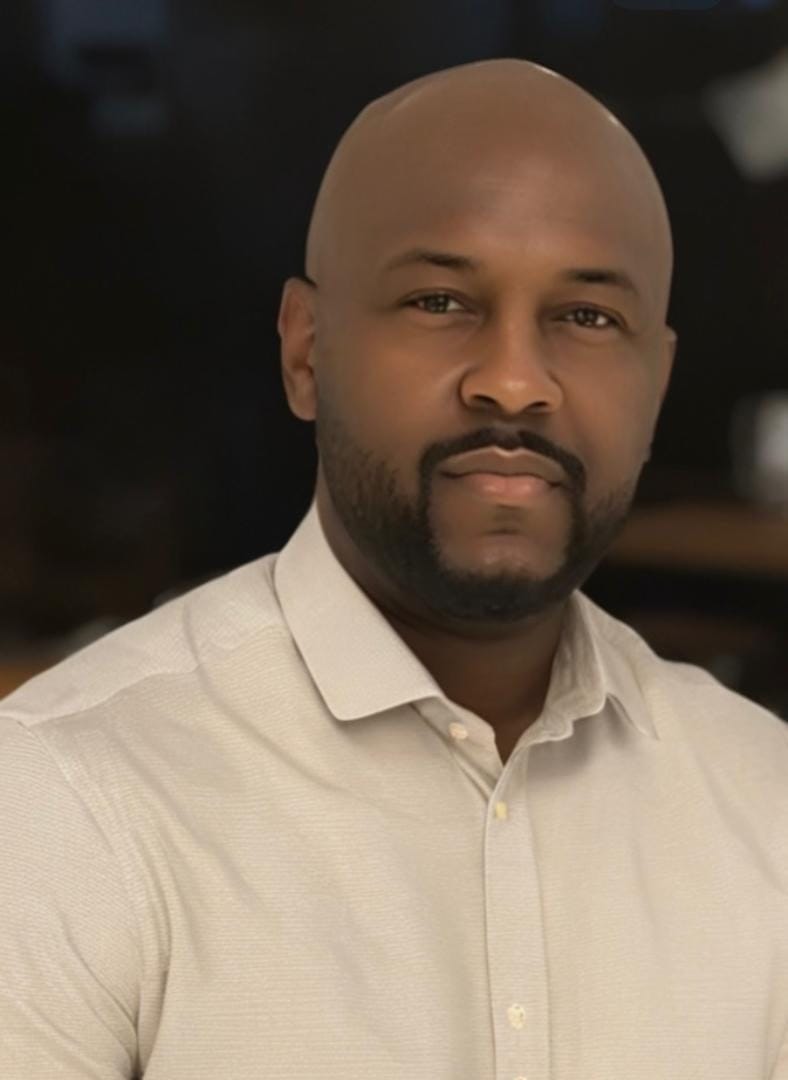
Leslie Nelson grew up in the UK, the oldest of three boys. His parents, originally from Ghana, worked hard—his father as an accountant and his mother in publishing sales. From a young age, Leslie learned the value of discipline and focus. Sports taught him to stay steady under pressure.
He studied History and English before heading to New York to earn his MBA in Finance and Global Business from NYU Stern. He also completed a certificate in Asset Management at NYU.
Leslie started his career in finance, working at Merrill Lynch and UBS. But his path changed when he joined GE. Over the next decade, he rose through the ranks—first in finance, then in infrastructure. He eventually led GE’s $1 billion power business in Africa and served as Country CEO in Ghana.
In 2018, he joined New Fortress Energy and helped take the company public. Then, in 2021, he launched his own energy transition platform. His goal: to bring clean, affordable power to communities across Africa. In 2023, the platform formed a joint venture with one of Africa’s largest investment firms.
Leslie now advises global funds and sits on multiple boards. He also mentors 15 university students in Ghana. He paid their tuition, gave them laptops, and stays involved in their careers. He lives in New Jersey with his wife and two daughters.
What is your typical day, and how do you make it productive?
My days are often split between strategy and execution. I start early—usually around 5 a.m.—with 30 minutes of quiet reflection or reading before the emails start. I tee off at the Golf course at 5:45am three times a week and wrap up 18 holes and 8-10k of walking in 3 hours, I often have calls with teams or partners in Africa first due to the time zones. Then I focus on reviewing proposals, investment decks, or deal terms. I leave afternoons for deeper work: mapping partnerships, working through financial models, or mentoring young professionals. I block time to think. Without it, I end up reacting all day instead of steering.
How do you bring ideas to life?
I test them in small, focused conversations. When I was building the energy transition platform, I spent months speaking with regulators, local operators, and funding institutions before we ever incorporated. I believe in pressure-testing ideas early—especially with people who’ll challenge you. If it survives those conversations, I put together a lean team and build from there.
What’s one trend that excites you?
Distributed power solutions in emerging markets. We often focus on big utility-scale projects, but modular energy—like solar mini-grids or containerized gas-to-power units—is making a real difference in places where national grids won’t reach for years.
What is one habit that helps you be productive?
I write things down. It sounds basic, but I keep a daily log of key conversations and decisions. Over time, it becomes a record of what I’ve committed to, who I’ve promised things to, and where to follow up. It also helps me track patterns I wouldn’t see otherwise.
What advice would you give your younger self?
Listen longer. In my early roles at Merrill Lynch and UBS, I was eager to prove I had the answers. But real leadership often means asking better questions, not offering fast answers. Especially in cross-cultural work, listening is not just polite—it’s strategic.
Tell us something you believe almost nobody agrees with you on?
Not all deals should scale. Some projects only work in one country or community. The obsession with replicability can ruin models that were good because they were specific. I’ve seen well-meaning investors try to force a playbook across regions, only to break what worked in the first place.
What is the one thing you repeatedly do and recommend everyone else do?
Ask: “What are we missing?” I write it on the whiteboard at nearly every offsite. It invites quiet people to speak and brings small problems to the surface. One time, this question uncovered a logistics issue that had caused 60-day customs delays for over a year—something nobody had escalated because it wasn’t in their KPIs.
When you feel overwhelmed or unfocused, what do you do?
I step away and walk. Even in New Jersey, I find a trail or quiet block to walk and reset. Often the problem isn’t that I have too much to do—it’s that I’m trying to do too many things at once.
What is one strategy that has helped you grow your business or advance in your career?
Bridging between financial language and operational language. I’ve worked across deal rooms and construction sites. Being able to explain a capital stack to an engineer—or a turbine failure to an investor—has helped me build trust and move projects forward faster.
What is one failure in your career, how did you overcome it, and what lessons did you take away from it?
Early in my time at GE, a power project in West Africa stalled over land issues. Legally, we had everything lined up. But the local community didn’t trust the process. I paused everything and spent a week having informal meetings with community leaders. We changed the employment plan and added a local liaison. The project got back on track. It taught me that execution isn’t just about documents—it’s about relationships.
What is one business idea you’re willing to give away to our readers?
Build a platform that matches technical professionals in the diaspora with short-term advisory projects in African infrastructure. So many qualified people want to contribute without moving full-time. A trusted, curated network could unlock major value.
What is one piece of software that helps you be productive? How do you use it?
I use Notion to track board roles, due diligence notes, and investment timelines. I like that I can customize it to show both high-level views and daily to-dos. It’s replaced three other tools I used to juggle.
Do you have a favorite book or podcast you’ve gotten a ton of value from and why?
One book that’s stayed with me is Walter Rodney, How Europe Undeveloped Africa. It explains for the student or newcomer to the region how to better understand the dynamics of Africa’s contemporary relations with the West. It clearly connects the past with the present and provides insights into the future.
What’s a movie or series you recently enjoyed and why?
I rewatched The Constant Gardener. It’s beautifully made, but also a tough look at how global business intersects with power, ethics, and human cost. It’s fiction, but there’s truth in the layers.
Key learnings
- Not all projects need to scale—local context often determines long-term success.
- Asking “What are we missing?” can surface blind spots that data alone won’t reveal.
- Trust and relationships are often more important than contracts in emerging markets.
- Cross-functional translation—between financial, technical, and community teams—can unlock momentum in complex projects.