
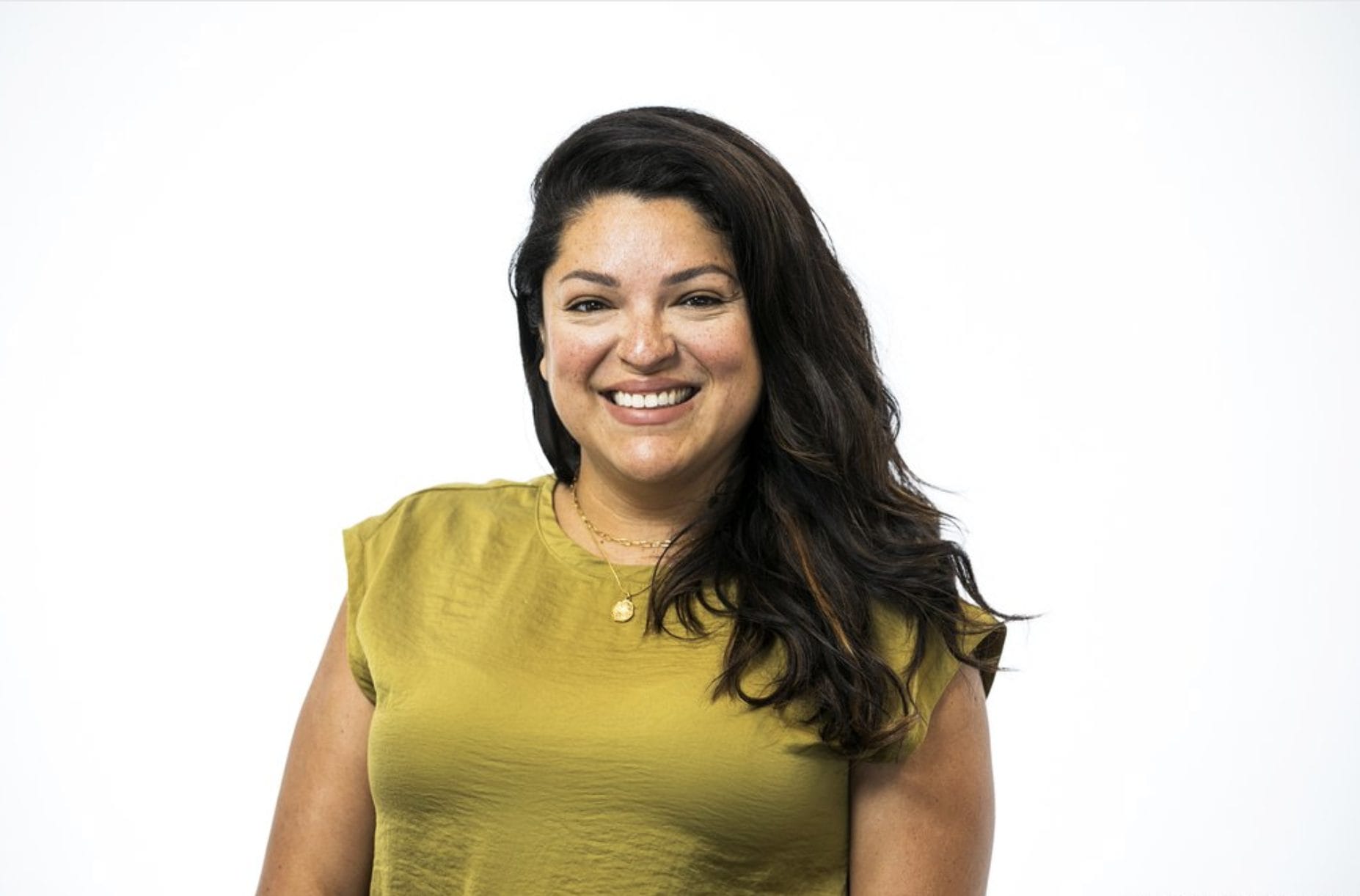
Natalia is a Colombian-born venture investor and startup ecosystem builder who founded Story, Louisville’s first startup-focused coworking space, to create a more cohesive and diverse entrepreneurial community in the region. She’s also led innovation efforts at the University of Louisville, backed bold early-stage founders through Renew Venture Capital and Hustle Fund’s Angel Squad, and serves as Chairperson of the board for Wild Accelerator supporting underrepresented founders—all while focusing on health equity and expanding access to capital for historically marginalized entrepreneurs.
What is your typical day, and how do you make it productive?
My day usually starts early—around 5:30 or 5:45 a.m. I take the kids to school and use that time to center myself a little. I’m not great at meditation, but I try to take a few breaths and feel grateful for the day.
After drop-off, I spend the rest of my commute in silence. When I get to the office, I check in with my team and immediately tackle the most difficult tasks of the day because that’s when my energy is highest.
I structure my day intentionally. I work in 90-minute increments because beyond that my productivity drops. Most meetings are capped at 30 minutes. I also use tools like Reclaim to schedule tasks based on my energy patterns.
I usually wrap my office day between 3–4 p.m., then shift into family time. Once I’m home, I shut everything off—no smartwatch, no work notifications. That boundary helps me stay productive during work hours and present at home.
How do you bring ideas to life?
I have a lot of “shower thoughts,” so I keep what I call a “bad ideas notebook” on my phone. I used to hesitate to write ideas down because I thought they were dumb, but I realized the act of capturing them is valuable.
I start by writing down the problem statement—what problem this idea is solving. Then I sketch possible solutions. Sometimes I revisit the idea later, sometimes I don’t.
The ideas that keep coming back are the ones I pursue. When that happens, I talk about them with my team, friends, or family and gather feedback. Then I move forward—even if I’m a little scared.
What’s one trend that excites you?
One trend that excites me is that many of the newest businesses in America are being started by younger founders and by women and people from Black and brown communities.
These founders are often building companies to solve real problems in their communities, and I think we need more of that perspective in business and entrepreneurship.
What is one habit that helps you be productive?
Setting strong boundaries with my time and technology. When I’m done with work, I literally turn everything off.
I used to burn out trying to be everything for everyone. Now I’m intentional about when I’m working and when I’m not. That intentionality allows me to be extremely productive during the hours that matter.
What advice would you give your younger self?
I’d remind my younger self that success happens when opportunity meets preparation, but I’d add something I’ve learned with experience: just because an opportunity appears doesn’t mean it’s the right one.
When you’re younger, everything feels urgent, like every opportunity is your only chance. But it’s not. There will be other opportunities, and sometimes the best decision is waiting for the right moment.
Tell us something you believe almost nobody agrees with you.
I believe you can make a lot of money and still do a lot of good.
In many venture capital circles, people think profit and positive impact are mutually exclusive. I completely disagree. I believe you can build companies intentionally from the beginning so that both things exist together.
What is the one thing you repeatedly do and recommend everyone else do?
Prioritize the people in your life.
That includes your team, your family, and your friends. Businesses and careers are important, but the relationships around you are what make everything meaningful and sustainable.
When you feel overwhelmed or unfocused, what do you do?
Honestly, sometimes I cry. I’m a habitual crier.
I also lean on my support system—family, friends, and my therapist. Therapy is something I recommend to everyone.
Another thing that helps is practicing gratitude. Sometimes I’ll just scroll through my photo library and look at the people I love. It’s a simple way to reset my perspective.
I’ve also learned the importance of pausing between moments—taking a breath before moving from one task, meeting, or space to another.
What is one strategy that has helped you grow your business or advance in your career?
Getting comfortable with sales.
A lot of founders believe their product should sell itself, but that’s rarely how it works. You have to be willing to ask for the sale and clearly guide the next step.
Learning to confidently say, “This is great—so what’s the next step?” has been a huge driver of growth in my career.
What is one failure in your career, how did you overcome it, and what lessons did you take away from it?
One of the biggest challenges in my career was winding down our software company, LevelUp, in early 2022.
We had built an amazing team and product, but we couldn’t raise the funding needed to keep scaling the business. Even though things were going well operationally, the financial runway wasn’t there.
The experience taught me that continuing something—even something successful—is always a choice. Walking away is also a valid choice. At that point, the cost to my health, family, and personal well-being had become too high.
It reminded me that sometimes the most powerful decision is knowing when to let go.
What is one business idea you’re willing to give away to our readers?
I’d love to see someone build a software platform that helps caregivers and parents support children on the neurodivergent spectrum.
The idea is a tool that helps translate communication between neurodivergent individuals and neurotypical systems—almost like an “accommodations translator.” It would help caregivers better understand what a person is trying to express and offer strategies that turn a diagnosis into a strength rather than a limitation.
What is one piece of software that helps you be productive? How do you use it?
I rely heavily on Reclaim and ClickUp.
Reclaim helps me schedule tasks based on my energy patterns and automatically creates buffers between meetings. ClickUp gives me a visual system to organize projects and tasks so nothing falls through the cracks.
As someone with ADHD, those systems are essential for keeping my work structured and manageable.
What is the best $100 you recently spent?
The best $100 I consistently spend is on a clothing rental subscription called Nuuly.
It’s around $90 per month and lets me rotate pieces without constantly buying new clothes. As someone who doesn’t love spending money on myself, it’s a practical way to keep my wardrobe fresh without the clutter or commitment.
Do you have a favorite book or podcast from which you’ve received much value?
One book that stuck with me is the children’s book “What Do You Do With an Idea?”
It’s a simple but powerful story about how ideas grow when you nurture them. It reminded me that some ideas are meant to be pursued, while others are okay to let go.
What’s a movie or series you recently enjoyed and why?
Recently, I’ve really enjoyed the TV show Shrinking. It’s one of those shows that’s both funny and deeply human at the same time.
I love how it explores relationships, grief, and personal growth in a way that feels real but still light and uplifting. It’s also a great reminder that even when life feels messy, there’s room for humor and connection—which is something I really value.
Key learnings:
- Productivity is driven by intentional structure—aligning work with energy levels, setting boundaries, and protecting focused time leads to better outcomes than working longer hours.
- Not every opportunity needs to be pursued; long-term success comes from preparation and discernment, recognizing that the right opportunities will come again.
- Strong businesses are built through action, not just ideas—clearly defining problems, seeking feedback, and being willing to make the ask (especially in sales) are critical to growth.
- Prioritizing people—teams, family, and support systems—creates more sustainable success than focusing on work alone.
- Profit and positive impact are not mutually exclusive; businesses can be intentionally designed to generate both financial returns and meaningful social good.