
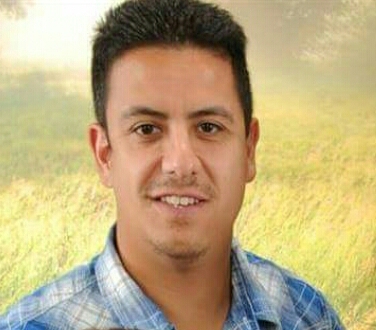
Based in Philadelphia, Nathan Rotenberg is a real estate investment professional who participates in both the short-term and long-term real estate markets. An active investor, he also invests in small businesses and related entrepreneurial projects. He is the owner and partner of property in various locations such as Nashville, Boston, and Ocean City, New Jersey. In the past, Nathan Rotenberg completed training with the State of Connecticut CFPC, NREMT, IAMTCS and APCO.
Nathan Rotenberg also a owner and partner at Provider 1 Health, a Philadelphia-market-based business in the public safety education sector focused on emergency medical services (EMS). The company emphasizes the sales of automated external defibrillators (AEDs), First in Jump bags & supplies among other products and services, including training on the equipment they sell. The company has worked with numerous clients in the EMS space.
In addition to his prior studies at the CFPC, Nathan Rotenberg studied advanced emergency medical dispatch at the International Academies of Emergency Dispatch. He was a certified flight communicator / advanced communications specialist with IAMTCS for 15+ years and has also studied public safety telecommunications and emergency medical dispatch at the Association of Public-Safety Communications Officials (APCO).
What is your typical day, and how do you make it productive?
My day still reflects the discipline of emergency services. I start early, orient myself to the operational landscape, and identify what could fail before it does. Years in EMS and emergency communications taught me that clarity saves lives—and in business, it saves time, capital, and momentum. I focus my mornings on strategy, leadership, and capital decisions that move the organization forward. Productivity isn’t about constant motion; it’s about deliberate action aligned with mission
How do you bring ideas to life?
In public safety, ideas are meaningless unless they work under pressure. I bring that same mindset to entrepreneurship. I begin with a real problem, validate it with people closest to the work, and design solutions that are practical, compliant, and scalable. I don’t chase perfection—I prioritize execution, learn quickly, and improve continuously. That approach has guided my transition from operator to owner and builder.
What’s one trend that excites you?
In public safety, ideas are meaningless unless they work under pressure. I bring that same mindset to entrepreneurship. I begin with a real problem, validate it with people closest to the work, and design solutions that are practical, compliant, and scalable. I don’t chase perfection—I prioritize execution, learn quickly, and improve continuously. That approach has guided my transition from operator to owner and builder.
What is one habit that helps you be productive?
After-action reviews. Whether following a critical incident or a major business decision, I take time to assess outcomes honestly. That habit, forged in emergency response, has become one of my most powerful leadership tools.
What advice would you give your younger self?
Understand that leadership is a skill, not a title. Learn finance earlier. Build systems sooner. And recognize that serving others doesn’t require staying small—it requires thinking long-term and building organizations that outlast you.
Tell us something you believe almost nobody agrees with you on?
Burnout is rarely about workload alone. It’s about lack of purpose, poor structure, and ineffective leadership. When people understand the mission and trust the system, they can operate at an extraordinary level—even under stress.
What is the one thing you repeatedly do and recommend everyone else do?
Write things down. Clear documentation creates alignment, accountability, and continuity. In emergency medicine, documentation protects patients. In business, it protects people, capital, and culture.
When you feel overwhelmed or unfocused, what do you do?
I return to first principles. Years in high-acuity environments taught me that complexity kills decision-making. I simplify, prioritize the next critical action, and move forward. Momentum restores clarity.
What is one strategy that has helped you grow your business or advance in your career?
Treating operational excellence as a competitive advantage. In healthcare, EMS, and regulated industries, trust is earned through consistency. That mindset has allowed me to grow health-centric companies while laying the groundwork for broader private equity and real estate investments across multiple states.
What is one failure in your career, how did you overcome it, and what lessons did you take away from it?
Early in my entrepreneurial journey, I scaled faster than my leadership infrastructure could support. The experience was humbling. I corrected course by investing in people, systems, and governance before pursuing further growth. The lesson was clear: sustainable scale requires intentional leadership development.
What is one business idea you’re willing to give away to our readers?
Build regionally integrated patient logistics platforms that connect EMS, NEMT, hospitals, and post-acute care. The demand exists. The differentiator will be operational discipline and compliance-driven execution.
What is one piece of software that helps you be productive? How do you use it?
Notion. It’s an operating system—for policies, strategy, deal flow, and institutional memory. It replaces chaos with clarity.
What is the best $100 you recently spent? What and why?
High-quality noise-canceling headphones. Focus is the most undervalued asset in leadership, and anything that protects it pays dividends.
Do you have a favorite book or podcast you’ve gotten a ton of value from and why?
Extreme Ownership, by Jocko Willink. Leadership under pressure is universal—whether on the battlefield, in an ambulance, or in the boardroom.
What’s a movie or series you recently enjoyed and why?
The Bear. It captures the reality of high-stakes leadership, operational breakdowns, and the cost—and necessity—of standards.
Key learnings
- High-stress public safety principles translate directly into effective entrepreneurial leadership.
- Operational discipline and documentation are foundational to scalable growth in healthcare and beyond.
- Sustainable success requires investing in leadership and systems before accelerating expansion.
- Purpose-driven structure outperforms motivation alone in preventing burnout.
- Trust, consistency, and execution create long-term value across operating companies and investment platforms.