
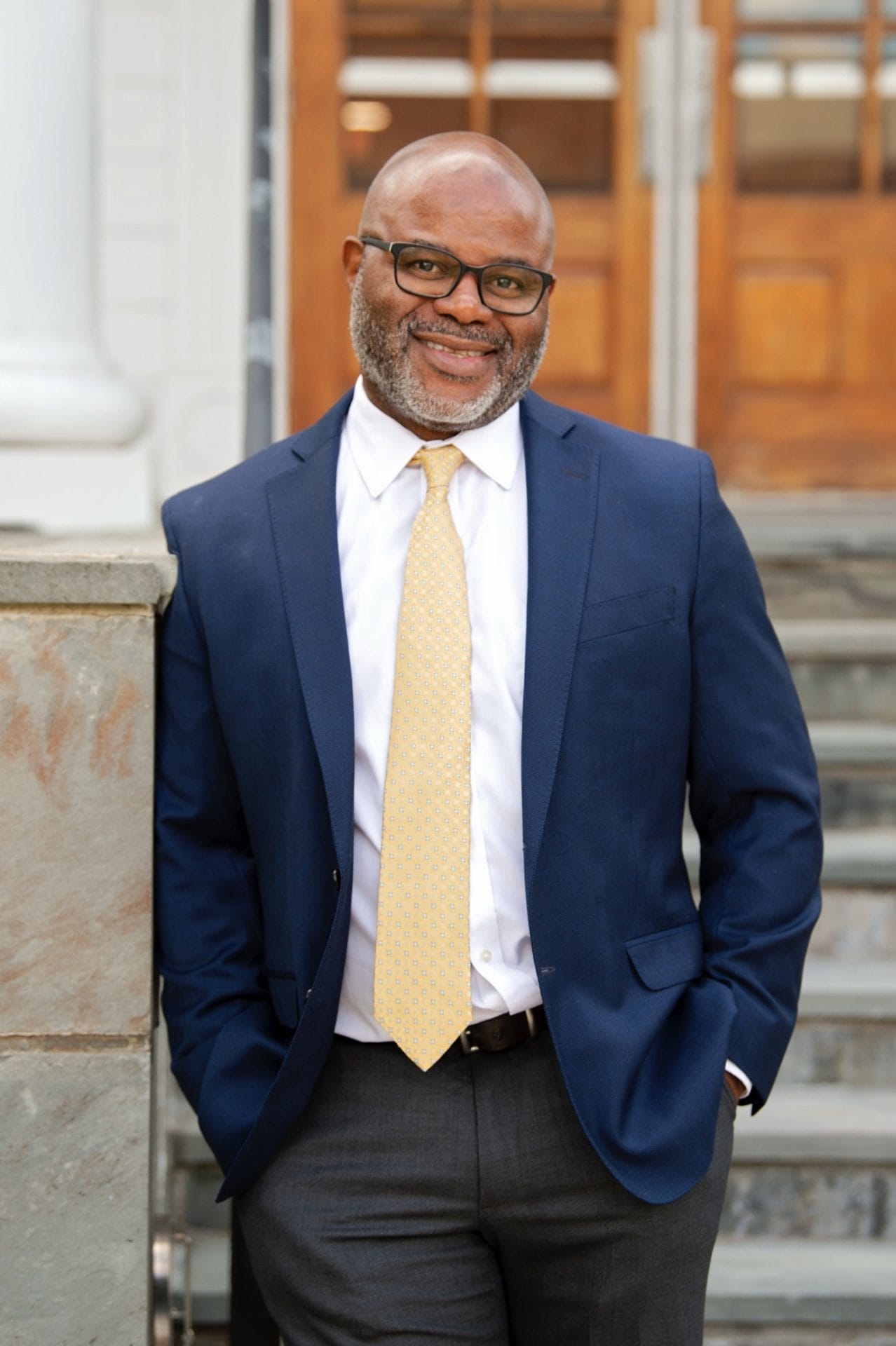
As Head of School at Rye Country Day School (RCDS), Randall Dunn leverages more than 30 years of experience leading schools to oversee operations and student success at the PK-12 independent school in New York. He has held this position since 2022, during which time he has steered significant curricular transformation to facilitate experiential learning and enhanced skill development. Randall Dunn also spearheaded the school’s new vision statement and strategic initiatives, launched a new master plan, and initiated a $125 million capital campaign.
Before joining RCDS, Randall Dunn was Head of School at a PK-12 independent school in Chicago with 1,200 students and 250 faculty and staff. He also served in similar leadership roles at The Roeper School in Michigan, Landon School in Maryland, and Derby Academy in Massachusetts. He began his career in education as a sixth grade and coach at The Potomac School in Virginia.
Complementing his extensive experience, he holds a Master of Education in Human Development and Psychology from Harvard University. He also earned a Bachelor of Arts in Psychology from Brown University and was a fellow of Columbia University’s Klingenstein Program for Visiting Heads of School.
What is your typical day, and how do you make it productive?
On a “typical day” I wake up at 6:00 am, play a mind-stimulating word game or two on my phone before getting out of bed, shower and get dressed, and go to the kitchen to pop a Sumatra pod into the Keurig and respond to emails. I head to my office at around 7:15 am.
Much of my day is filled with meetings and conversations with faculty, staff, parents, trustees, and various teams of educational professionals (department chairs, division directors, and members of the senior administrative team). When I am not in meetings, I am doing things like reading to kindergarteners, listening to 4th grade historical figure presentations, or meeting with seniors in small-group “Senior Circles.” These are the parts of each day that I love the most. The school day typically extends into evenings and weekends with attendance at sports events, robotics tournaments, board meetings, student performances, and parent events. Each day is jam-packed, fast-paced (well, not all of the meetings are fast-paced), unique, and far too short.
Much of the deeper work of researching, processing, and responding to things that have come up during the day happens at home, well into the evening. With so many moving pieces, and only 24 hours in a day, I feel productive and successful if I have been able to check everything off my list and ensure that I have responded to everyone who needs a response. Because there is rarely enough time to get everything done, I have to prioritize, but I always try to keep in mind that something that might seem less important to me may feel monumental to someone else. I aim—not always successfully—to be in bed before midnight.
How do you bring ideas to life?
One of the most important jobs I have as a head of school is to stay current on national and global trends in education and bring interesting new ideas to the table. I have benefitted from working with strong teams of senior administrators, faculty, and staff who are experts in their fields. We brainstorm and problem-solve together to bring new ideas to life, each of us bringing our unique perspective. We share the belief that innovation and growth are critical in education, so we discuss promising new ideas—mine or others’—in our weekly meetings. I always try to approach ideas first from a place of “YES,” remaining open-minded as we flesh them out. Once we’ve decided to move forward, we work with all of the players involved to figure out the details. Because every new action inevitably prompts a reaction, we work closely with our extraordinary communications office on the marketing piece to engage and educate community members and get as much buy-in as possible before the idea is launched.
What’s one trend that excites you?
I am excited by the growing enthusiasm for a more student-centered approach to education with an emphasis on skill development and competency-based learning rather than rote memorization and standardized testing.
What is one habit that helps you be productive?
I look forward to having dinner with my wife, Liz, every evening—even if it’s just for 20 minutes before I have to run back out to a school activity—and talking about our kids, weekend plans with friends, why I ordered so many pairs of bright blue compression stockings, and who’s still together on “Age of Attraction.”
What advice would you give your younger self?
Keep doing what you’re doing—you’re on the right path! Make sure your family always knows and feels they are your top priority, even when you are consumed with work 24/7. Stay physically active and don’t eat (or drink) too much sugar.
Tell us something you believe that almost nobody agrees with you on.
I don’t believe that my snoring is really that bad.
What is the one thing you repeatedly do and recommend everyone else do?
Almost every year, I get together with three close friends from high school for a long weekend getaway. We’ve fished off the coast of Provincetown; hiked in Boulder, Colorado; and eaten tacos together in Austin, Texas. Those great men make me laugh harder than I’ve ever laughed, support me unconditionally, and give me much-needed perspective. I recommend that everyone prioritize and value important friendships because they truly nurture the soul.
When you feel overwhelmed or unfocused, what do you do?
If I have a little time, I will do something physical like go to a hot yoga class, hit golf balls at the driving range, run on a treadmill, throw a baseball in the yard, swim, or go for a hike. If I only have five to 10 minutes, honestly, I will probably grab some junk food and watch some sports on TV to clear my head.
What is one strategy that has helped you grow your business or advance in your career?
As a head of school, my key strategy in nearly everything I do is to ask myself: 1) “What is best for the children?” and 2) “How can I best support and care for my talented team of teachers, staff, and administrators so that they, in turn, can do what’s best for our students while feeling professionally fulfilled?” Asking myself those two questions keeps my work focused so I can have a positive impact on the students and professionals in my school.
What is one failure in your career, how did you overcome it, and what lessons did you take away from it?
Interestingly, the two key strategies that have helped me grow and achieve success as an educational leader—centering my work first and foremost on what is best for the children, and supporting and mentoring teachers, staff, and administrators so that they (as experts in their fields) can do what’s best for their students while feeling professionally fulfilled—have been seen by a very few as a failure in leadership.
Independent schools rely on tuition and fundraising, which means that while there is significant and intentional socioeconomic diversity in our communities, there are also families of great means and influence. These families provide necessary support and strength to schools. The vast majority of relationships between schools and families are positive and mutually enriching. It is inevitable, however, that some people, based their professional or personal background, are more familiar and comfortable with a transactional business model of management.
Transactional relationships work well in business settings but not in schools. In schools, the focus needs to be on what is best for our students and teachers. When this very small percentage of community members—sometimes referred to, in educational lingo, as the “5 percenters”—have a concern, they generally also have an “easy solution” that does not take into account the expertise of educators and educational administrators. In a school setting, it is inappropriate to change published expectations for student behavior, hire or dismiss a teacher, provide preferential admissions that disregards the ability of the child to succeed academically, or provide unusual special treatment because of a person’s ability to donate to the school or in deference to their power or influence.
To answer your question, I will likely never overcome this “failure” because I won’t succumb to pressure at the expense of the well-being of a child or teacher. My personal and professional integrity is very important to me.
What is one piece of software that helps you be productive? How do you use it?
I use Google Chrome all day long. I don’t remember how I managed everything before it existed. I appreciate the collaborative nature of Chrome workspaces like Google Docs and shared drives. We are able to share timely information quickly, securely, and efficiently. At home, I also have fun using Google Lens to find the value of things we have collected and inherited from family members over the years.
What is the best $100 you recently spent? What and why?
My wife, Liz, and I went to Hudson, New York, last weekend, and spent nearly $100 on an extraordinary tour of the Olana State Historic Site—the unique home and grounds of American landscape painter Frederick E. Church. It was a warm, sunny day, and we hiked for hours around the beautifully landscaped property, enjoying unbelievable views of the Catskill Mountains and Hudson River Valley. Our tour guide was fun and very knowledgeable, and we learned a lot about Church, his vast travels, his paintings, and his fascinating family home. This was one of the best historical tours we have ever had.
Do you have a favorite book or podcast you’ve gotten a ton of value from and why?
Podcast: I love 99% Invisible (99PI). I revel in learning new things, and each of these little 30- to 50-minute episodes hones in on “all the thought that goes into the things we don’t think about—the unnoticed architecture and design that shape our world.” I often find myself bringing up seemingly random—but, in fact, very important—things I learn on 99PI in conversation. Some of my favorite episodes: “Sister Aimee and the Birth of the Megachurch,” “Freedom House Ambulance Service” (about the first paramedics, who were Black), “Wipe Out” (about toilet paper), and “PDX Carpet” (about the carpet at the Portland, Oregon airport).
Book: I just finished reading “My Friends” by Fredrik Backman, a beautifully written novel that explores the intuitive and instinctive bond of friendships that have the power to withstand extraordinary circumstances. I found the quirky, intimate personal connections described in this novel deeply moving.
What’s a movie or series you recently enjoyed and why?
I am a big fan of dystopian fiction, and Liz and I just finished watching the second season of “Paradise.” Between such rapid advances in AI and so many unexpected, shocking, often divisive events taking place in our world right now, this show raises a lot of “what ifs?” in my mind. The storyline is fascinating and well-executed (Sterling K. Brown, James Marsden, Julianne Nicholson). There is nothing better than relaxing with your wife on the couch and fully escaping into a TV series that you love.
Key learnings
- Consider others’ perspective when determining what tasks or issues to prioritize—what seems minor to you may seem monumental to someone else.
- Innovation, growth, and early buy-in are critical to developing and executing new ideas or systems in education.
- Transactional relationships in educational settings fail both students and teachers—school management must prioritize the best interests of students and teachers.
- Make time for family and friends—ensure your family knows they are your top priority and preserve friendships that nurture the soul.