
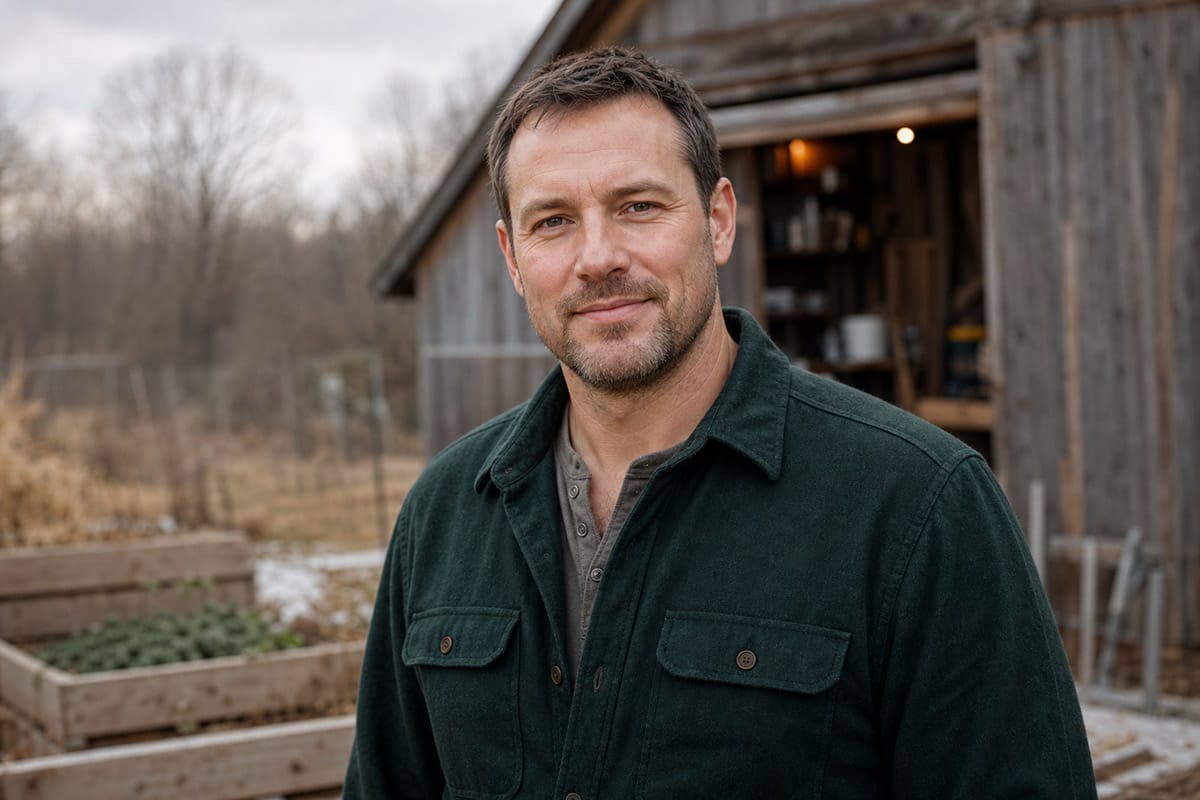
Ryan Zarnowski grew up in Columbia, Missouri, the middle of three children. His father fixed diesel engines, and his mother kept books for a farm supply store. Summers on his grandparents’ farm near Fayette gave him an early respect for useful work, careful spending, and food raised close to home.
He earned a finance degree from Missouri State University in 2007 and entered mortgage lending during the housing crash. He watched families struggle with debt and foreclosure. The experience shaped his practical view of money. Over 15 years, he became a senior loan officer, helping first time buyers and rural property owners make sound choices.
In 2021, he moved with his wife, Melissa, and their two children to Central New York. The family bought four acres near LaFayette. A small garden and six chickens soon grew into a working homestead. By 2023, he had left banking to manage the land full time and share what he learned.
His approach is simple. Track every dollar. Test every claim. Tell the truth, even when the numbers sting. He writes about land loans, chickens, gardens, food preservation, winter heating, and family budgets. His stories include failed fences, costly vegetables, and a turkey project that did not go as planned. Each setback becomes a better plan.
Today, Ryan works toward paying off his land by 45 while helping families build steadier lives with patience, humor, honest math, and strong black coffee close by.
What is your typical day, and how do you make it productive?
I start with strong black coffee and a quick check of the weather. Then I feed the chickens, rabbits, goats, cats, and bees. I handle outdoor work before lunch. Afternoons are for writing, repairs, and tracking expenses. I choose three tasks each morning. More than three becomes fiction.
How do you bring ideas to life?
I start with a problem from our own property. Then I test a solution and track the cost. My chicken articles came from logging feed purchases and egg counts. I use the same process for gardens, heating, and food preservation. The final idea includes the numbers, mistakes, and fix.
What’s one trend that excites you?
More people want honest cost reports about homesteading. They are asking what a project saves, how long it takes, and what equipment it needs. That is healthier than pretending every backyard tomato is free.
What is one habit that helps you be productive?
I enter every expense into a spreadsheet on the day it happens. Waiting until Friday means forgetting why I spent $18.47 at the hardware store. That habit gives me better budgets and useful writing ideas.
What advice would you give your younger self?
Do not confuse a high income with financial security. Keep your fixed costs low. Save more cash. Learn practical skills before you need them. Also, buy the good work gloves. Cheap gloves cost more because you replace them every month.
Tell us something you believe almost nobody agrees with you on?
Most small homesteads should rent a tractor instead of owning one. A tractor is useful, but it also needs fuel, storage, repairs, and attachments. Renting equipment twice a year may beat financing a machine that spends most days parked.
What is the one thing you repeatedly do and recommend everyone else do?
Calculate the cost per useful unit. Find the cost per egg, canned jar, pound of meat, cord of firewood, or hour saved. A total price tells only half the story.
When you feel overwhelmed or unfocused, what do you do?
I walk the property without my phone. I check fences and visit the animals. Then I write the next physical action on paper. “Fix the coop” is vague. “Replace the broken latch” is manageable.
What is one strategy that has helped you grow your business or advance in your career?
Specific answers built trust during my lending career. I explained monthly payments, closing costs, and loan tradeoffs in plain language. I use that same method in writing. A real expense table is more useful than broad advice because readers can compare it with their own numbers.
What is one failure in your career, how did you overcome it, and what lessons did you take away from it?
Early in lending, I underestimated how long a rural appraisal would take. The closing was delayed because the appraiser needed better comparable sales and proof of legal road access. I began using a rural-property checklist on every file. The lesson was simple: unusual details should be checked first.
What is one business idea you’re willing to give away to our readers?
Create a rural property “true monthly cost” service. Review taxes, heating, wells, septic systems, roads, insurance, and equipment before a buyer makes an offer. It would work like a home budget stress test.
What is one piece of software that helps you be productive? How do you use it?
Google Sheets runs most of my planning. I track feed, eggs, garden yields, repairs, heating costs, and article ideas. Each project gets a budget, an actual cost, and a cost per unit.
Do you have a favorite book or podcast you’ve gotten a ton of value from and why?
The Simple Path to Wealth by JL Collins is a favorite. Its core message is easy to use: spend less than you earn, avoid needless debt, and keep investing simple. I may debate some details, but the framework holds up.
What’s a movie or series you recently enjoyed and why?
I enjoyed Clarkson’s Farm. The scale is different from my place, but the failures feel familiar. Weather changes the plan. Animals ignore the plan. Equipment breaks. The show understands that farming can be serious and absurd during the same afternoon.
Key learnings
- Track costs when they happen and measure each project by its useful output.
- Test rural property details early, especially access, appraisals, wells, and septic systems.
- Turn large, unclear projects into one small physical action.
- Rent rarely used equipment before taking on another payment.
- Build trust by sharing specific numbers, tradeoffs, mistakes, and practical fixes.