
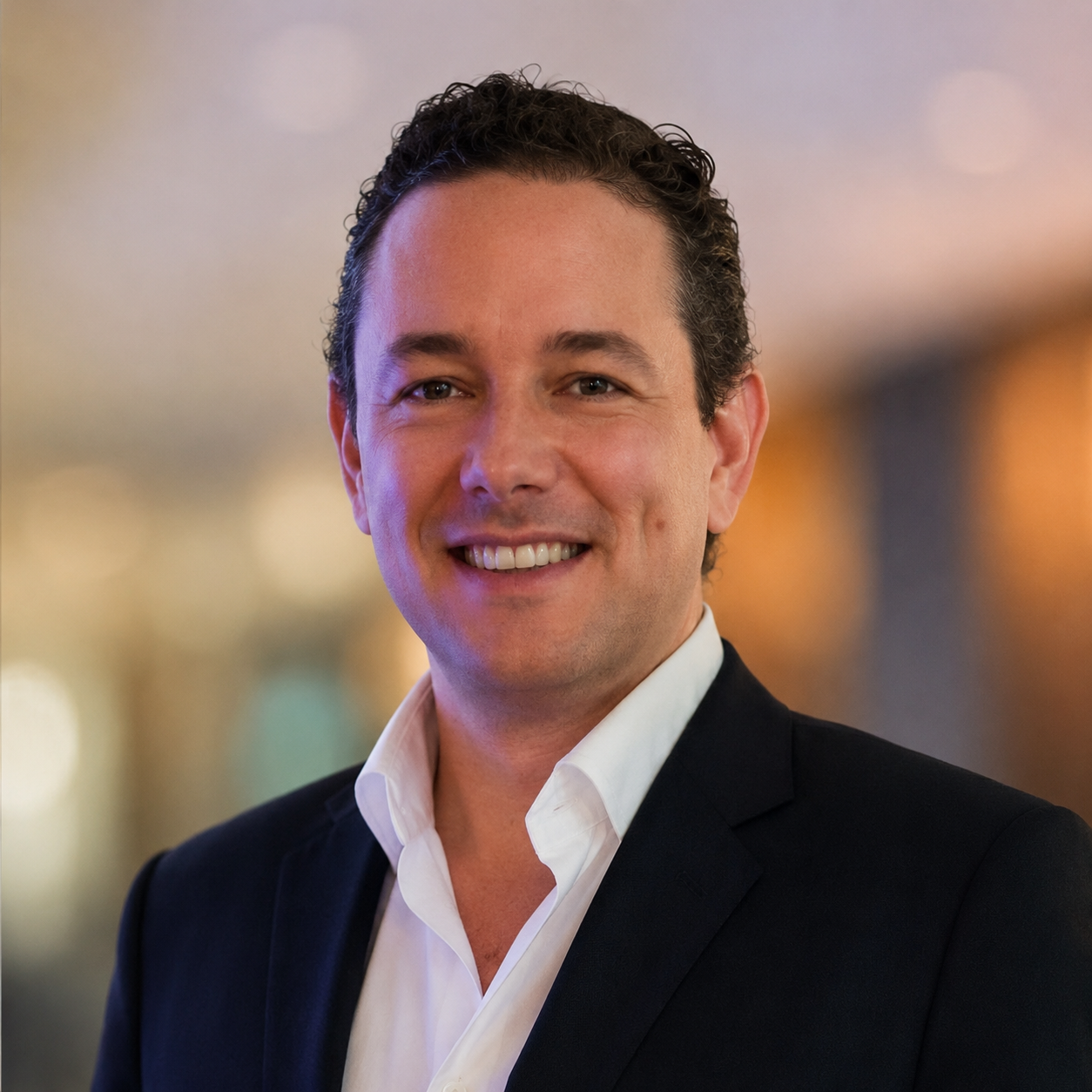
Scott Tom is an entrepreneur, private investor, and business leader with more than 25 years of experience building companies, investing across industries, and pursuing opportunities in international markets. He is CEO of S3 Media Agency, a digital agency providing marketing, web development and SEO, graphic design, and multimedia content services to businesses in Panama and the broader region.
Scott’s entrepreneurial career began at 21, when he launched his first company. Raised in Frenchtown, Montana, he grew up with limited resources and developed an early appreciation for resourcefulness, persistence, and creating opportunities rather than waiting for them. He later earned dual degrees in Finance and Business Management from the University of Montana.
Over the course of his career, Scott has worked across technology, finance, real estate, and international business. In addition to his leadership at S3 Media Agency, his professional interests include private investments, asset management, international real estate, aviation-related ventures, fintech and payment-processing opportunities, and cross-border business development. He also works with entrepreneurs and private companies through advisory relationships and strategic partnerships.
Scott has spent many years living and doing business internationally and is based in San José, Costa Rica. Fluent in English and Spanish, he has developed extensive personal and professional ties throughout Latin America. His experience in the region has contributed to a particular interest in long-term investment opportunities, real estate development, international entrepreneurship, and the importance of local relationships when conducting business across borders.
Outside of work, Scott is an aviation enthusiast who enjoys padel, golf, fitness, travel, outdoor activities, and spending time with his dogs and family. He supports charitable causes involving children and families, education, wellness, animal welfare, and community assistance, while generally preferring to keep his philanthropic activities private.
Throughout the different stages of his career, one characteristic has remained constant: determination. Scott describes himself simply as tenacious and believes that persistence, curiosity, and a willingness to keep learning are among the most valuable qualities an entrepreneur can develop.
What is your typical day, and how do you make it productive?
I don’t really believe in having the same day twice. My priorities change depending on what’s happening across our businesses, but there are a few constants. I usually start the morning with coffee, a workout, and some uninterrupted time to think before looking at email. The rest of the day is split between our family office, real estate developments, aviation business, and investment opportunities. I also spend a surprising amount of time solving problems rather than sitting in meetings.
One thing I’ve become much better at over the years is protecting my attention. Most people manage their calendars. I try to manage my focus. If I can spend several hours working through one important problem without distractions, I consider that a successful day.
How do you bring ideas to life?
Most ideas aren’t worth pursuing. The hard part isn’t generating ideas—it’s knowing which ones deserve your time. I try to test concepts as quickly and inexpensively as possible. If an idea survives real-world feedback and still looks promising, then I’m willing to invest more heavily in it. I’ve always believed that execution compounds. Small improvements, made consistently over time, can turn a promising idea into a successful business.
What’s one trend that excites you?
Artificial intelligence is changing everything, but I’m even more interested in how AI combines with small, highly capable teams. A handful of talented people, supported by AI, will build companies that once required hundreds of employees. I think we’re going to see smaller teams move faster, operate more efficiently, and accomplish things that would have required much larger organizations just a few years ago.
What is one habit that helps you be productive?
I make decisions quickly once I have enough information. Perfect certainty never comes, and waiting for it can slow you down unnecessarily. I try to gather the information that matters, weigh the risks, make a decision, and move forward. If new information comes along, I can always adjust.
What advice would you give your younger self?
Be more patient. Compounding works in investing, relationships, health, and business. The small things you do consistently over time often have a much greater impact than you realize in the moment. When you’re young, it’s easy to want results quickly. I’ve learned that some of the best outcomes come from giving good decisions enough time to work.
Tell us something you believe almost nobody agrees with you.
People overestimate planning and underestimate simply starting. Planning has its place, but at some point, you learn more by putting an idea into the real world than you ever could by continuing to analyze it. Starting gives you actual feedback, and you can adjust from there. You don’t need to have every detail figured out before you take the first step.
What is the one thing you repeatedly do and recommend everyone else do?
Protect your health with the same intensity that you protect your finances. It’s easy to become so focused on building a business or pursuing the next opportunity that exercise, sleep, and taking care of yourself get pushed aside. I try to stay active and make fitness a regular part of my life. You can always pursue another deal or business opportunity, but your health is much harder to replace once you’ve lost it.
When you feel overwhelmed or unfocused, what do you do?
I reduce everything to one decision and solve the highest-impact problem first. When too many things are competing for my attention, trying to address all of them at once usually makes it harder to make progress on any of them. I step back, identify the issue that will make the biggest difference, and focus on resolving that first. Once it’s handled, the rest often becomes much easier to prioritize.
What is one strategy that has helped you grow your business or advance in your career?
I’ve never been afraid to enter industries other people considered too complicated or too risky. Complexity doesn’t necessarily make something a bad opportunity; sometimes it simply means you need to spend more time understanding it. I’ve always been willing to learn a new industry, ask questions, and surround myself with people who know it better than I do. The goal isn’t to avoid risk altogether. It’s to understand what you’re getting into well enough to make an informed decision.
What is one failure in your career, how did you overcome it, and what lessons did you take away from it?
Every entrepreneur has setbacks. I learned to confront difficult issues early instead of letting small problems become large ones. It can be tempting to assume something will work itself out, but that often makes the situation harder to resolve later. I’ve become much more willing to address problems directly, make the difficult decision when necessary, and move forward.
What is one business idea you’re willing to give away to our readers?
Modernize an old industry that still runs on spreadsheets, paper, and phone calls. There are established businesses in almost every sector that haven’t fully adopted the technology already available to them. Find an industry where routine processes are still unnecessarily manual, learn how the people in that business actually work, and build something that makes their jobs simpler and more efficient. Sometimes the best opportunity isn’t creating an entirely new market. It’s improving one that already exists.
What is one piece of software that helps you be productive? How do you use it?
ChatGPT has become one of the most useful tools I use for thinking, research, and organizing complex information.
What is the best $100 you recently spent?
A great bottle of wine shared with good friends.
Do you have a favorite book or podcast from which you’ve received much value?
Poor Charlie’s Almanack. Charlie Munger’s mental models have influenced how I think about business and investing. I particularly like his approach to drawing ideas from different disciplines rather than relying on a single way of thinking. It’s a useful reminder to look at a problem from several angles before making an important decision.
What’s a movie or series you recently enjoyed and why?
Landman. It captures entrepreneurship, negotiation, and the realities of building businesses in difficult industries.
Key learnings:
- Focus is often more valuable than working longer hours.
- Great businesses are built through consistent execution.
- Protect your health like your investments.
- Start before you’re ready.
- Long-term thinking consistently wins.