
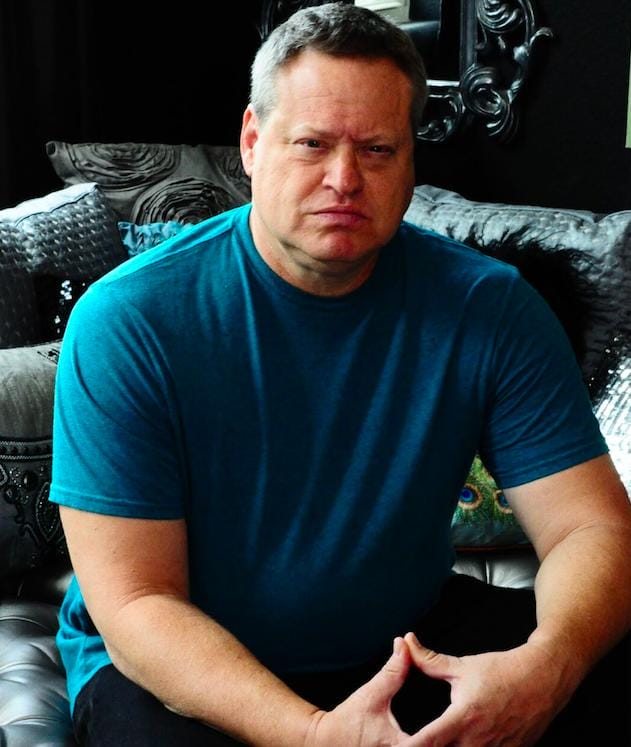
Seth Hurwitz is the founder and chairman of I.M.P. and the co-owner of the renowned 9:30 Club in Washington D.C. His journey into the heart of the music world began in his youth, sparked by an early exposure to live music that captivated his imagination and set him on a lifelong path. Seth’s passion for music was not just a passive experience; as a young student, he was known for sharing his favorite singles with classmates, a precursor to his later career.
Before he had even graduated high school, Seth managed to land his dream job as a DJ at the local radio station WHFS, where he made progressive programming choices that would eventually cost him the position. However, it was this setback that led him to a serendipitous encounter with a concert promoter—an interview that ignited his interest in the live music business. Teaming up with his high school teacher, Rich Heinecke, Seth founded I.M.P., an enterprise that would grow to play a pivotal role in D.C.’s live music scene.
Under Seth’s leadership, I.M.P. purchased the 9:30 Club, a beloved yet grungy venue known for hosting a number of up-and-coming artists. His work enabled him to revitalize the failing business while maintaining the original spirit of the venue, turning it into a cultural landmark, and eventually expanding it to a bigger venue. Other key venues for I.M.P include Merriweather Post Pavilion and The Anthem.
Beyond building venues, Seth has actively defended the integrity of the music industry, standing against monopolistic practices by testifying before Congress on the proposed merger of Live Nation and Ticketmaster. His dedication to fair practices and his ability to transform challenges into opportunities have helped define his career and contribute to the vibrant community around D.C.’s music venues. Through over 20,000 events hosted by I.M.P., Seth Hurwitz has not only promoted concerts; he has fostered a thriving music culture that continues to resonate with millions.
What is your typical day, and how do you make it productive?
On a typical day, I start by waking up and meditating for 20 minutes before anything else. Then I feed the dog and make coffee, followed by a bunch of reading.
I read a lot, often for a couple of hours. Being the ADD person that I am, I juggle about 12 books at once on my iPad, switching from one to another at chapter breaks or section ends. I stick to non-fiction mostly, saving fiction for nighttime reading. Exercise fits in there somewhere too. I generally avoid getting on the computer to answer emails for as long as I can, and some days, I don’t even touch it.
But yeah, then I have lunch. I take a nap. When I wake up, I think, “Now what? I’ve answered emails. I’ve read everything.” That’s when I find myself stuck, wondering what else there is to do for the day. So, I’m looking for suggestions in that department, if you have any.
How do you bring ideas to life?
You know, I’ll get an idea while I’m riding my bike, just like people get ideas in the shower or while driving. Sometimes, reading about the industry gives me ideas too. I’ve been reading about this sphere concept that I haven’t seen yet, and I totally applaud anyone rethinking things like that. It makes me wonder, “What can I do that nobody’s done before?”
We also have meetings. Especially as you get older and more people start doing the tasks you used to handle alone, you have to stay on top of things. You don’t want to lose touch, unless you’re looking to retire, which I have no desire to do. So, we have regularly scheduled meetings with my team in various departments. They always make me feel great because I love my team. We go around the room, brainstorm, and ask, “What can we do better?” and “What’s wrong?” I try to feel grateful for the people I have and for the chance to mentor a new generation who will take over what I’ve done. That’s where I get a lot of my inspiration.
What’s one trend that excites you?
This might sound a bit harsh, but since you asked: the realization that there are too many festivals, and bands are spreading themselves too thin. The whole festival pricing thing is oversaturated, and I’m looking forward to seeing a natural culling in that regard.
Another trend I hope takes hold is the idea that some bands doing arena tours might not actually be suited for them. We built the Anthem to accommodate arena-level productions, and for example, Weezer is doing two nights there instead of an arena. It’s been sold out for a while now, which shows that acts like this are certain of their success.
Bands often fear how they’re perceived and think, “What’s worse? Playing a slightly smaller venue and turning people away, or playing an arena and not filling it?” Even if it’s not half empty, the upper levels often go unsold. The acts that thrive in arenas are those that could succeed anywhere—even in a garage or a field. Those are the ones that should be playing arenas. Bands that are just stuck in the “we’re an arena act” mindset might need to rethink their approach.
Of course, I’m saying this because I own the Anthem, but it’s true. The issue is that no act will admit they’re not ready for an arena, and managers are often afraid to tell them. That’s why so many situations go poorly; no one can admit they might not sell out. Everyone thinks, “Oh, we’ll be fine. It’s not us; it’s the other acts.” No band goes into an arena thinking, “We probably shouldn’t be doing this.” They can’t admit it. The bands that can assess their situation realistically are the ones that will succeed. That’s a trend I’m excited about.
What is one habit that helps you be productive?
Take on the thing you least want to do first—the email you least want to answer, the task you least want to do—do that first.
What advice would you give your younger self?
Read “How to Win Friends and Influence People” now, not later. You know, I’ve made a lot of social and—what do you want to call it?—personality, tactical mistakes from the way I reacted earlier that I would never make now. I wish I had known that earlier; I wouldn’t have so many long-running feuds. But fortunately, I don’t deal with those people anymore. The team I have in place doesn’t escalate issues and are very reasonable—you can work things out with them, as opposed to how I might have been, perhaps not the most reasonable. Hey, I’ll admit it. I mean, you know, I’m, yeah, guilty. I wish I had known more about personality skills back then.
Tell us something you believe almost nobody agrees with you on?
Scalping tickets. I don’t do it, and I don’t think it’s a good idea to participate in it. We should continue our efforts to eliminate it. At the beginning, everyone said, “Oh no, we don’t scalp tickets now.” It was like, “The scalpers are making money; we should get a piece of that.” Now they’ve enabled scalpers to a level where they get all the tickets, and it’s frustrating. I even found some of my own people saying, “Hey, we should do this. We’d make extra money.” I replied, “We’re doing okay. We don’t need to take more money from the marketplace than we have to. The act gets most of it anyway. Let’s help people afford to go to more concerts.
What is the one thing you repeatedly do and recommend everyone else do?
Say no if you don’t believe something is right, and stick to it. Don’t compromise or make bad deals just to book a show. In particular, I’ll never agree with the whole free merch thing. I think people are selling themselves short in the short term to get a show, thinking they might win out because their competitor won’t.
I can’t speak for others, but we provide the best staff in the business to sell merch and an optimal space that could be used for something else, like another bar. We do a great job and deserve to be paid for that. I pay people for their work. Fans often ask if they get a piece of our bar, and my answer is always, “Yes, actually you do. That’s how you get paid.” The idea that anyone should work for free or that bands are entitled to use your space for commerce just because they’re performing there doesn’t sit well with me. It’s like saying, “We wouldn’t be here without the show, and there wouldn’t be a place to play if it weren’t for us.” So everyone should share fairly. It’s a place for commerce with a common interest.
Get paid, don’t work free. Don’t work cheap, don’t work for free. Maintain your dignity and your standards and don’t do something stupid just to get one show.
When you feel overwhelmed or unfocused, what do you do?
Great question. Take a nap.
What is one strategy that has helped you grow your business or advance in your career?
Don’t have a strategy that focuses on grandiose goals. Instead, tackle things one at a time, step by step. Concentrate on what makes sense in the present moment and avoid getting caught up in the idea of building a massive empire. The perfect analogy is a batter at the plate. In that moment, you focus solely on the pitch you’re facing. You don’t make decisions based on your long-term career; you concentrate on what’s happening right now.
What is one failure in your career, how did you overcome it, and what lessons did you take away from it?
I can’t think of this one major wrong turn I took in my career. There’s been a number of times I was wrong about shows and not trying hard enough—that doesn’t mean doing a bad deal, it just means not being attentive enough. I don’t want to say I’ve been perfect, but nothing sticks out.
What is one business idea you’re willing to give away to our readers?
Create a venue that no one else has.
Do you have a favorite book or podcast you’ve gotten a ton of value from and why?
“Meditations” by Marcus Aurelius is a book I always recommend. Another one is “How to Win Friends and Influence People”. Oh, I also read “The Power of Now” recently. That one’s important.
What’s a movie or series you recently enjoyed and why?
“Succession” is probably up there with “The Sopranos”, tied for the best ever. The writing, the acting, the story, and the blend of humor and drama are all top-notch. Generally, I’m not one to follow recommendations for just any show. I don’t need trivial TV or entertainment for the sake of it—I’d rather read. I only want to watch the truly exceptional shows. I love Hacks—it’s fantastic.
“Severance” is another great one. Aside from that, when people suggest shows, I try them, but often find them just okay. I feel like I’m wasting time on pedestrian entertainment. A lot of people are always looking for their next show, but I prefer to be selective about what I watch.
Key learnings
- Take on the thing you least want to do and do that first.
- Say no if you don’t believe something is right and stick to it.
- Don’t have a strategy that focuses on grandiose goals. Instead, tackle things one at a time, step by step.