
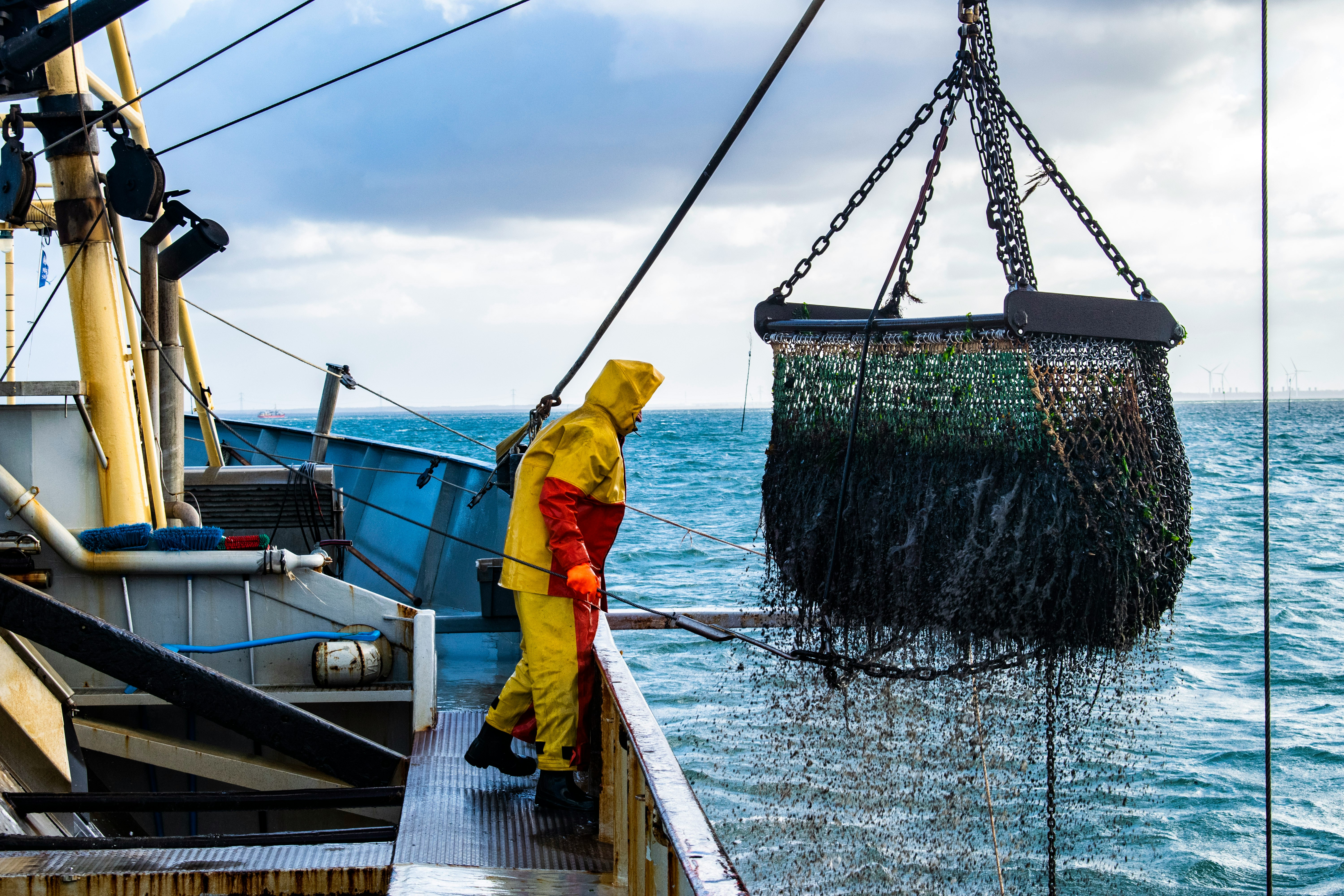
Victor Daniel Silva is a commercial fisherman whose life has been shaped by the water, hard work, and a deep respect for tradition. Based along the Louisiana Gulf Coast, Victor has built a career in shrimping and crabbing by staying true to the lessons he learned as a young boy growing up in Beaufort, North Carolina.
From an early age, Victor could be found on the water with his father, Daniel Silva Sr., who introduced him to commercial fishing. Those early mornings taught him more than how to read tides or mend nets. They taught him patience, preparation, and the importance of doing every job right. After graduating from Beaufort High School, Victor chose to continue the family tradition, working alongside his father before eventually carrying on the legacy after his father’s passing.
In his late 20s, Victor relocated to Louisiana to pursue new opportunities on the Gulf Coast. Learning in unfamiliar waters challenged him, but he embraced the experience and gradually earned a reputation as a dependable and knowledgeable fisherman. Today, he is known not only for his work ethic but also for his thoughtful approach to commercial fishing and his commitment to supporting coastal communities.
Away from the boat, Victor enjoys a quieter pace of life with his wife, Marisol, whose passion for cooking transforms each day’s catch into memorable family meals. Together they celebrate the simple pleasures of coastal living, proving that success is often built through consistency, humility, and an appreciation for the work that happens long before anyone sees the final result.
What is your typical day, and how do you make it productive?
Most of my days begin before sunrise. I start with a cup of coffee, check the weather, review the tide charts, and inspect my boat before I leave the dock. That routine has become one of the most important parts of my day because it helps me avoid problems before they happen. Once I’m on the water, I stay focused on the conditions around me because no two days are exactly alike. After I return, there is still plenty of work to do. I clean equipment, repair nets, inspect the engine, and prepare everything for the next trip. Staying productive isn’t about working faster. It’s about staying consistent and taking care of the small details every day.
How do you bring ideas to life?
I don’t usually chase big ideas. Most of the improvements I’ve made have started with noticing something that could work a little better. Sometimes it’s a better way to organize equipment. Other times it’s adjusting my routine because the weather or tides have changed. I like testing small changes before making them permanent. If something makes the work safer, more efficient, or more reliable, then I keep doing it. If it doesn’t, I move on and try something else.
What’s one trend that excites you?
I like seeing more people take an interest in where their food comes from. More customers are asking questions about local seafood and the people who harvest it. I think that’s a positive change because it helps people understand the work behind every catch and encourages them to support local fishing communities.
What is one habit that helps you be productive?
Preparation has probably made the biggest difference in my career. I never skip checking my equipment before a trip because I’ve learned that small problems become much bigger ones once you’re offshore. My father taught me that lesson years ago, and I’ve carried it with me ever since.
What advice would you give your younger self?
I would tell myself not to be in such a hurry to prove what I know. When I moved from North Carolina to Louisiana, I thought my experience would automatically translate to the Gulf Coast. It didn’t. I had to learn new waters, different weather patterns, and a new fishing community. Looking back, I wish I had worried less about proving myself and spent more time asking questions.
Tell us something you believe almost nobody agrees with you on?
I think people underestimate the value of slowing down. Whether I’m checking equipment or making decisions on the water, taking an extra few minutes usually saves hours of frustration later. I don’t believe faster is always better. I believe careful is usually better.
What is the one thing you repeatedly do and recommend everyone else do?
Pay attention to the small things. Most major problems begin as minor ones. Whether it’s an unusual sound from an engine or a small change in the weather, noticing those details early gives you the chance to solve problems before they grow.
When you feel overwhelmed or unfocused, what do you do?
I stop worrying about everything that still needs to be done and focus on the next task in front of me. If I’m repairing equipment, I work on one repair at a time. If I’m preparing the boat, I go through my checklist from beginning to end. Breaking large jobs into smaller steps helps me stay calm and keeps me moving forward.
What is one strategy that has helped you grow your business or advance in your career?
Consistency has been the biggest factor. People remember whether you show up, whether you keep your word, and whether they can rely on you. You don’t build that reputation through one good season. You build it over many years by doing the work properly every single day.
What is one failure in your career, how did you overcome it, and what lessons did you take away from it?
One of the biggest lessons came after I moved to Louisiana. I assumed that because I had grown up fishing in North Carolina, I already knew what I was doing. The Gulf Coast quickly reminded me that every body of water is different. I spent too much time relying on what had worked back home instead of learning from local fishermen. Once I started listening more and assuming less, I became a much better fisherman. That experience taught me that experience is valuable, but humility is just as important.
What is one business idea you’re willing to give away to our readers?
I think more coastal communities could benefit from hosting seafood education days where local fishermen invite families to the docks to learn how seafood is harvested and prepared. It would help people better understand the work behind local seafood while strengthening connections between fishermen and the communities they serve.
What is one piece of software that helps you be productive? How do you use it?
I rely on marine weather and navigation apps every day because they provide updated forecasts, radar, tide information, and navigation tools. They’re incredibly useful for planning trips, but I never rely on technology alone. I still believe there’s no substitute for paying attention to the water itself.
Do you have a favorite book or podcast you’ve gotten a ton of value from and why?
One book I’ve really enjoyed is The Comfort Crisis by Michael Easter. It made me think differently about how much we can benefit from doing difficult things instead of always choosing the easiest option. Working on the water has taught me that growth usually comes from challenges, not comfort. The book reinforced many of the lessons I’ve learned throughout my career about resilience, practical skills, and spending time outdoors.
What’s a movie or series you recently enjoyed and why?
I recently enjoyed Somebody Feed Phil. I like how the show uses food to tell stories about people and their communities. Since I spend my days helping bring seafood from the Gulf to people’s tables, it’s interesting to see what happens after that. The show reminds me that every meal has a story behind it, whether it comes from a family recipe, a local restaurant, or the work of fishermen who were out on the water before sunrise. It makes the connection between food and community feel personal, and I think that’s something worth appreciating.
Key learnings
- Long-term success comes from consistent preparation and paying attention to small details before they become bigger problems.
- Staying curious and learning from others often leads to better decisions than relying on past experience alone.
- Building trust through reliability creates stronger relationships than chasing short-term success.
- Adapting to changing conditions is one of the most valuable skills in any profession.
- Understanding where food comes from helps strengthen the connection between local communities and the people who produce it.