
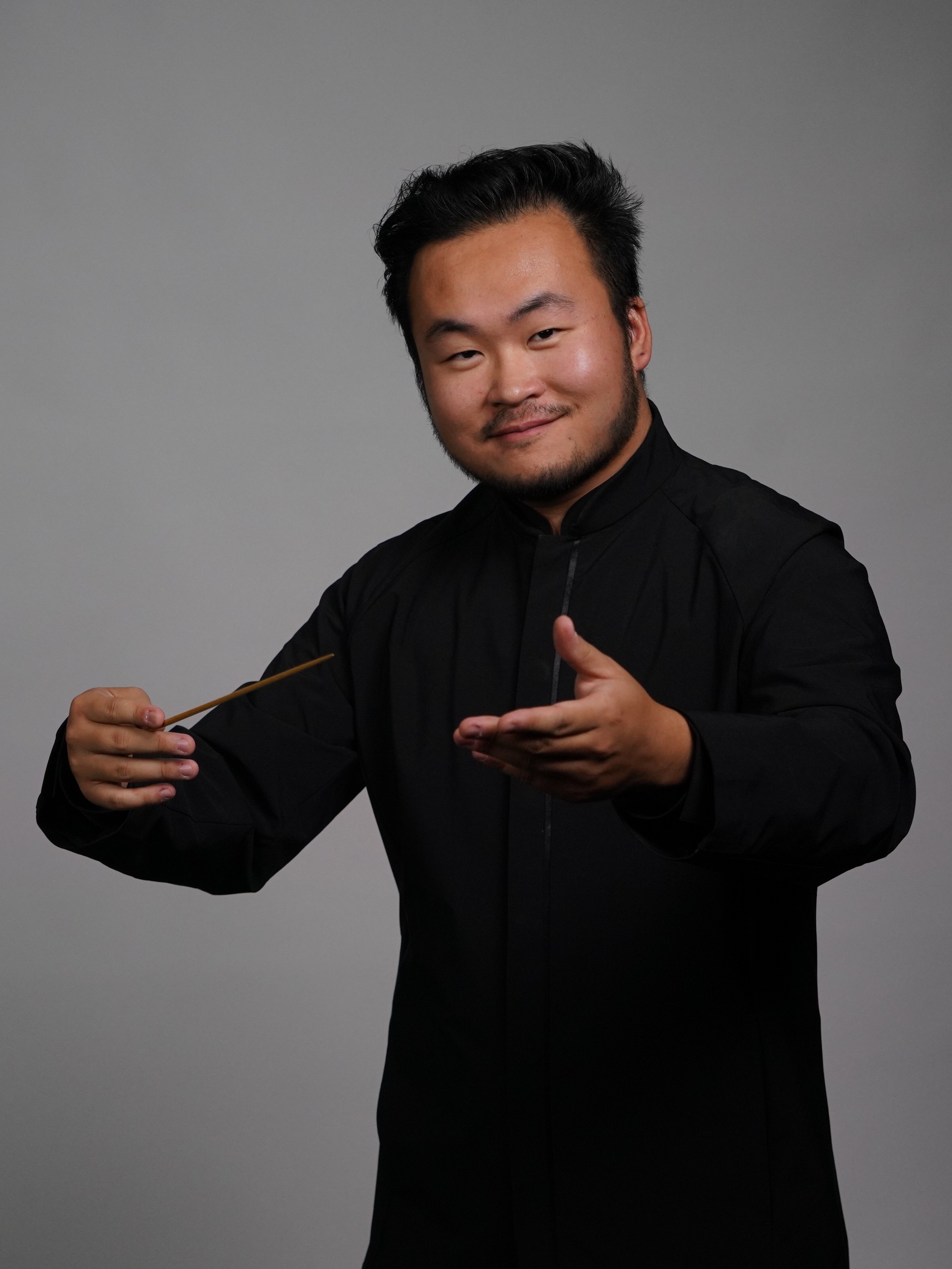
Chinese American conductor, arts administrator, and pianist Yun Cao is recognized for his musical versatility, energetic presence, and compelling musicianship. From classical concerts to opera and musical theater productions, his diverse musical palette has led him to Carnegie Hall, the Kennedy Center, Severance Hall, Chicago Symphony Hall, the Lincoln Center, and major concert halls in Asia and Europe.
Yun currently serves Music Director of the Aurora Philharmonic and Managing Director of JSGS Publishing. He was Associate Conductor and Manager of the Frost Symphony Orchestra, and Lead Doctoral Teaching Assistant at the Frost School of Music From 2022-2025, he also served as an Assistant Conductor of the Palm Beach Symphony in West Palm Beach, Florida. He has been a Young Artist of the Cleveland Orchestra Kent/Blossom Music Festival, Conducting Fellow at the 2024 Cabrillo Music Festival, and auditioned at the 2025 Riccardo Muti Italian Opera Conducting Academy in Tokyo, Japan.
Yun has conducted and performed throughout the United States, Asia, and Europe, including three fully-staged opera productions: Puccini’s Suor Angelica, Kurt Weill’s Street Scene, and Jonathan Dove’s Flight. As a pianist, he has conducted Mozart concertos from the bench, played orchestral keyboards side-by-side with the Cleveland Orchestra, soloed in concertos with orchestras across the nation, led Baroque ensembles from the harpsichord, and is an avid chamber musician performing works such as the Dvorak, Schumann, and Schubert Quintets. He is also the Second Prize winner of the American Protégé International Piano Competition and was a member of the 2016 Cleveland International Piano Competition Junior Jury.
His involvements at the University of Miami have led to world premieres of new musical compositions, family concerts, opera productions, TV broadcast recordings, conducting workshops, and collaborations between the Moss Center for the Performance Arts, the Adrienne Arsht Center, the Lowe Art Museum, and the Frost School of Music. Recently, Yun was credited assistant music director and audio producer for a live recording of Beethoven’s 9th Symphony, which was nominated for an Emmy. He was also credited as assistant music director for a multimedia presentation of Mussorgsky’s “Pictures at an Exhibition,” Both TV shows were broadcasted on more than 200 PBS stations nationwide.
What is your typical day, and how do you make it productive?
I’m someone who values structure and intentionality in my day. I usually start early with a small routine that helps me feel grounded—making espresso, making my bed, and reviewing the priorities I set the night before. I find that beginning the day with a clear plan helps me stay focused and productive.
Because my work spans both music and administration, my mornings are often dedicated to practicing piano, studying scores, or rehearsing. I try to approach each day with balance in mind, especially in a field that can be creatively and mentally demanding. Taking intentional breaks is important to me, whether that means having lunch with colleagues, connecting with friends, or simply taking a moment to reset before transitioning into administrative work.
I also make time for the gym in the evenings, which helps me maintain both energy and discipline, and I always try to end the day by checking in with family. For me, productivity is not just about getting tasks done; it’s about maintaining consistency, focus, and balance over the long term.
How do you bring ideas to life?
I bring ideas to life through collaboration, organization, and clear communication. I believe the strongest ideas grow when people feel inspired, invested, and part of a shared vision. Whether I’m leading an artistic project, coordinating an event, or working within a team, I try to create an environment where people feel motivated to contribute their best work.
I’m also someone who values preparation and follow-through. Strong organizational skills, patience, and consistency are essential in turning an idea from a concept into something tangible and successful. At the same time, I understand that meaningful projects are rarely created alone. Some of the best outcomes come from listening to others, being open to different perspectives, and building ideas collaboratively.
Ultimately, I see bringing ideas to life as a balance between vision and teamwork—having a clear direction while empowering others to help shape and strengthen the final result.
What’s one trend that excites you?
As a conductor, one trend that really excites me is the growing emphasis on accessibility and audience engagement in the arts. I think organizations are becoming much more intentional about reaching people who may not have previously felt connected to classical music or live performance.
I’ve seen how creative programming, educational outreach, digital media, and community-centered initiatives can completely change the way audiences experience music. Projects like family concerts, interdisciplinary collaborations, and culturally responsive programming are helping orchestras and arts institutions feel more welcoming and relevant to broader communities.
What excites me most is that this trend doesn’t lower artistic standards—it expands the impact of the art form. It creates opportunities to build new audiences, foster curiosity, and make meaningful connections through music.
What is one habit that helps you be productive?
One habit that consistently helps me stay productive is creating detailed to-do lists. I organize tasks not only day to day, but also on a weekly and long-term basis, especially when planning larger projects or career goals.
Having things written out helps me stay focused and grounded, particularly in a field where there are often many moving parts and competing priorities. It allows me to break large goals into manageable steps and maintain a clear sense of direction rather than getting overwhelmed by the pace of daily life.
I also find that to-do lists create accountability for myself. They help me prioritize effectively, stay disciplined with my time, and ensure that I’m consistently making progress toward both immediate responsibilities and bigger-picture objectives.
What advice would you give your younger self?
The advice I would give my younger self is to not be afraid to express my opinions and trust my own voice. Growing up, I was very sheltered and often hesitant to speak up or share what I truly thought, especially in unfamiliar environments.
Over time, I realized that having a perspective and communicating it thoughtfully is important—not just professionally, but personally as well. Some of the greatest growth comes from learning how to advocate for yourself, contribute ideas confidently, and engage openly with others.
Looking back, I wish I had understood earlier that your voice does not have to be perfect to be valuable. Confidence is something that develops through experience, and learning to speak with honesty and conviction has been an important part of my growth.
Tell us something you believe that almost nobody agrees with you on.
One belief I hold that not everyone agrees with is that classical music is far from dying. I often hear people say that it is becoming irrelevant or losing its place in modern society, but I genuinely do not believe that is true.
As a conductor and musician, I believe that when great music is performed with conviction, authenticity, and high artistic standards, audiences will respond. Music that has endured for centuries has done so for a reason—it speaks to something deeply human that transcends trends and time periods.
I think the challenge today is not that the music itself has lost relevance, but that arts organizations must continue finding meaningful ways to connect with audiences and communities. I’ve seen firsthand, especially through educational and outreach concerts, that people are still deeply moved by live classical music when they feel welcomed into the experience.
For me, that gives me a great deal of optimism about the future of the art form.
What is the one thing you repeatedly do and recommend everyone else do?
One thing I consistently remind myself—and would recommend to others—is to not take yourself too seriously. In demanding fields and high-pressure environments, it can be easy to become consumed by stress, competition, or ego.
I’ve found that maintaining a sense of humility and perspective makes both work and life healthier and more enjoyable. It allows you to collaborate more openly, learn from mistakes, and approach challenges with a clearer mindset.
Especially in the arts, where passion and ambition run high, I think it’s important to remember that growth comes from curiosity, openness, and human connection—not from trying to prove yourself all the time. When you stop taking yourself too seriously, you often become more grounded, more approachable, and ultimately more effective.
When you feel overwhelmed or unfocused, what do you do?
When I feel overwhelmed or unfocused, I’ve learned that stepping back briefly is often more productive than trying to force my way through a problem. I think it’s important to take intentional breaks, spend time with friends or family, and allow yourself a moment to reset mentally before returning to the work with a clearer perspective.
I’ve also found that large challenges become much more manageable when broken down into smaller, achievable steps. Rather than trying to solve everything at once, I focus on making steady progress piece by piece.
Another lesson I’ve learned is the importance of asking for help when needed. I don’t see that as a weakness—I actually think it takes confidence and self-awareness to recognize when collaboration or guidance can lead to a better outcome. In both music and life, some of the best results come from working through challenges together rather than trying to carry everything alone
What is one strategy that has helped you grow your business or advance in your career?
One strategy that has significantly helped me advance in my career has been being open to collaboration and saying yes to opportunities. Especially in the arts, I’ve learned that meaningful growth rarely happens in isolation. Some of the most valuable experiences in my career came from projects, partnerships, or conversations that I initially did not expect would lead anywhere significant.
Being willing to collaborate with others has allowed me to build strong professional relationships, expand my network, and learn from people with different perspectives and expertise. It has also opened doors to opportunities that I may not have discovered on my own.
At the same time, collaboration teaches flexibility, communication, and trust—qualities that are essential in both leadership and teamwork. I think long-term career growth often comes from being genuinely engaged with people, showing up consistently, and being open to where opportunities may lead.
What is one failure in your career, how did you overcome it, and what lessons did you take away from it?
One failure that became an important learning experience for me was a period when I overcommitted myself professionally. I had taken on too many responsibilities and projects at the same time, and as a result, I was not able to give each commitment the level of focus and energy it deserved.
That experience forced me to reevaluate how I manage my time, priorities, and personal limits. I realized that saying yes to every opportunity is not always sustainable, and that effective leadership also requires knowing when to step back, delegate, or protect your time in order to maintain quality.
The biggest lesson I took away was that excellence is not about doing everything—it’s about doing the right things well. Since then, I’ve become much more intentional about balancing ambition with sustainability, and I believe that has made me both more effective and more dependable in my work.
What is one business idea you’re willing to give away to our readers?
One business idea I would genuinely love to see come to life is a flexible performance organization called the Miami Music Collective. The idea would be to create a core group of highly versatile musicians who could perform repertoire ranging from Bach cantatas and chamber orchestra works to contemporary music and world premieres.
What makes the concept exciting to me is its flexibility. Rather than functioning strictly as a traditional large orchestra, the ensemble could adapt in size and instrumentation depending on the repertoire and venue. That would allow performances to take place not only in concert halls, but also in more unconventional and community-centered spaces such as galleries, outdoor venues, schools, and cultural centers.
I think audiences today are increasingly interested in artistic experiences that feel personal, immersive, and accessible. A collective like this could preserve high artistic standards while also creating innovative ways for people to engage with live classical music in their everyday lives.
What is one piece of software that helps you be productive? How do you use it?
One piece of software that helps me stay productive is the calendar app. I use it constantly to organize rehearsals, meetings, travel, and administrative work. I also build in preparation and travel time, which helps me manage my schedule more realistically and reduce stress.
I like that I can attach notes and reminders to events, allowing me to keep everything centralized and organized. For me, staying productive comes down to having structure and clarity, and my calendar helps me maintain both.
What is the best $100 you recently spent? What and why?
The best $100 I recently spent was probably on orchestral scores and sheet music. While digital copies are convenient, there’s something much more personal and meaningful to me about working from a physical score and marking it by hand in pencil.
Over time, those markings become a record of your growth and your evolving relationship with the music. When I revisit a score years later, I’m not just studying the piece again—I’m also reconnecting with past ideas, interpretations, and lessons I learned along the way.
Do you have a favorite book or podcast you’ve gotten a ton of value from and why?
One book I’ve gotten a great deal of value from is “This Was Toscanini” by Samuel Antek. Written from the perspective of a violinist in the NBC Symphony Orchestra, it offers a fascinating firsthand account of Arturo Toscanini—his musicianship, rehearsal technique, personality, and leadership style.
What I appreciate most about the book is that it humanizes someone who is often viewed as a larger-than-life figure. It shows not only Toscanini’s brilliance, but also his flaws, intensity, and humanity. As a conductor, I find books like that incredibly valuable because they remind us that great artists are still people, and that leadership in music is deeply connected to character, communication, and relationships.
Key learnings
- Carry oneself with integrity, humility, and honesty in both personal and professional life.
- Long-term success is built through collaboration, openness to opportunity, and strong relationships with others.
- Maintaining balance, perspective, and the ability to not take oneself too seriously leads to healthier leadership and greater creativity.
- Great art remains relevant when presented with authenticity, passion, and meaningful community engagement.
- Growth comes from self-awareness, respecting personal limits, and continuously learning from both successes and failures.