
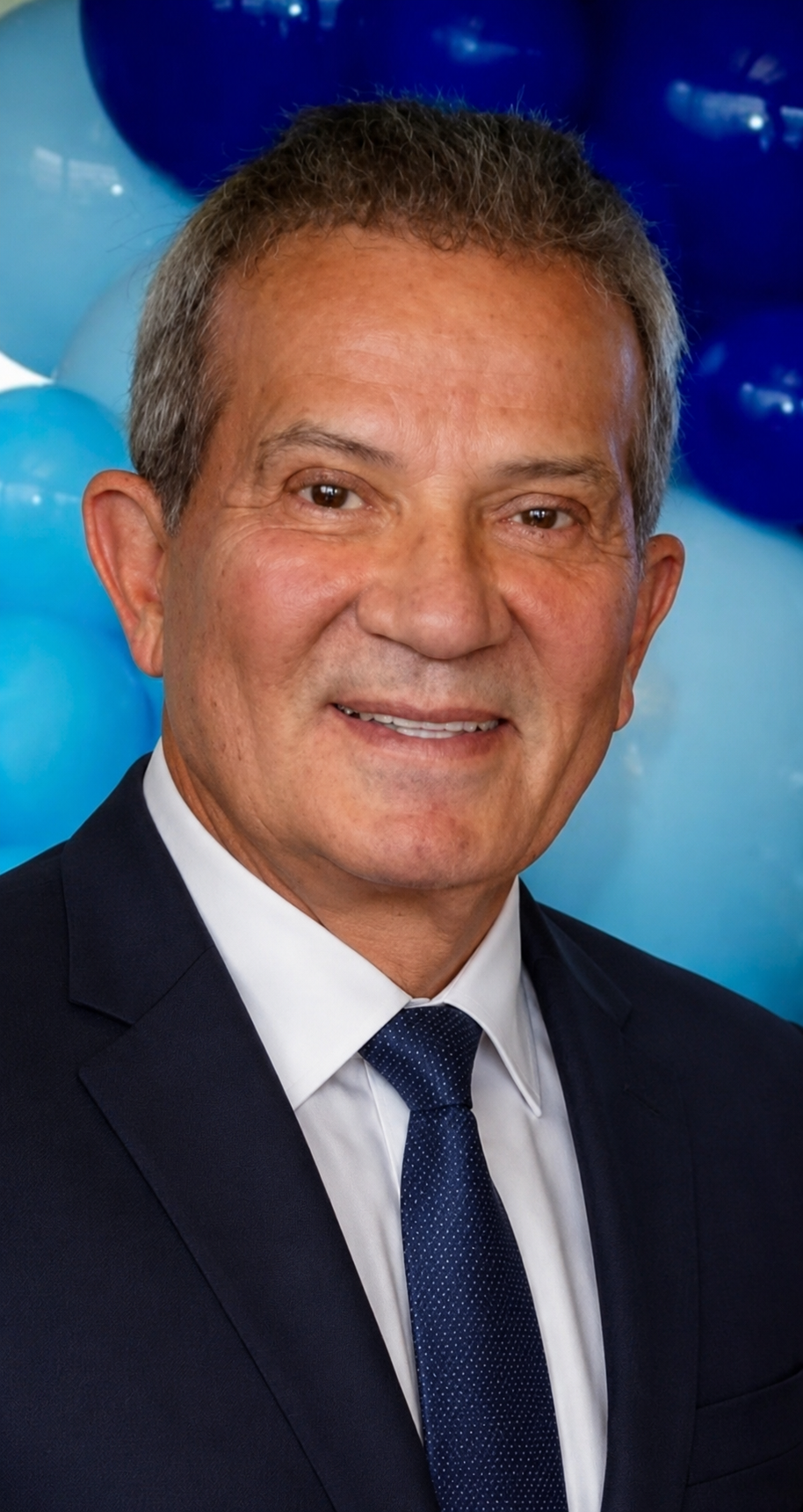
Shahriar James Ekbatani is an entrepreneur, commercial real estate developer, and nonprofit leader whose career has been defined by building organizations and projects that create lasting value. His professional journey spans more than four decades and reflects a willingness to embrace new opportunities while staying focused on long-term goals.
Born in Iran, Ekbatani immigrated to the United States at the age of 18. He earned bachelor’s and master’s degrees in industrial engineering, followed by graduate studies in healthcare administration. Those experiences laid the foundation for a career in healthcare leadership, where he held executive roles in hospital consulting and health systems before building and leading his own healthcare company, which was acquired in 2018.
Rather than slowing down after that milestone, Ekbatani turned his attention toward new challenges. Today, he is involved in commercial real estate development across Central Florida, with projects that include retail, medical, and mixed-use developments. His work reflects a belief that successful developments should serve the communities around them and remain valuable for years to come.
In 2020, he founded Lotus Behavioral Health, a nonprofit organization dedicated to helping adolescents between the ages of 12 and 17 recover from drug and alcohol addiction. As Chairman of the Board, he continues to support programs that give young people and their families hope for the future.
Outside of work, Ekbatani enjoys boating, biking, canoeing, and traveling. Whether through business, philanthropy, or community development, he remains focused on creating opportunities that have a meaningful and lasting impact.
What is your typical day, and how do you make it productive?
My day usually starts early with quiet time before meetings begin. I review the projects that need attention and decide which ones will have the biggest impact if I move them forward that day. Right now, that often means balancing commercial real estate developments with my work as Chairman of Lotus Behavioral Health. No two days are exactly alike, but I always try to leave each day with meaningful progress instead of simply staying busy. I have learned that productivity is about moving the right projects forward, not checking the most boxes.
How do you bring ideas to life?
I always start with the end result. I ask myself what success should look like several years from now, rather than next week. Once I can clearly picture that outcome, I work backward and break it into smaller steps. That approach has helped me throughout my career, whether I was building a healthcare company, developing commercial properties, or launching Lotus Behavioral Health. Big ideas only become reality when you give people a practical roadmap to follow.
What’s one trend that excites you?
I enjoy seeing commercial developments become gathering places instead of simply collections of businesses. People are looking for experiences, not just places to shop. Projects like Orlando’s Eola Food Hall reflect that shift. When developments create opportunities for people to connect, they become part of the community instead of just another address.
What is one habit that helps you be productive?
I spend time every day thinking about long-term goals before I focus on today’s tasks. It keeps me from reacting to every problem that appears. There will always be unexpected issues, but having a clear destination makes it easier to decide which ones deserve immediate attention.
What advice would you give your younger self?
I would remind myself that not every opportunity is worth pursuing. Earlier in my career, I sometimes underestimated the time, money, and resources required for certain projects. I learned that saying no to the wrong opportunity is often just as important as saying yes to the right one.
Tell us something you believe almost nobody agrees with you on?
I think people place too much value on speed. There is pressure to make decisions quickly and show immediate results. In my experience, the strongest organizations and the most successful projects usually take longer than expected because they are built carefully. Fast growth gets attention. Sustainable growth creates lasting value.
What is the one thing you repeatedly do and recommend everyone else do?
Talk to the people who will actually use what you’re building. Whether it is a commercial development or a nonprofit program, the people closest to the problem usually have the most valuable insights. Listening early saves time later.
When you feel overwhelmed or unfocused, what do you do?
I simplify everything. Instead of thinking about ten different issues, I identify the one decision that will move the project forward. Once that is finished, the next step usually becomes much clearer. Progress creates momentum.
What is one strategy that has helped you grow your business or advance in your career?
I have always been willing to evolve. My career has included healthcare leadership, entrepreneurship, nonprofit work, and commercial real estate development. Those changes were possible because I focused on learning rather than becoming attached to a single title or industry. The skills that matter most, like leadership, planning, and problem-solving, transfer surprisingly well from one field to another.
What is one failure in your career, how did you overcome it, and what lessons did you take away from it?
One lesson that stayed with me came from projects where I misjudged demand or underestimated what would be required to achieve the outcome I envisioned. Those experiences taught me to spend more time validating assumptions before moving forward. I still believe in thinking big, but I also believe every ambitious idea needs careful planning and realistic expectations.
What is one business idea you’re willing to give away to our readers?
I think every growing community could benefit from more partnerships between nonprofit organizations and commercial developers. Imagine designing developments that intentionally include space for youth programs, community services, or nonprofit events. Strong communities are built when businesses and nonprofits support one another instead of operating separately.
What is one piece of software that helps you be productive? How do you use it?
Microsoft Outlook is still one of the most valuable tools I use. I rely on the calendar to organize meetings across multiple projects and use task lists to keep priorities visible. It is simple, but consistency matters more than having complicated software.
Do you have a favorite book or podcast you’ve gotten a ton of value from and why?
One book I return to is Good to Great by Jim Collins. I appreciate its focus on disciplined leadership and long-term thinking. It reinforces the idea that sustainable success comes from making consistent decisions over time instead of relying on one breakthrough moment.
What’s a movie or series you recently enjoyed and why?
I recently watched A Man Called Otto. What stayed with me wasn’t just the story itself, but how it showed the impact one person can have on the people around them, often without realizing it. It reminded me that whether you’re leading an organization, developing a property, or working with a nonprofit, success isn’t only measured by what you build. It’s also measured by the relationships you create and the positive effect you have on a community. I think that’s a lesson that’s easy to overlook in business, but it’s one that’s worth remembering.
Key learnings
- Long-term success is built by focusing on outcomes first and working backward to create a realistic plan.
- Communities benefit most when commercial development is designed with people, not just buildings, in mind.
- Listening to the people who will be affected by a project leads to better decisions and stronger results.
- Sustainable growth often requires patience, thoughtful planning, and the willingness to adapt as circumstances change.
- Leadership skills can transfer across industries when they are rooted in problem-solving, consistency, and a commitment to continuous learning.